

Italy Aviation Strike Feb 16 Disrupts Flights
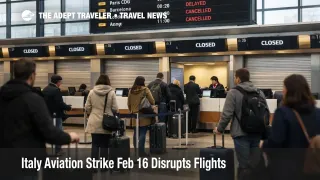
A cluster of aviation labor actions is scheduled to hit Italy on February 16, 2026, combining an ITA Airways 24 hour strike with separate work stoppages that can reduce ground handling capacity at Milan Linate Airport (LIN) and Milan Malpensa Airport (MXP). The same day also carries a listed Vueling cabin crew strike, which means disruption risk is not limited to one carrier or one airport process. Travelers should treat February 16 as a high cancellation and long queue day, shift flexible trips off the date when possible, and time must travel departures into the protected flight windows while building extra buffer for airport access and connections.
The practical traveler problem is that these are stacked constraints. Airline staffing actions can trigger outright cancellations, while handling actions can slow check in, bag drop, baggage delivery, and aircraft turnarounds even when a flight is still operating. When both happen on the same day, airlines often consolidate schedules into fewer departures, and that concentrates crowds into narrower time bands.
Who Is Affected
Travelers flying ITA Airways, connecting to or through Italy, or relying on Milan and Rome as transit points are the first tier of exposure, especially anyone checking a bag or traveling on a tight same day chain. February 16 also matters to travelers not "going to Italy" on paper, because aircraft and crews rotate through Rome and Milan, and a delayed inbound can break the next leg to another European hub, or to a long haul departure later in the day.
The airports most likely to feel traveler facing friction are Rome Fiumicino Leonardo da Vinci Airport (FCO), Milan Linate Airport (LIN), and Milan Malpensa Airport (MXP), because they carry the heaviest mix of business travel, short haul banks, and long haul waves where late turns quickly cascade into missed onward flights. Linate is especially vulnerable to disruption because it is slot constrained, so once a rotation slips, recovery options are thinner than at airports with looser slot pressure. Malpensa's exposure is different, it is connection heavy for certain itineraries, and handling slowdowns can spill into baggage delivery and minimum connection times, which is where misconnects multiply.
A second tier is travelers on other carriers that share the same ground infrastructure. Even if your airline is not the one striking, you can still face longer lines, slower bag systems, and gate delays if handlers are constrained. That ripple tends to propagate into surface transport and lodging as well, because delayed arrivals miss timed rail or car transfers, and canceled evening flights push demand into airport hotels for replacement seats the next day.
What Travelers Should Do
Travelers with flexibility should move nonessential flying off Monday, February 16, 2026, or redesign the day so they are not depending on checked baggage, a last train, or a protected connection. If moving the date is not realistic, bias toward the earliest protected departures and treat the airport as slower than normal, even if your flight is still showing on time, because staffing and handling bottlenecks often show up first at bag drop and at the gate.
A useful decision threshold is whether a miss would force an overnight anyway. If a broken connection would cost you a hotel night, a prepaid tour, or a separate ticket onward flight, rebook proactively now into a route that avoids Italy that day, or into a protected window departure with a larger buffer, rather than betting on day of reaccommodation when inventory collapses and lines build. For long haul, protect the first leg above all else, because once you miss the long haul segment, replacement options may be next day, or later, depending on season and route density.
In the 24 to 72 hours before departure, monitor three signals in parallel. Watch your airline app for pre cancellations and self serve change offers, watch ENAC minimum service and guaranteed flight guidance for what should operate during protected windows, and watch airport advisories for handling pressure that can change recommended arrival times. If you are traveling with tight ground transfers, also monitor rail and road timing, because a late inbound plus slow baggage is a common way a strike day breaks a "flight plus train" itinerary.
How It Works
Italy treats air transport as an essential public service, and strikes operate under a minimum service framework that keeps a limited baseline of flights and assistance running. ENAC notes protected time bands during strikes, typically 700 a.m. to 1000 a.m. and 600 p.m. to 900 p.m. local time, when flights are intended to operate, even when the rest of the day is exposed to heavier disruption. That rule shapes airline scheduling, because carriers often cancel lower priority flights, then retime remaining operations into those protected windows, which can produce the paradox of "more reliable" flights inside the windows but more crowded terminals at exactly those times.
On February 16, the disruption is not just an airline labor story, it is also an airport processing story. When ground handling staffing is constrained at Milan Linate and Milan Malpensa, the bottleneck can shift to check in, baggage systems, and ramp handling, which increases turnaround times and raises the chance that a flight that does operate still departs late, arrives with delayed bags, or misses its next rotation. Those delays propagate outward through at least two layers. First, connections and crew flow, late arrivals compress minimum connection times, crews approach duty limits, and reaccommodation demand spikes across the network, including onto flights that never touch Italy but share aircraft rotations. Second, surface transport and lodging, missed rail links, missed car pickups, and same day hotel extensions become more common as travelers wait for replacement seats, or accept next day departures.
Italy's strike calendar also flags additional air transport actions on January 31, 2026, including listed actions that touch easyJet airline staff and air traffic services in Verona, Italy. Even if February 16 is the larger traveler facing day, the January 31 actions matter for planning because they can create lingering mispositioned aircraft and crews, and they are a reminder to treat late January and mid February as a period where schedule reliability can be more fragile than usual for Italy routings.
For passenger rights, EU rules generally still require airlines to offer rerouting or reimbursement in cancellations, and to provide care while you wait, even when cash compensation may depend on whether the cause is considered extraordinary circumstances. That is why the most practical traveler move is to protect the itinerary first, then preserve receipts and disruption documentation in case reimbursement or assistance claims are needed.
Sources
- Scioperi, settore Aereo (Ministero delle Infrastrutture e dei Trasporti)
- Voli garantiti in caso di sciopero (ENAC)
- Air passenger rights, FAQ on extraordinary circumstances (Your Europe, European Union)
- Delays and Cancellations (ITA Airways)
- Italy Airport Strikes January 2026, Milan Flights at Risk
- EU Keeps 3 Hour Flight Delay Compensation Rule