

Isle of Man Heysham Ferry Cancellations From High Winds
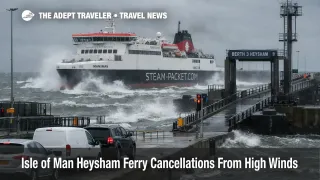
Strong winds in the Irish Sea are disrupting the Isle of Man's main sea link to northwest England, with cancellations and at risk sailings on the Douglas to Heysham route. Travelers with vehicles, freight timed to a specific crossing, and anyone chaining onward rail plans from Lancashire are most exposed when the sailing you built your day around flips status close to departure. The practical move is to treat Isle of Man travel as weather fragile for this window, use the operator's sailing status page as your single source of truth, and shift decisions earlier so you are not already committed to a terminal drive when the Master makes the final call.
This disruption matters because Isle of Man ferry cancellations remove a fixed block of capacity on a route with limited same day substitutes, and recovery often arrives in uneven steps as sea state improves and backlogs clear.
Who Is Affected
Passengers booked on Isle of Man Steam Packet Company crossings between Douglas and Heysham are the core exposure group, especially those traveling Friday, January 23, 2026, and into the weekend as forecasts show strong easterlies building, with gale risk overnight. Steam Packet's sailing status shows the late day Douglas to Heysham crossing as at risk, and it also flags additional at risk sailings into Saturday, which is the pattern that turns a single day problem into a rolling backlog.
Vehicle travelers are hit harder than foot passengers because space on the next available sailing can be limited, and because rerouting around the sea crossing is not realistic for most itineraries. If you are meeting a fixed hotel check in, a vehicle drop off, or a time sensitive appointment in England, a late cancellation can force a same night accommodation decision rather than a simple wait at the port.
Travelers connecting to rail in England face a different failure mode. Even when a sailing operates, adverse conditions can create late arrivals and slower turnarounds, which pushes you into tighter margins for trains from the Lancaster area toward Manchester, Liverpool, and beyond. Once you miss the last practical connection chain, your trip becomes an overnight whether you planned one or not, and that change tends to be more expensive when many passengers are rebooking at once.
What Travelers Should Do
Take immediate actions that reduce uncertainty and wasted movement. Check the Steam Packet sailing status before you leave for Douglas or Heysham, then check again after the posted Master decision time, because that is when an at risk sailing most often flips to cancelled or confirmed. If your crossing is marked at risk, use the operator's amend option early rather than waiting for a late call, and do not start a long drive to the terminal unless your sailing is shown as operating, or scheduled with no adverse note.
Set clear decision thresholds for rebooking versus waiting. If you must be in England by a fixed hour, or you are protecting a rail connection on a separate ticket, treat an at risk label plus a late decision time as your trigger to move to the earliest alternative sailing that still has vehicle space. If the day's operating window is narrowing, assume the first stable sailing after the wind peak will sell out first, and book lodging in Douglas or near Heysham as soon as you decide you are likely rolling to the next day.
Over the next 24 to 72 hours, monitor the signals that predict whether the system is stabilizing or still brittle. Watch the Isle of Man coastal waters forecast for upgrades that mention gales and very rough seas, and pair that with the Met Office shipping forecast for the Irish Sea. Then watch Steam Packet status language, when it shifts from at risk to scheduled and operating across multiple consecutive sailings, the recovery is real. If you want a comparable playbook for how maritime weather suspensions cascade into backlogs and forced overnights, see Greece Ferry Sailing Bans Hit Islands January 21, 2026 and Severe Weather North Island Flights and Ferries Jan 21-22.
How It Works
The ferry disruption starts with operating thresholds, not just wind speed at shore. When easterly winds strengthen across the Irish Sea, sea state and crosswind exposure in approach channels can make safe berthing and schedule reliability uncertain, even if conditions look manageable from a car park. That is why operators use decision windows, Steam Packet lists at risk sailings with specific Master decision times and notes that bookings can be amended free of charge when adverse weather is forecast. This is a safety and control process designed to avoid committing passengers and vehicles to a departure that cannot be completed safely.
The first order effects are immediate at the source. Cancellations remove an entire departure block, and at risk sailings create a holding pattern where travelers are unsure whether to travel to the terminal, and where port processing and check in timing become more sensitive. When one or more sailings cancel, the next operating crossing becomes a pressure valve for both passengers and vehicles, and loading that backlog can lengthen check in cycles, tighten space, and delay later departures even after winds begin to ease.
Second order ripples show up quickly across at least two other layers of the travel system. On the accommodation layer, a late cancellation forces unplanned hotel nights in Douglas or in the Heysham and Lancaster area, and that demand spike can compress inventory and raise prices for everyone arriving late. On the ground transport layer, rail itineraries become fragile because a delayed arrival at Heysham can break timed trains, and because replacement services late in the day are limited. For car hire and prebooked transfers, the risk is mismatch, your reservation window may not move with your sailing, so you need to communicate early and get written confirmation of changes.