

Storm Harry Malta Gozo Ferries Suspended, Backlogs
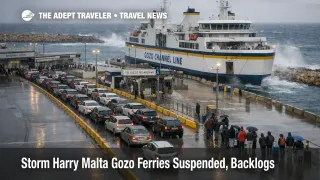
Storm Harry Malta Gozo ferries have been operating in a stop start pattern after rough seas forced multi day suspensions on the main Malta to Gozo vehicle route and extended disruption across fast ferry and regional sailings. Travelers are most exposed if they are switching islands close to a flight, a hotel check in deadline, or a timed tour pickup that cannot slide. The practical move is to treat crossings as unstable until operators clearly signal normal service, and to plan for either an overnight buffer or a same day reset that keeps you on the correct island.
The change that matters now is not only the wind event itself, it is the recovery backlog. Gozo Channel sailings began returning after the suspension, but reports from the terminals describe long vehicle lines and passenger waits at Ċirkewwa and Mġarr as the system tried to clear pent up demand.
Who Is Affected
Day trippers, commuters, and visitors with split island itineraries are the first group hit, because the Malta Gozo corridor behaves like a bridge, once it closes, demand compresses into the next available departures instead of disappearing. If you are staying on Gozo, Malta, and flying out of Malta International Airport (MLA) on the same calendar day, you have compounding risk because you are chaining a maritime leg to a road transfer and airport processing that do not wait for each other.
Travelers who normally rely on the Valletta to Mġarr fast ferry are affected differently, because Gozo Highspeed has paused service after storm damage and access restrictions at the Ta' Liesse terminal. Even if the Gozo Channel vehicle ferries are running again, the loss of the fast ferry removes a key pressure valve that usually helps absorb passenger demand and keeps Valletta based itineraries moving.
There is also a wider knock on for travelers connecting beyond Malta. Virtu Ferries published rolling cancellations and amended departures on the Malta Sicily route during this weather window, which matters if you were using Pozzallo, Italy, and onward rail or road connections as part of a larger itinerary.
What Travelers Should Do
If you need to cross in the next 24 hours, reduce uncertainty before you move. Check Gozo Channel and Gozo Highspeed status updates, then time your arrival to the terminal around a confirmed operating pattern, because showing up early can simply place you deeper into a stationary queue if loading is slowed by sea state or berth constraints. If you are traveling with a car, assume the vehicle backlog clears more slowly than foot passenger demand, and avoid tight hotel check in or dinner reservations on restart days.
Set a hard decision threshold for rebooking versus waiting. If your plan requires being on a specific island by mid afternoon, or you have a same day flight out of Malta International, treat any suspension notice, any wording that sailings are weather permitting, or any visible queue that exceeds your buffer as your trigger to overnight rather than gamble on a late recovery sailing. In practice, that usually means sleeping on Malta's main island the night before a flight if you are currently on Gozo, or staying on Gozo if you have already crossed and conditions are deteriorating again.
Over the next 24 to 72 hours, monitor the signals that predict another halt. Watch operator language about berthing difficulty, South Quay operations, terminal access restrictions, and whether service is described as normal versus emergency or limited. Also watch whether fast ferry service remains paused at Ta' Liesse, because a continued closure there increases queue pressure on the vehicle ferries and makes same day recovery more fragile.
How It Works
Wind and swell disruptions in Malta propagate through the travel system in layers, and the recovery tail is usually what breaks itineraries. The first order effect is straightforward, ferries suspend when sea state and berthing conditions exceed safety limits, or when terminals cannot be operated safely. In this storm, that showed up as Gozo Channel halts, slow restarts, and long queues at Ċirkewwa and Mġarr once crossings resumed.
The second order ripple spreads quickly into at least two other layers. Connections become brittle because even a modest delay can erase the margin you built for airport check in, and travelers who miss a window tend to rebook into the same limited pool of later departures, which amplifies crowding and extends waits. At the same time, hotels near Valletta, ferry approaches, and airport area properties can see short notice demand spikes when passengers decide, or are forced, to stage overnight on the "safe" side of their next departure.
A third layer is substitution pressure. When the fast ferry is paused due to terminal access limits, and when regional sailings like Malta Sicily are running cancellations and amendments, there are fewer clean alternatives for travelers trying to "route around" the disruption. That is why the right mental model is not one cancelled sailing, it is a capacity and backlog problem that can persist after the wind eases. For related recovery patterns in other ferry systems under weather stress, see Storm Harry Malta Ferries Disrupted January 19 and Greece Ferry Sailing Bans Hit Islands January 21, 2026 Greece Ferry Sailing Bans Hit Islands January 21, 2026.
Sources
- Gozo ferries resume normal service as Malta recovers from Storm Harry
- Severe delays for Gozo Channel ferry as service recovers from Storm Harry
- Gozo Fast Ferry Schedule: Plan Your Quick Crossing
- Gozo Highspeed Facebook post on Ta' Liesse terminal access and suspension
- Latest voyage updates
- Storm Harry: weather forecast for the coming days