

NYC Alternate Side Parking Suspended Through Feb 1
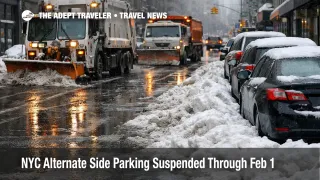
New York City paused alternate side parking rules through Sunday, February 1, 2026, to facilitate snow operations. For visitors, the practical change is that you do not have to move a legally parked vehicle solely to comply with posted alternate side parking street cleaning windows during the suspension. That can make curbside parking look easier in the moment, but it also reshapes where cars sit for days at a time, which can slow clearing on some blocks and compress pickup and loading space near hotels, attractions, and transit hubs.
The NYC alternate side parking suspension matters because it changes how quickly streets return to normal driving patterns, and it changes the curb behavior that travelers rely on for hotel unloading, airport drop offs, and early morning departures. The key catch is that the suspension does not turn off the rest of New York City parking enforcement, and it does not guarantee that every street will clear evenly while snow operations continue.
Who Is Affected
Visitors driving in New York City, New York are the first group exposed, especially travelers in rental cars who planned to rely on overnight street parking, quick curbside stops, or early morning checkouts. Neighborhoods with dense curb demand, narrow one way streets, and limited off street garages can feel more constrained because cars can remain parked in the same positions for longer stretches, while snowbanks and plowed slush reduce usable lane width.
Hotel guests using valet or nearby street parking face a second layer of risk. Even when alternate side parking is suspended, active snow operations can temporarily limit curb access, and that can push loading and pickup activity into fewer workable spots. The visible symptom is longer taxi and rideshare dwell time, slower hotel car retrieval, and pickup points that shift a half block or more to find passable curb.
Departure day itineraries are the third group that should adjust. Airport runs to John F. Kennedy International Airport (JFK), LaGuardia Airport (LGA), and Newark Liberty International Airport (EWR) are vulnerable when morning traffic stacks behind narrowed lanes, double parked loading activity, and intermittent plow passes. Rail station access can also tighten during peak checkout windows if curb space near entrances is partially blocked by snow storage, commercial deliveries, or idling pickup vehicles.
What Travelers Should Do
Treat the suspension as a street cleaning rule change, not a free parking holiday. Keep paying meters where required, keep obeying all posted no standing, no parking, time limit, hydrant, and loading zone rules, and assume enforcement continues normally for anything that is not alternate side parking. If you are unsure whether your spot is legal beyond alternate side parking, move the car and reset your plan before you get locked into a bad curb situation overnight.
Use decision thresholds for whether to keep the car on the street or switch to a garage. If your departure is before mid morning, if you have bags to load, or if you are within a few blocks of a high demand corridor, a paid garage can be cheaper than losing time to curb hunting and pickup uncertainty. If your hotel offers valet, ask for retrieval earlier than you normally would, and plan a buffer so you are not forced into last minute double parking while plows are still working.
Over the next 24 to 72 hours, monitor official status updates rather than relying on what you see on one block. Check the city's alternate side parking status before you go to sleep, and again before you leave in the morning, because reinstatement timing can change as conditions improve. If you are aiming for an airport or a fixed time rail departure, plan for surface travel to be the fragile link, and add time for slower traffic, longer rideshare matching, and detours around streets that are still being cleared.
How It Works
Alternate side parking is New York City's rotating street cleaning system, posted on curbside signs, that requires vehicles to move during specific windows so sanitation crews can clean the curb lane. When the city suspends alternate side parking, it pauses that move requirement, which reduces the need for drivers to circle the block and re park, and it helps snow operations by lowering churn while crews prioritize plowing, salting, and hauling in the heaviest areas. The city can still run snow operations with cars present, but parked vehicles and snowbanks can constrain how close plows can get to the curb, which is why clearing can look uneven from block to block.
That first order shift at the curb creates second order ripples across the travel system. When curb lanes stay partially blocked, traffic moves into fewer usable lanes, which increases surface travel time and makes pickup timing less reliable for taxis and rideshares. As travel time variance grows, travelers miss tighter departure targets, which pushes more people into earlier pickup requests, longer hotel lobby waits, and more last minute curb activity right when streets are still recovering. For travelers also navigating weather driven air disruption in the region, the ground side friction can compound missed connections because an airport that is operational can still be hard to reach on schedule if the street network is recovering unevenly.
For broader context on the storm recovery environment that can overlap with New York City area ground logistics, see Winter Storm Fern US Flight Delays January 27 and Flight Delays and Airport Impacts: January 27, 2026.