

NYC Ferry Ice Suspension Disrupts Routes January 28
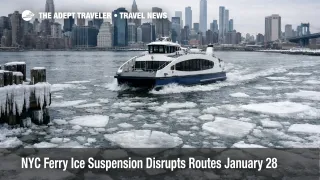
NYC Ferry suspended service across its system after heavy ice built up on the East River, the Hudson River, and across New York Harbor. The shutdown affects commuters and visitors who use ferries to move between Manhattan, New York, and waterfront neighborhoods in Brooklyn, New York, and Queens, New York. If your plan included a ferry leg, switch to subway and bus alternates now, add buffer for airports and rail terminals, and keep checking official alerts because restart timing depends on waterway conditions.
NYC Ferry's public guidance has been consistent on the core issue, thick ice forces slow speeds, unpredictable landings, and short notice suspensions, so the operator can keep service closed until navigation conditions improve. Multiple outlets reported that service stopped by 2:00 p.m. ET on Tuesday, January 27, 2026, remained suspended on Wednesday, January 28, 2026, and could stay disrupted for several days.
Who Is Affected
Neighborhoods that lean on ferry access for routine cross river travel are the most exposed because the ferry is not just a scenic ride, it is a time saving connector that bypasses road bottlenecks and some subway transfers. When it goes dark systemwide, riders get pushed onto a few predictable alternates, and those alternates concentrate crowding and delays at the same choke points, major subway hubs in Lower Manhattan, Midtown Manhattan, Downtown Brooklyn, and the Queens transfer stations that feed Manhattan.
Visitors feel this differently than commuters. A commuter may know three backup paths and can tolerate a longer trip. A visitor is more likely to be carrying luggage, heading to a timed commitment, and unfamiliar with the fastest substitution once the water option disappears. That is why the practical risk is not only inconvenience, it is missed showtimes, missed restaurant reservations that require deposits, missed tour departures, and broken same day chains to airports and trains.
Airport connections are an obvious pressure point because waterfront hotels, short term rentals, and popular dining corridors cluster near NYC Ferry landings. If your plan was ferry to subway to John F. Kennedy International Airport (JFK) or LaGuardia Airport (LGA), you should assume longer transfers and more variability at peak hours, especially if rideshare demand surges when the ferry is unavailable.
This kind of disruption also ripples into the broader travel system in ways people miss. When river traffic is constrained by ice, operators may need to hold or reposition vessels and crews, and that reduces the odds of a quick, partial restart. When the ferry is down, street level traffic demand climbs, which can slow hotel to airport runs and delay coach or shuttle pickups that are scheduled tightly. Even if flights operate normally, ground access friction can become the failure point. For Northeast travel this week, the wider cold weather recovery posture has already been stressing air travel, so adding a ground access miss on top of a tight flight plan is exactly how travelers lose the day. Winter Storm Fern US Flight Delays January 27 and Flight Delays and Airport Impacts: January 27, 2026 are useful context if you are stacking ferry disruption with a same day flight or connection.
What Travelers Should Do
Treat any itinerary that depended on NYC Ferry as a land based trip until you see a clear, dated restart message, not just a general status page. If you are leaving a waterfront neighborhood for Manhattan, prioritize subway first because it scales better than taxis when demand spikes. If you are traveling with luggage, build extra time for elevators, station navigation, and platform crowding, and consider a short taxi hop only for the last mile if the weather is tolerable and you can absorb surge pricing.
Use decision thresholds instead of hoping for a quick reopen. If you have a timed admission, a Broadway curtain time, an Amtrak departure from Pennsylvania Station (NY Penn Station), or a flight at JFK or LaGuardia, do not wait for ferry service to return unless you have enough slack to miss the first attempt and still succeed. A practical threshold is to reroute immediately if losing the ferry removes your buffer and forces you into a plan with a single transfer point, such as one subway line plus one bus, where any delay breaks the chain.
Over the next 24 to 72 hours, monitor three layers. First, watch NYC Ferry's official alerts for whether service remains fully suspended or comes back in a limited, corridor by corridor way. Second, watch surface conditions that govern ice persistence, sustained subfreezing temperatures, wind, and tides, because that is what determines when navigation is safe again. Third, watch your own choke points, rideshare pricing, tunnel and bridge traffic, and subway service changes, because even a ferry restart can create uneven demand patterns as riders rush back at the same time.
Background
River ice is not common in the way snow is common, but it becomes a real operational problem when temperatures stay low long enough for ice to form and persist, especially in brackish, tide influenced waterways like the Hudson and East rivers. Local reporting on this event pointed to temperatures dipping below about 30 degrees and conditions such as weak currents or tides that make it easier for ice to accumulate and linger near shorelines and landings.
For ferry operations, the constraint is not only whether a vessel can move. It is whether it can do so on schedule, dock reliably, and avoid damaging hulls, propulsion systems, and pier infrastructure. Heavy ice can force slow speeds, and it can also make landings unpredictable, which is why the system may suspend broadly rather than run an unreliable partial schedule that strands riders mid route. That same dynamic explains why officials warned that the suspension could last several days, since safe operations depend on changing waterway conditions, not a simple mechanical reset.
It is also important not to conflate different ferry systems. ABC7 noted that larger vessels, such as the Staten Island Ferry, can be less affected by ice conditions compared with smaller services, so travelers should verify which operator they are relying on before assuming all water crossings are unavailable.
Sources
- NYC Ferry suspends all service until 'further notice' as ice builds in Hudson, East Rivers
- NYC Ferry service may be suspended for days due to ice in rivers
- NYC Ferry suspended due to icy rivers, NJ Transit back to normal schedule
- NYC, NJ ferry services disrupted by ice on Hudson River
- Service Alerts, New York City Ferry Service