

Storm Kristin Portugal Spain Travel Disruption
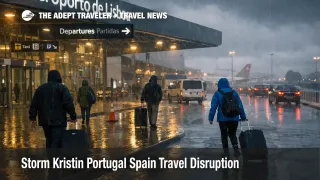
Storm Kristin is battering Portugal and Spain on January 28, 2026, bringing damaging winds, heavy rain, snow, and coastal hazards that can shut down surface transport and disrupt airport access. The highest traveler exposure is not only flight delays, it is getting to airports, stations, and meeting points when power outages, fallen trees, flooding, and road closures break local mobility. If you are traveling through Lisbon, Portugal, Porto, Portugal, Madrid, Spain, or Andalucía, Spain, prioritize route flexibility, earlier departures, and backup ground options, and assume that disruption can persist after the worst weather passes.
The Storm Kristin Iberia disruption matters because utility failures and red level weather alerts shift risk from airline recovery to ground mobility failure, which is how travelers end up stranded even when a timetable still shows service. In Portugal, power interruptions affected a very large share of customers, and operators said they were coordinating restoration with emergency authorities. In Spain, the national weather agency warned of severe wind impacts, and major transport operators reported weather related slowdowns, including at Madrid Barajas where snow and de icing activity reduced operational throughput.
Who Is Affected
Travelers in Portugal are most exposed where wind and falling debris coincide with power outages, because blocked roads and intermittent electricity can disrupt rail signaling, fuel stations, traffic controls, and communications that riders depend on for last mile decisions. Official Portuguese communications described an extreme weather event with significant impacts, while grid operators reported high wind observations and active restoration operations, which is the mix that tends to create uneven recovery by neighborhood rather than a clean return to normal everywhere at once.
In Spain, the exposure is broad because AEMET warnings covered many regions, but the most consequential traveler scenarios cluster where severe wind alerts overlap with mountainous roads, long bridges, and coastal corridors that are routinely restricted during maritime events. Reporting tied Kristin to red level wind alerts in parts of the south and southwest, and transport impacts included a large number of affected roads, which is a direct threat to airport and rail access for travelers who planned "arrive and drive" legs.
Air travelers are also exposed to second order effects even if their departure airport is not in the worst weather zone. When winds, snow, or staffing interruptions slow one hub bank, aircraft and crews arrive late into other cities, and that can trigger rolling delays, cancellations, and missed connections across an airline's network. Madrid Barajas reported weather related slowdowns tied to snow operations, and that type of constraint can ripple into later rotations across Spain and beyond, especially when the same aircraft is scheduled to run multiple short haul legs the same day.
What Travelers Should Do
Start with immediate actions that reduce strand risk. Confirm your flight status directly with your airline, then check airport operator updates for Lisbon Humberto Delgado Airport (LIS), Francisco Sá Carneiro Airport (OPO), and Adolfo Suárez Madrid Barajas Airport (MAD), because weather can shift the limiting factor from runway capacity to de icing queues and surface access. If you are driving, switch to main corridors only, avoid coastal roads in exposed zones, and keep enough fuel to reverse course, because a single closure or fallen tree can strand you between exits.
Use clear thresholds for rebooking versus waiting. If you have a same day onward commitment, such as a cruise embarkation, a tour pickup, or a non refundable rail departure, move the most timing critical leg earlier, or reroute through a less exposed airport, even if it costs more. If you are on a single protected ticket with multiple later options and you can tolerate arriving a day late, waiting can be reasonable, but only if you have a realistic overnight plan near the airport, and you are not relying on late evening ground transport that may stop running in severe weather.
Over the next 24 to 72 hours, monitor three channels in parallel: official weather warnings for your province and coast, emergency management updates about road access and power restoration, and transport operator notices about reduced timetables and station access. Watch for the recovery trap where winds ease but debris removal and power restoration lag, which can keep taxis scarce and rail links unreliable even after precipitation tapers. If you are transiting Lisbon, keep in mind that operational bottlenecks can compound with other chokepoints, including border processing variability described in Lisbon Airport Pauses EES Border Checks Until March.
How It Works
A named winter storm like Kristin disrupts travel in layers, and the most painful traveler outcomes usually come from the layers interacting. First order impacts start at the source, high winds fell trees and damage lines, heavy rain floods low points, and snow and ice reduce road friction and slow ground handling at airports. In Portugal, large scale power interruptions were reported alongside restoration activity, and that matters for travelers because electricity supports rail signaling, airport systems, and the wider logistics that keep taxis, fuel pumps, and card payments functioning.
Second order ripples spread across connections and capacity. When a hub slows due to de icing or snow clearance, departures miss slots and arrivals bunch, which strains gates, baggage halls, and surface transport queues. That can push travelers into overnight stays, and it can also create rental car scarcity as people abandon onward drives and try to rebook to flights or trains the next day. In Spain, road impacts and severe wind warnings increase the odds that travelers miss the airport even when flights still operate, and that drives reaccommodation pressure into the next departure wave, raising fares and lowering seat availability.
The third layer is behavioral, and it is where travelers can gain leverage. When many people try to move at once, the first viable substitutes sell out fast, including intercity buses, last minute hotel rooms near terminals, and one way rental cars. If you are traveling within Spain during the same window as other planned disruptions, you also need to avoid stacking risks, for example rail capacity constraints from the upcoming strike window covered in Spain SEMAF Rail Strike Feb 9 to 11 Train Disruption, because compounded shocks are when a manageable delay becomes a missed trip.
Sources
- Storm Kristin knocks out power to 800,000 in Portugal and barrels into Spain
- Tempestade Kristin: REN mobiliza equipas para reposição do abastecimento elétrico
- Tempestade "Kristin" - Comunicado do Governo
- Comunicados, Vento, chuva, neve e agitação marítima, Depressão KRISTIN, continente
- Avisos meteorológicos, Agencia Estatal de Meteorología
- Ralentizadas operaciones en el aeropuerto de Barajas por la nieve y Adif alerta de retrasos
- El aeropuerto de Madrid sufre demoras este miércoles por la nieve, con tres de cuatro pistas operativas