

Winter Storm Fern American Cancellations at DFW, CLT
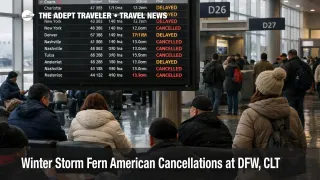
American Airlines says Winter Storm Fern is driving one of the most severe operational impacts it has faced, centered on prolonged ice and freezing precipitation that has constrained departures and arrivals at major hubs. Travelers most exposed are those flying through Dallas Fort Worth International Airport (DFW) and Charlotte Douglas International Airport (CLT), plus anyone relying on tight same day connections that depend on those hubs running normal banks. The practical move now is to treat the next two days as recovery risk days, use the airline's travel waiver if eligible, and rebuild itineraries around longer connection buffers and earlier departures.
The core issue is not just snowfall, it is the combination of ice, deicing throughput limits, changing precipitation types, and road access and staffing constraints that slow the entire turnaround cycle. American has signaled that elevated cancellations can persist for multiple days even as conditions begin to improve, because the airline has to rebuild aircraft and crew rotations that were broken by repeated waves of cancellations and delayed turns.
Who Is Affected
Travelers booked on American Airlines flights to, from, or through Dallas Fort Worth and Charlotte are the most directly affected, especially if the itinerary includes an onward connection on the same day. When a hub is constrained by ice and deicing holdover limits, departures do not simply run late, they often get canceled in clusters so the airline can restore workable aircraft sequences. That means your flight can look stable early, then drop when the carrier reprioritizes aircraft for later legs or for routes with higher reaccommodation pressure.
A second high risk group is passengers on American Eagle regional flights feeding the hubs, because regional schedules are often the first place an airline trims capacity to reduce congestion and to protect limited gate space for mainline operations. That dynamic also raises the risk that a traveler misconnects even when the long haul leg still operates, because the short feeder segment was cut.
Even if your origin and destination are outside the heaviest storm corridor, you can still be affected if your aircraft or crew was scheduled to cycle through DFW or CLT earlier in the day. Recovery disruptions propagate across the network through aircraft positioning, crew duty limits, and gate availability, then show up as rolling departure time changes, equipment swaps, and late cancellations when same day rebooking options are already thin.
What Travelers Should Do
Act on the waiver and on the parts you can control. If you are eligible under American's Winter Storm Fern travel alerts, changing your trip earlier in the recovery window is usually easier than trying to rebook after airport lines build and call wait times spike. Check your inbound aircraft assignment, not just your departure time, and pack essentials in your personal item in case checked baggage delivery lags during uneven restarts.
Use clear decision thresholds for rebooking versus waiting. If your itinerary depends on a hub connection that is now under about 90 minutes, or if your first leg is delayed enough that a single gate hold would break the connection, moving to a nonstop or a longer layover routing is typically safer than betting on perfect alignment. If you have a fixed deadline such as a cruise embarkation, a medical appointment, or a prepaid tour pickup, treat any mid to late day departure out of the most impacted hubs as a higher risk choice than it appears on paper.
Monitor the next 24 to 72 hours in layers. Watch American's travel alerts for airport list changes and deadline rules, watch your flight status for aircraft swaps and rolling delays, and watch local road and temperature conditions around the hubs because staffing access can remain impaired even after precipitation ends. If you are forced into an overnight, book lodging early near the airport corridor, and keep receipts for rebooking and expense tracking, especially if your travel insurance or credit card coverage requires documentation.
How It Works
Major winter disruptions have two phases, capacity loss during the event, then fragile recovery as the airline tries to restore a schedule built on tight aircraft and crew rotations. At the source airport, ice and freezing precipitation reduce safe movement rates, extend taxi times, and force deicing queues that can compress departure banks into short bursts, then stall again. American has also pointed to situations where changing precipitation types and temperatures can shorten deicing holdover effectiveness, which limits how long an aircraft can wait before takeoff after treatment and can trigger additional delays or cancellations if departure slots slip.
Once cancellations accumulate, the second order effects often matter more to travelers than the storm itself. Aircraft end up in the wrong cities, crews time out or cannot reach the airport safely, and rebooking inventory disappears because today's passengers are competing for tomorrow's seats. That spilled demand pushes into hotels, rental cars, and ground transport, particularly around hub airports, and it can also affect cruise and tour logistics when travelers arrive a day late and need last minute transfers or extra hotel nights.
For related recovery planning signals across the broader U.S. system, see Winter Storm Fern US Flight Delays January 27 and Flight Delays and Airport Impacts: January 27, 2026. For deeper context on how air traffic staffing and flow management can amplify recovery days, see U.S. Air Traffic Control Privatization: Reality Check.