

Storm Fern American Airlines Recovery Strains Crews
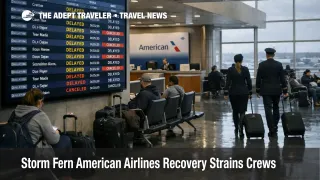
American Airlines passengers should plan for lingering irregular operations as the carrier works through the recovery from Winter Storm Fern, with the most stubborn knock on effects centered on Dallas Fort Worth International Airport (DFW) and other hubs that were hit in sequence. Travelers are most exposed if their itinerary depends on tight same day connections, late day departures, or regional feeder flights that can be trimmed to protect gate space. The practical next step is to use the active travel waivers where eligible, rebuild itineraries around larger buffers, and document costs and communications while the recovery remains uneven.
American Airlines Storm Fern recovery now looks less like a pure weather problem and more like a network reset problem, because crews, aircraft, gates, and hotels all have to realign before the published schedule becomes trustworthy again.
Who Is Affected
Travelers booked to, from, or through Dallas Fort Worth and Charlotte Douglas International Airport (CLT) sit at the center of the risk, because these hubs amplify disruptions into hundreds of downstream city pairs when departures stop moving in normal banks. If your flight is not in Texas or North Carolina, you can still be impacted when your aircraft or crew was scheduled to cycle through those hubs earlier in the day, then gets displaced by cancellations, long taxi times, or crew duty limit failures.
Passengers on American Eagle regional flights are a second high risk group. During recovery, regional schedules are often reduced first to decongest gates and to preserve mainline departures, which means the long flight you care about can still operate while the short feeder you needed quietly disappears. That same dynamic can break international trips even when weather has cleared at your destination, because missed connections cascade into overnight layovers and limited rebooking inventory.
A third group is anyone with a hard arrival deadline, such as cruise embarkations, weddings, exams, medical appointments, or conference start times. Recovery days produce more last minute changes than storm days, including equipment swaps, rolling delays, and late cancellations that arrive after alternative seats have already been claimed. If you are traveling on separate tickets, the risk is higher because the airline has no obligation to protect your onward segment.
For real time system level signals beyond your own reservation, Flight Delays and Airport Impacts: January 28, 2026 can help you spot where capacity constraints are still likely to trigger metering and missed connections. For the earlier storm phase details at American's core hubs, see Winter Storm Fern American Cancellations at DFW, CLT.
What Travelers Should Do
Start with actions that reduce your exposure to the recovery queue. If your trip is covered by American's travel alerts, changing sooner is typically easier than rebooking after airport lines build and same day inventory disappears. When you review your options, check the inbound aircraft and the first operating leg of your crew sequence where visible in the app, because those two elements often predict a late cancellation better than an on time looking departure board.
Use decision thresholds that match your risk tolerance rather than hoping the network smooths out at the last minute. If your itinerary depends on a connection under about 90 minutes at DFW or CLT during the current recovery window, or if your first leg delay would leave you with a single gate hold worth of slack, treat a reroute, a longer layover, or a nonstop alternative as the safer choice. If you must arrive the same day for a cruise or event, shifting to an earlier departure, even if it is less convenient, is usually the most effective hedge.
Over the next 24 to 72 hours, monitor three layers, your flight status, the waiver and alert updates, and the hub level recovery cues that affect hotel and ground transport availability. Watch for gate congestion and late day cancellations, and assume that hotel inventory near hubs can tighten quickly when crews and displaced passengers both need rooms. Save screenshots of cancellation notices, keep receipts, and record the timeline of assistance attempts, because those documents matter for employer travel policies, insurance claims, and any reimbursement request you choose to pursue.
For deeper context on how flow management and staffing constraints can extend disruption beyond the storm footprint, U.S. Air Traffic Control Privatization: Reality Check explains why system capacity can remain fragile even when local skies improve.
How It Works
Large winter disruptions have two phases, the capacity collapse during the storm, then the fragile recovery as airlines rebuild tightly timed aircraft and crew rotations. At the source, freezing precipitation slows deicing throughput, extends taxi times, and reduces safe movement rates, which compresses departure banks into irregular bursts. Once cancellations pile up, aircraft end up in the wrong cities, crews time out, and the schedule becomes less predictive because the airline is continuously re sequencing the network to restore workable patterns.
The second order effects are what most travelers feel. Crew positioning becomes the limiting factor because pilots and flight attendants must be legal to fly under duty and rest rules, and they must physically reach the aircraft at a hub where roads may still be icy and parking and terminal access may be constrained. Hotel availability then becomes operational infrastructure, not a passenger comfort issue, because stranded crews need rooms to rest, and without rest they cannot legally operate the next day's flights.
That hotel pinch also ripples outward. When crews and displaced passengers compete for the same inventory near hub airports, prices rise and rooms sell out, forcing longer commutes from distant suburbs or additional nights in cities that were never the traveler's destination. The ripple then hits cruises, tours, meetings, and rail connections, because a single missed leg can shift arrival by a full day and trigger secondary rebooking costs that are hard to unwind, especially for separate ticket itineraries and prepaid reservations.
Sources
- Storm tests American Airlines as stranded crews face hotel shortages, long waits for help
- American Airlines reports fourth-quarter and full-year 2025 financial results
- American makes continued progress in its recovery from Winter Storm Fern
- Travel alerts, Travel information, American Airlines
- Refunds, U.S. Department of Transportation