

Winter Storm Gianna US Flight Waivers For Weekend Travel
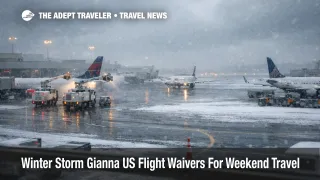
U.S. airlines are expanding fee free rebooking options ahead of Winter Storm Gianna, as a rapidly intensifying coastal system threatens to disrupt flights across parts of the Southeast and up the East Coast. The biggest practical change for travelers is that multiple carriers have published defined eligibility windows, airport lists, and rebooking deadlines that can eliminate change fees, and in some cases fare differences, if you move quickly. Travelers with weekend itineraries through major Southeast airports should check their reservation now, decide whether to shift dates or routings, and then rebook inside the carrier's rule set rather than waiting for airport day of lines.
The Winter Storm Gianna flight waivers matter because they convert a weather risk into a decision window, if you act within the airline's deadline, you can often move to a safer travel day without paying the usual penalty.
Who Is Affected
American Airlines' active travel alert applies to customers scheduled to travel January 30, 2026, through February 2, 2026, through a broad set of Southeast airports, including Hartsfield-Jackson Atlanta International Airport (ATL), Charlotte Douglas International Airport (CLT), and Savannah Hilton Head International Airport (SAV). The policy includes Basic Economy, but it keeps the usual guardrails, you generally cannot change your origin or destination, and you must meet the airline's change by deadline.
Delta's advisory covers travel January 31, 2026, through February 1, 2026, for a Southeast city list that includes Atlanta, Charlotte, and Raleigh-Durham International Airport (RDU). Delta's terms place the key decision on timing, if you rebook and start travel no later than February 4, 2026, you can avoid the fare difference in the same cabin, while later travel can still avoid a change fee but may trigger a higher fare.
Southwest's advisory covers January 30, 2026, through February 1, 2026, for a smaller list of Southeast cities including Atlanta, Charleston, Charlotte, and Raleigh-Durham. Southwest frames choices in operational terms, you can keep your booking, rebook or travel standby within 14 days of your original date between the same city pairs without paying a change in airfare, or pursue a refund if the airline cancels or significantly delays your flight and you opt to cancel.
United has also signaled flexibility tied to the same weather event, with a published window for rebooked United departures that extends beyond the immediate weekend, which is useful if you want to wait out both the storm and the recovery backlog. The safest assumption is that United's exact eligible airports and ticket rules can vary by advisory, so travelers should confirm the precise travel alert that matches their itinerary before changing anything.
If you want more context on how this storm cycle is landing on airline operations, see Winter Storm Gianna East Coast Flight Waivers and the earlier disruption layer from Storm Fern American Airlines Recovery Strains Crews.
What Travelers Should Do
Act in two passes. First, decide whether you are protecting a connection, an event, or a return home, then use the waiver to move the riskiest leg off the core impact dates while seats still exist. Second, add buffer that matches how you travel, if you have a checked bag or a rental car pickup, shifting to an earlier flight is usually safer than shifting later, because recovery options shrink as the day goes on.
Use clear decision thresholds. If your trip requires a tight same day connection through ATL or Charlotte Douglas, or if you are on separate tickets, rebooking is usually the rational move once a waiver is posted because one cancellation can break the itinerary and strand you overnight. If you have a nonstop, flexible hotel, and no timed commitments, waiting can be reasonable, but only if you are willing to accept a next day arrival and you have a realistic plan for ground transport and lodging if flights bunch.
Monitor the next 24 to 72 hours like an operator. Watch your airline's app for aircraft swaps and schedule trims, then watch airport arrival rates and posted delays for the hubs you touch, because a slow start at a hub can ripple into your later departure even if your origin weather is fine. If you are traveling anyway, plan for longer curb to gate time, bring essentials for a longer terminal stay, and keep documentation for any expenses you may later claim through trip protection or travel insurance.
How It Works
Airline waivers are operational pressure valves. They are published when a carrier expects irregular operations, and they are designed to reduce passenger volume on the highest risk flights while giving the airline more flexibility to cancel early and reposition aircraft and crews. That is why the fine print matters, each policy ties benefits to an eligible airport list, a scheduled travel window, and a rebooking deadline, and many also restrict changes to the same origin and destination city pair.
The first order effect of a storm like Gianna is capacity loss at the source, airports lose throughput due to low visibility, de icing demand, runway configuration changes, and ground staffing constraints. The second order effects spread across the network, inbound aircraft arrive late and push outbound flights late, crews time out under duty rules, and aircraft rotations break, which can strand later flights even outside the storm footprint. The third layer hits traveler behavior and local inventory, passengers reroute through alternate hubs, rental cars sell out on short notice, and hotels near airports like Atlanta and Charlotte compress quickly when cancellations bunch arrivals into the next day. If you want a deeper look at systemic constraints that shape recovery, US Air Traffic Control Privatization Reality Check provides background on why the system can be brittle during multi day disruptions.
Sources
- Travel alerts - Travel information - American Airlines
- Southeast Winter Weather | Delta Air Lines
- Travel Advisories & Alerts | Southwest Airlines
- Storm Gianna: US airlines warn passengers over 'bomb cyclone' disruptions
- Tens of thousands enter 6th day without power as Carolinas and Virginia prep for a winter storm