

Winter Storm Fern US Airline Recovery Risk at Hubs
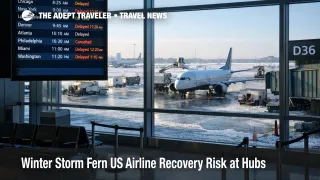
Winter Storm Fern has moved beyond the worst icing and snowfall, but U.S. airline operations are still in a fragile restart phase as crews, aircraft, and hotel capacity realign across major hubs. Travelers connecting through Dallas Fort Worth International Airport and Charlotte Douglas International Airport are most exposed to late cancellations and rolling delays driven less by active weather and more by crew legality, missed positioning flights, and gate congestion. The practical move is to treat February 3, 2026, as a recovery risk day, use same day change options early, and avoid tight connection chains until hub departure banks look stable again.
Winter Storm Fern airline recovery is now about restart friction, not radar, meaning the schedule can look normal in the morning and still unravel by afternoon when crews run out of legal duty time, or inbound aircraft arrive too late to work the next bank. Reporting on American Airlines has been especially instructive because the carrier's hub exposure meant the storm hit the heart of its system, and the recovery stress showed up in crew support, hotel availability, and reassignment delays after cancellations piled up. Recent reporting also indicates American began compensating flight attendants who were stranded and seeking reimbursements, a signal that lodging and crew support failures were widespread enough to require formal remediation rather than one off fixes. For earlier hub specific context and the mechanics of a multi day reset, see Storm Fern DFW Flight Delays, American Recovery Lags.
Who Is Affected
The highest risk group is anyone whose itinerary depends on a tightly banked connection through a large hub that lost significant schedule volume during Fern, especially Dallas Fort Worth and Charlotte. When a hub loses a departure bank, the disruption is not confined to that airport, aircraft end up in the wrong cities, crews miss rest windows, and later flights cancel far from the storm footprint because the planned rotation never arrives. That is why a clear forecast can still produce a bad travel day.
Travelers on regionals feeding the hubs are also exposed because airlines often trim feeder flying to decongest gates and protect the next day schedule. If your first leg is a short hop into a hub, a single cancellation can wipe out the entire itinerary, and replacement seats may not exist until the next day once displaced passengers absorb inventory. This is also where "last minute" feels most common, the airline may hold a flight while trying to source a legal crew, then cancel when the crew times out, which converts a delay into an overnight problem.
Finally, travelers with hard arrival deadlines, including cruises, weddings, medical appointments, and ticketed events, face outsized downside because recovery days reduce the reliability of connection chains. If you are on separate tickets, the risk rises again because the second provider may not protect you if the first leg misconnects. The same logic applies to airport corridor hotels and ground transfers, when crews and displaced passengers compete for the same rooms, even routine overnights can become expensive or unavailable. For a parallel example of how a hub recovery turns into mass cancellations and downstream rebooking pressure, see Charlotte Airport Snow Cancellations Disrupt CLT.
What Travelers Should Do
Start with immediate actions that reduce exposure to the recovery queue. Check your airline app before leaving for the airport, and again after arrival, because recovery day schedules can change quickly once crew legality and inbound aircraft swaps become clear. If a waiver applies, use it early, it is usually easier to move while the system still has open seats and before airport lines spike. If you must connect, widen the buffer, and keep essentials and medication in a personal item in case a late cancellation forces an overnight.
Use a clear decision threshold for rebooking versus waiting. If your itinerary relies on Dallas Fort Worth or Charlotte and your connection is tight enough that a modest delay breaks it, shifting to a nonstop, a different hub, or an earlier departure is usually smarter than waiting for perfection. The same is true if your second leg is the last bank of the day, if you miss it, you are far more likely to slip a full day. If the cost of arriving late is high, a slightly worse routing that removes a connection can be the best trade you can buy on a recovery day.
Over the next 24 to 72 hours, monitor three layers that reveal whether the system is stabilizing. Watch hub level cancellation counts and whether delays are clustering late day, because late day clusters often indicate crews are still out of position. Watch whether your airline expands or extends waivers, that is a practical proxy for expected instability. Also watch hotel availability near the hub, if airport corridor hotels are selling out, that can be a sign crews are still being displaced and recovery friction may persist into the next schedule cycle.
How It Works
Winter storms break airline schedules in two phases, capacity loss during the event, then a brittle recovery when airlines try to rebuild a tightly optimized network. At the source, ice and deicing queues slow turn times, ramp safety pauses reduce throughput, and air traffic flow programs can hold aircraft at their origins to avoid airborne congestion near constrained arrivals. Even after precipitation ends, cold temperatures and residual ice can continue to slow ground operations, which stretches rotations and eats the slack a hub needs to run its connection banks on time.
The second order effects often matter more than the weather itself. Crews scattered by cancellations still need legal rest, and they still need rooms and transportation, so lodging shortages and slow reassignment can turn into cancellations that appear unrelated to the forecast. That is why reporting focused on crew hotels, long waits for scheduling help, and formal compensation matters, it signals that the recovery system is under strain, not merely the airfield. Once crews and aircraft are out of position, airlines may cancel additional flights proactively to protect the next day schedule, which concentrates pain into fewer operating flights and forces passengers to compete for scarce seats.
Those aviation disruptions propagate outward into the rest of the travel system. Missed hub connections become missed cruise embarkations, missed timed attraction entries, and forced hotel extensions, often with limited ability to recover costs when reservations are nonrefundable or booked on separate tickets. Recovery day fragility is also amplified by system wide constraints like staffing and flow management, which can reduce the margin for error even when local conditions improve. For deeper context on why a few constrained nodes can ripple nationwide, see U.S. Air Traffic Control Privatization: Reality Check.
Sources
- American makes continued progress in its recovery from Winter Storm Fern, American Airlines Newsroom
- Storm tests American Airlines as stranded crews face hotel shortages, long waits for help, Reuters
- American Airlines Compensating Flight Attendants for Winter Storm Fern, Business Insider
- 1.26.26, Winter Storm Fern Update, January 26, 2026, APFA
- US airline operations seized by icy grip of winter storm Fern, FlightGlobal