

CocoCay Pier Capacity Limits Hit Bahamas Cruises
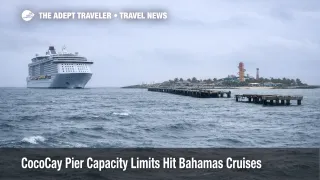
Perfect Day at CocoCay in the Bahamas is now operating under ongoing docking restrictions after storm related pier damage, and the traveler impact is no longer limited to a single disrupted call. Follow on reporting indicates the pier is effectively running at reduced capacity, with only one ship per day able to dock while crews address safety issues tied to pier catwalks that fell into the water and debris that has not been fully located. That constraint matters because many Bahamas itineraries are built around two ships calling CocoCay on the same day, so a one ship limit turns the schedule into a rolling triage problem that can force last minute diversions.
Early examples show how the restriction propagates. Guest communications described Freedom of the Seas skipping CocoCay and shifting to a sea day, then adding Cabo Rojo, Dominican Republic, while other sailings have swapped CocoCay for Freeport, Bahamas, or simply lost the port day entirely. The key update for travelers is that this is not just an isolated weather cancellation, it is an operational constraint that can keep affecting multiple sailings until the damaged side is cleared, repaired, and declared safe.
Who Is Affected
The primary impact group is travelers booked on Royal Caribbean International and Celebrity Cruises itineraries that include Perfect Day at CocoCay over the next two weeks, especially three to five night Bahamas loops where CocoCay is the main value anchor and there are limited substitute ports within range. When a short sailing loses its private island day, the substitution options tend to be a sea day, Nassau, an alternate Bahamas port such as Freeport, or a longer reach port swap that changes the timing and the onboard feel.
A second group at risk is anyone with prepaid CocoCay specific spend, including beach club add ons, day passes, waterpark plans, and shore excursions. Cruise line sold items are typically the easiest to unwind because they are tied to the sailing and can be auto cancelled when the port is removed, but the friction rises quickly for independent bookings, third party vendors, and nonrefundable travel stacked around a specific port day.
A third group is travelers whose cruise timing is tightly coupled to flights, hotels, and transfers. A port swap does not always change the embarkation or debarkation day, but it can change the pacing of the trip, including when travelers feel pressure to rebook excursions, rearrange dining, or manage childcare and accessibility needs on a newly added sea day. That behavioral layer is where misconnect risk and hotel change fees often show up, even when the ship stays on schedule.
What Travelers Should Do
Start with immediate verification and buffers. Open the cruise line app twice a day if you are within seven days of sailing, and screenshot the itinerary, port hours, and any captain or guest services notices so you have a stable record if the plan changes again. If you booked independent shore plans that assumed CocoCay, contact those vendors now and ask what happens if your ship is diverted, because their weather and port cancellation policies can be stricter than the cruise line's.
Use a decision threshold to choose rebooking versus waiting. If CocoCay is the reason you chose the sailing, treat the current environment as a high probability of disappointment on any day where two ships are scheduled, and price alternative dates or longer itineraries that do not rely on a single private island stop. If your goal is mainly ship time and you can accept an added sea day, it can be rational to hold, but only after you decide what you would do with that reclaimed day onboard and what costs you might still eat on independent plans.
Monitor three concrete signals over the next 24 to 72 hours. First, watch for any indication that the pier has returned to two ship operations, because that is the switch that meaningfully reduces last minute triage. Second, watch whether the line is diverting the same class of ships repeatedly, which can hint at how they are prioritizing capacity, for example higher guest counts, tighter overall routing, or fewer workable alternate ports. Third, watch sea state and wind forecasts for the Bahamas chain, because even if one berth is usable, rough conditions can still complicate approach and departure windows and raise the odds of a conservative skip.
For context on the initial disruption and why two ship days are the fragile point, see CocoCay Pier Damage Hits Royal Caribbean Calls. For a recent example of how weather and port posture can turn a short Bahamas run into sea days, see Celebrity Reflection Fort Lauderdale Cruise To Nowhere. If your trip stack includes nonrefundable air or hotels, revisit coverage basics at Travel Insurance.
How It Works
CocoCay is designed for predictable, high throughput guest flow, and that design assumes its pier can safely berth multiple ships across the operating day. When one side is restricted, the first order effect is simple, there is less berthing capacity, so not every scheduled ship can dock. The second order ripple is what travelers feel, because the cruise line has to choose winners and losers on days with two scheduled calls, and the losing ship must be rerouted into a sea day or an alternate port with whatever berthing inventory is available at short notice.
That reroute decision then spreads across at least two other layers of the travel system. One layer is shore side capacity, when multiple ships are pushed into the same substitute ports, excursions and beach inventory tighten, and the port day can feel more crowded and more expensive than planned. Another layer is traveler logistics, a changed port mix alters what guests try to reserve onboard, which can change demand for dining, spa, and paid activities on what becomes an unplanned sea day, and it can change the timing of trip management tasks such as rebooking flights, shifting hotels, or handling travel advisor coordination for groups.
The practical takeaway is that pier capacity limits behave like a rolling operational constraint, not a one time disruption. Until the damaged side is cleared and reopened, travelers should assume CocoCay remains conditional, especially on the highest density Bahamas sailing dates.