

Carnival Adds Second Baltimore Ship for 2027 28
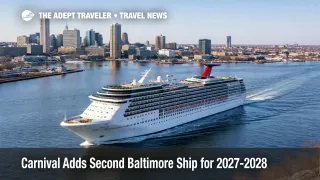
Carnival Cruise Line is expanding its Baltimore, Maryland, footprint by adding a second homeported ship for the 2027 28 season. Beginning in fall 2027, Carnival Miracle will join Carnival Pride in Baltimore, creating the first season where Carnival homeports two ships from the Port of Baltimore. For travelers, the practical change is more itinerary variety and more sailing length options from the same drive to port, which can reduce the need to connect through Florida when you want longer Eastern Caribbean routes or extended Carnival Journeys voyages.
The Carnival adds second Baltimore ship announcement matters because it reshapes what a Mid Atlantic cruise plan can look like without flying, especially for families and groups who want a wider set of seven to 14 day choices while keeping embarkation logistics simple.
Carnival says Carnival Miracle will operate seven, eight, and nine day itineraries to the Bahamas and the Eastern Caribbean, and will also offer extended 12 and 14 day voyages that include stops such as Dominica, Guadeloupe, and St. Maarten. The line also tied the change to a specific ship movement, noting that Miracle is scheduled to arrive in Baltimore on November 20, 2027, after a 15 day transatlantic sailing from Civitavecchia, Italy. Carnival's president Christine Duffy framed the move as a long term commitment to the homeport, describing Baltimore as a key base for more than two decades, and positioning the second ship as a way to expand itinerary variety for guests.
Who Is Affected
The most directly affected travelers are anyone who prefers driving to a cruise rather than flying, particularly guests across Maryland, Virginia, Pennsylvania, West Virginia, Delaware, and the Washington region who can reach Baltimore in a single day. A second ship in the same homeport typically means more weekly departure patterns and more cabin inventory, which can change both pricing behavior and availability for peak periods such as summer sailings, school breaks, and holiday weeks.
Travelers who plan longer Caribbean itineraries from Baltimore are also affected, because longer sailings can be harder to find from northern homeports, and they can require careful calendar planning around work schedules and childcare. When a line adds longer voyages from a regional port, it can reduce the need to book a separate flight to Florida just to reach a 12 or 14 day itinerary. That matters most for travelers who want to minimize connection risk, baggage friction, and pre cruise hotel nights.
The change also touches travelers who do fly into the region to start a cruise, because two ships can concentrate weekend demand for hotels, rides, and parking around embarkation and debarkation cycles. Even when the ships sail on different days, a two ship homeport season can increase background demand for airport arrivals, last mile ground transfers, and post cruise overnights, especially when weather or operational issues create late returns that push travelers into unplanned hotel nights.
Carnival also confirmed that Carnival Pride will continue year round cruising from Baltimore, with seven day Bahamas sailings, seven day Bermuda cruises, and additional nine, 12, and 14 day options. For repeat Baltimore cruisers, that continuity matters as much as the incremental Miracle capacity, because it suggests the homeport remains a stable long term option rather than a limited seasonal experiment.
Finally, the announcement affects travelers considering Carnival Firenze, because Carnival updated Firenze's 2027 28 deployment. The ship is set to homeport in Port Canaveral, Florida, beginning in fall 2027 with four to 14 day Caribbean itineraries, and Carnival also lists an 11 day Carnival Journeys Southern Caribbean sailing departing Miami on May 16, 2027 that ends in New York City before the ship repositions to a seasonal New York homeport.
What Travelers Should Do
Start with booking mechanics and buffers. If Baltimore is your preferred drive to port option, treat the two ship season as a reason to compare dates and itinerary lengths early, then lock in the sailing that best matches your vacation window once schedules and pricing open. For embarkation days, plan ground logistics as if parking and nearby hotels will be tighter than a single ship season, especially on weekends, and build a conservative arrival buffer so traffic, weather, or check in congestion does not turn into a missed boarding window.
Use a decision threshold for how you choose between Baltimore and Florida. If your top priority is minimizing flights and reducing misconnect risk, Baltimore becomes more competitive as itinerary lengths expand, particularly when you can find an eight to 14 day route that would otherwise require flying to Florida. If your priority is the lowest fare and maximum sailing frequency, you should still price compare against Port Canaveral options, because Florida homeports often have more ships, more weekly departures, and more last minute inventory, even after Baltimore adds a second vessel.
Over the next 24 to 72 hours after schedules post, monitor three practical details that can change the real value of this deployment. Watch which specific Miracle sailings include the longer Eastern Caribbean routing versus nearer Bahamas patterns, watch whether Pride and Miracle departure days cluster on the same weekends that drive hotel and parking demand, and watch Firenze's exact timing for its Port Canaveral start and its May 16, 2027 Miami to New York City itinerary if you are planning an open jaw trip. If you are stacking flights or nonrefundable hotels around any cruise, keep the broader cruise reality in mind, ports can change and itinerary timing can shift, as recent coverage of Bahamas Cruise Port Swaps Rise in High Winds and CocoCay Pier Capacity Limits Hit Bahamas Cruises shows in a different context.
Background
Cruise deployment announcements look like simple schedule expansions, but they propagate through the travel system in predictable ways. The first order impact starts at the homeport, adding a ship increases the number of embarkation and debarkation cycles, which raises demand for terminal staffing, parking throughput, rideshare availability, and nearby pre cruise hotel inventory. Even travelers who drive can feel this, because heavier weekend volume can change how early you need to arrive, how long bag drop takes, and how quickly traffic backs up around terminal approaches.
Second order effects show up across at least two more layers. One layer is air and rail connectivity, when more cruisers choose to fly into Baltimore or Washington area airports to join a sailing, flight arrival banks and local ground transfers can become more price sensitive during peak embarkation days. Another layer is itinerary and operations, long voyages such as 12 and 14 day sailings are more exposed to downstream disruption recovery, because a late return can compress turnaround time and can force last minute adjustments to boarding windows, shore day timing, and in rare cases itinerary sequencing. That is why travelers planning complex cruise stacks, such as pre cruise events or same day flights home, should treat cruise schedules as a plan that can change, not as a fixed appointment.
In Firenze's case, shifting to Port Canaveral adds another capacity layer, Florida homeports can support frequent Caribbean loops, but they also sit inside weather and port availability dynamics that can reshape port calls. The practical takeaway is that new capacity usually improves choice, but it does not remove the need for conservative buffers when you build a trip around fixed dates.
Sources
- Carnival Cruise Line Expands Baltimore Presence with Second Ship for 2027/28 Season
- Carnival Cruise Line Adds Ship in Baltimore, Expands New Sailings for 2027/28 Season
- Carnival Cruise Line Expands Baltimore Deployment with Second Ship for 2027/28
- 11 Day Southern Caribbean Cruise from Miami, Carnival Firenze, Sail Date May 16, 2027