

Strait of Gibraltar Ferries Disrupted by Storm Leonardo
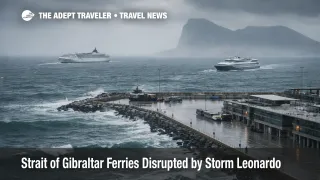
Storm Leonardo disrupted marine operations in the Strait of Gibraltar corridor, forcing port level suspensions that spilled into ferry cancellations and rolling restarts around Algeciras, Spain, and Gibraltar. Travelers moving between southern Spain, Gibraltar, and northern Morocco saw schedules break with little lead time as wind and sea conditions crossed operating limits. The practical next step is to treat the crossing as time critical transport, verify status close to departure, and be ready to shift to alternate ports or an overnight buffer.
The Strait of Gibraltar ferries disrupted pattern matters because it removes a key cross border choke point for road trips, tour circuits, and cruise adjacent travel that relies on predictable short sea transfers.
Operationally, this disruption has not behaved like a single closure notice. Reports and port updates show stoppages that can clear briefly, then return, which is why you may see Algeciras resume some departures while the faster Tarifa to Tangier City link remains suspended. For recent corridor context on how quickly this system can pause even outside major storms, see Gibraltar Port Work Suspension Delays Strait Ferries and Tangier Tarifa Ferry Suspensions During Morocco Storms.
Who Is Affected
Foot passengers using the fastest crossings are typically the first group stranded when wind and swell spike, because high speed craft and port approaches can hit safety thresholds quickly. Vehicle travelers face a different constraint, even when a restart window opens, the next operating sailing can fill immediately, and the queue that follows can consume the rest of the day.
Travelers chaining the ferry to timed onward plans are the highest risk group. That includes rail connections deeper into Andalusia, fixed check in deadlines, guided departures, and same day flights out of Málaga Costa del Sol Airport (AGP), Gibraltar International Airport (GIB), or Tangier Ibn Battuta Airport (TNG). When your itinerary is split across separate tickets, a ferry cancellation can become a full day loss because neither side is obligated to protect the downstream segment.
Cruise adjacent travelers can also get hit indirectly. When ports suspend movements, pilots, tugs, and berth windows can tighten, and restart periods can bunch vessel calls. Even if your cruise is not embarking in Algeciras or Gibraltar, knock on port service constraints in the region can pressure schedules and shore time reliability, especially when multiple operators are trying to recover at once.
What Travelers Should Do
Start with verification and buffer discipline. Check the port level status first, then your operator, and only then commit to a long drive into Tarifa or Algeciras, because restart signals can change within hours when gusts and sea state fluctuate. If you are traveling by car, plan for slower approaches and holding patterns near terminals, particularly when freight access is restricted and traffic backs up.
Use decision thresholds instead of waiting on the pier. If your crossing is canceled, or if earlier departures on your route are being pulled in blocks, set a cutoff time where you rebook to a later sailing, switch to an alternate port pairing, or move to an overnight plan. Waiting for a same day restart is often the most expensive option once hotels tighten and the first restarted sailings sell out.
Over the next 24 to 72 hours, monitor the triggers that actually restart the system. Wind speed and gust guidance is the core variable, but the practical signal for travelers is whether ports declare full movements restored, and whether operators complete several consecutive departures on time. A single resumed sailing does not mean the corridor is stable, it can be a brief weather window that closes again.
How It Works
A Strait crossing disruption propagates through multiple layers of the travel system. The first order failure is at the waterline, when wind direction, gust strength, and sea state make berthing, pilotage, and high speed craft operations unsafe, ports suspend movements, and ferry operators cancel blocks of departures rather than risk an arrival they cannot complete.
The second layer is recovery sequencing. When vessels and crews are out of order, operators rebuild the lineup, ports meter departures to manage terminal and harbor safety, and the restarted schedule often comes back in uneven steps. That is why Algeciras can resume selected routes while Tarifa remains paused, and why published timetables can be less useful than live sailing boards during a storm week.
Second order ripples show up away from the pier. When sailings bunch after a restart, ground transport demand spikes on both shores at the same time, and road access near terminals can slow. Accommodation becomes a key pressure valve, because a missed crossing becomes an unplanned overnight, and inventory can tighten quickly in Algeciras, Tarifa, Tangier, and Gibraltar as many travelers make the same decision simultaneously. The broader Storm Leonardo pattern also matters because flooding and transport disruption inland can reduce the quality of backup options, making it harder to pivot to rail or long reroutes if the Strait does not stabilize.
Sources
- Red alert for strong winds and rain
- Weather & Tide
- Puerto de Algeciras status update on Storm Leonardo closures
- Port of Algeciras resumes crossings with Tanger Med
- Algeciras and Tarifa ports suspend Tangier connections due to severe weather
- More storms coming as Leonardo swells rivers, bursts aquifers in Spain, Portugal