

EU EES Biometric Border Queues Risk Summer 2026
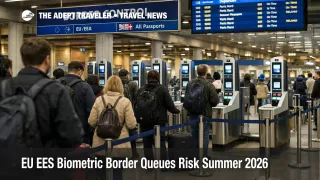
Travel industry groups are warning that the European Union's new biometric Entry Exit System, also called EES, could create significant queues and knock on disruption as enrollment expands during the 2026 peak season. The travelers most exposed are non EU visitors entering the Schengen Area for the first time since the phased rollout began, plus anyone crossing the UK Schengen boundary at high volume "juxtaposed" controls. If your itinerary relies on tight connections, the practical move is to add time buffers, reduce reliance on separate tickets, and plan a fall back route that still works if border processing slows.
The underlying risk is not just a slower passport glance. EES replaces routine stamping for covered travelers with a registration step that can include fingerprints and a facial image at the border, then it logs entry and exit events to track short stay compliance. The phased approach means processing time can vary sharply by airport, port, and lane as kiosks, staffing, and local procedures change, which is why queue forecasts matter most at peak arrival banks and at pinch points where space is limited.
Who Is Affected
Queue risk concentrates where many travelers funnel through limited border infrastructure, especially at major Schengen airports handling long haul arrivals, busy ferry terminals, and road crossings where vehicle queues can back up into surrounding roads. It is also unusually concentrated on British soil at juxtaposed border controls where French entry checks happen before departure, including London St Pancras International for Eurostar, plus Channel Tunnel and ferry interfaces tied to Folkestone and Dover. When the physical footprint is constrained, even a modest increase in per passenger processing time can cascade into missed train departures and crowding that then slows the line further.
Families and groups are more exposed because the line typically moves at the pace of the slowest first time enrollment, and because regrouping after split processing is harder in crowded control halls. Travelers on separate tickets are also more exposed because a late inbound train or delayed border clearance can void the protections that would normally rebook you automatically. The same pattern hits cruise and tour schedules when arrival windows are tight, because late check ins can force dropped excursions, missed embarkation cutoffs, or last minute hotel nights in gateway cities.
What Travelers Should Do
If you are traveling in the next few months, assume EES processing time will remain volatile even when the system is technically "working." Build a larger buffer at the first Schengen entry point, and avoid planning a same day rail or ferry connection that leaves you with only a slim margin once you include deplaning, immigration, baggage, and station transfers. If you must connect, choose earlier arrivals, and pick itineraries that keep your onward segment on the same booking so reaccommodation is simpler when queues spike.
Set a clear decision threshold before you depart. If your plan depends on making a specific train, flight, or sailing, and your realistic border margin is under what you would normally tolerate during peak travel, rebook now rather than gambling on a smooth day. For many travelers, that means paying for a refundable change option, shifting to an earlier departure, or adding a planned overnight near the border node so a delay does not collapse the entire trip.
Over the next 24 to 72 hours before travel, monitor operational signals rather than generic headlines. Watch your carrier for station or terminal specific instructions, check whether your arrival airport or port is reporting long border waits, and look for any notices that biometric checks are being paused or scaled differently at a specific location. Recent examples of localized adjustments are a reminder that procedures may change quickly, so keep your documents accessible, and expect staff to reroute you between kiosks and staffed desks depending on the day's configuration. For travelers transiting the United Kingdom en route to Europe, make sure your UK side entry requirements are also settled to avoid denied boarding compounding the border risk. UK Entry Requirements For Tourists In 2026 Lisbon Airport Pauses EES Border Checks Until March Schengen EES Biometric Queues At Airports And Ports Rise
Background
The Entry Exit System is an EU wide border technology change for the Schengen Area's external borders. For most short stay visitors from outside the EU and European Economic Area, it records entry and exit events digitally, and it can collect biometric identifiers such as fingerprints and a facial image during first time enrollment. The goal is to modernize border records and help enforce the short stay limit, but the travel system impact comes from throughput, not intent.
First order effects show up at the border control itself. A longer per passenger transaction time, even by a small amount, reduces the number of people a lane can process per hour. When arrivals are banked, that bottleneck turns into a line, and the line becomes self reinforcing as crowding complicates queue management, pushes people into the wrong lane, and increases the time it takes to handle exceptions such as minors, worn fingerprints, or document issues.
Second order ripples then spread across at least two other layers. On the transport side, missed departures create rebooking surges that can wipe out later train, flight, and ferry inventory, which raises costs and pushes travelers into next day options. On the ground side, those forced overnights compress hotel availability near border nodes and major stations, and that compression can then disrupt tours, transfers, and cruise embarkation timing because groups do not arrive when planned. This is why industry bodies are pushing for clear contingency options, including the ability to pause or scale biometric checks during peak demand to prevent multi modal gridlock.
Sources
- Summer travel disruption fears over new biometric checks at European borders
- Flexibility to pause EES over summer vital to avoid 'five hour queues'
- Upcoming changes for travel to Europe
- The pre registration devices for Entry Exit Sytem EES
- Eurostar written evidence to UK Parliament on EES and juxtaposed controls