

American Airlines Pilot Union Talks Raise Delay Risk
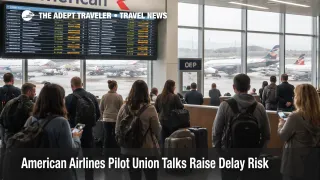
American Airlines CEO Robert Isom told the Allied Pilots Association that he will meet with union leaders as soon as possible after the group asked to present its concerns directly to the airline's board. The request reflects rising pilot frustration with what the union describes as persistent operational, cultural, and strategic shortcomings at the carrier. For travelers, the practical takeaway is not that schedules change immediately, but that operational reliability, recovery performance, and customer support processes are under sharper internal pressure right as winter disruption risk remains high.
The union's push arrives in the shadow of the late January Winter Storm Fern disruption, which triggered extensive cancellations and a messy recovery at key hubs, and it also lands amid investor scrutiny of American's ability to close a profitability gap with competitors. In recent public reporting, American has also flagged a meaningful financial hit from the storm and described Fern as an unusually large disruption in its own operating history, which matters because carrier recovery choices, staffing resilience, and spare capacity are all constrained when margins are thin.
Who Is Affected
Travelers flying American Airlines are most exposed when their itineraries depend on hub performance, especially connection heavy routings that run through Dallas Fort Worth International Airport (DFW), Charlotte Douglas International Airport (CLT), Chicago O'Hare International Airport (ORD), Miami International Airport (MIA), or Phoenix Sky Harbor International Airport (PHX). In stable operations, those hubs enable dense schedules and same day connections, but during large weather events the same hub structure can magnify problems, because one stalled bank of departures can strand both passengers and crews, and it can also displace aircraft needed for later flights.
Passengers on regional feeder flights are another high exposure group, because recovery playbooks often protect long haul and mainline departures by trimming short segments to free gates and crews. That is how a traveler can see the long flight still operate while the short hop that makes the itinerary viable disappears, and that pattern can break international trips even when the destination weather is fine.
Business travelers, groups, and anyone with hard arrival windows, such as cruise embarkations, conferences, weddings, medical appointments, and prepaid tours, should treat this moment as a signal to plan more conservatively for winter and shoulder season travel. When an airline is under internal operational review, the near term traveler risk is not the meeting itself, it is that the next major disruption becomes a stress test for recovery staffing, hotel sourcing, call center capacity, and self service rebooking tools, all at once.
What Travelers Should Do
If you have American travel booked in winter sensitive corridors, rebuild the itinerary around buffers that match your downside. That means earlier departures over last flights of the day, longer hub connections over minimum connect times, and fewer separate ticket handoffs that the airline is not obligated to protect. If you cannot avoid a tight hub connect, choose a routing where a same day fallback exists, and where you would accept the alternative without losing the trip's purpose.
Use a decision threshold for rebooking versus waiting that is based on arrival certainty, not hope. If your first delay erases the buffer you built, or if your connection relies on a single gate to gate sprint with no later flight options, move early while seats still exist. If you can tolerate a later arrival, and later flights remain plentiful, waiting can be rational, but only if you are watching the hub wide picture and not just your gate screen.
Over the next 24 to 72 hours before departure, monitor three layers, the forecast along your hub path, American's travel alerts and waiver rules, and the hub's recovery posture as seen in rolling delays and late day cancellations. Keep your receipts, screenshots, and a short timeline of what happened and when you sought help, because those details often decide whether you can recover costs through employer policy, travel insurance, or a carrier reimbursement request.
For practical tools that can reduce time lost during disruptions, see American Airlines App Update Adds Delay Rebooking Tools. For storm recovery mechanics at American's hubs, see Storm Fern American Airlines Recovery Strains Crews.
How It Works
Labor confidence issues do not cancel flights by themselves, but they can shape how quickly an airline recovers when the system breaks. The first order disruption layer is the operational event, such as a winter storm that reduces airport movement rates through deicing constraints, low visibility, and extended taxi times. When cancellations spike, aircraft and crews end up out of position, and the published schedule becomes less predictive because dispatch, crew scheduling, and station operations are rebuilding the network in real time.
The second order ripple is where travelers feel the cost. Crew legality rules mean pilots must have required rest, and they must physically reach the aircraft, which can be difficult when hub hotels sell out and ground transport slows. Hotel availability becomes operational infrastructure, not comfort, because without rooms crews cannot rest, and without rest flights cannot legally depart. That constraint then spills into passenger outcomes, because displaced travelers compete for the same limited inventory of seats, rooms, and rides, especially near hub airports.
When financial pressure is added to this system, airlines have less slack, fewer spare aircraft, tighter staffing, and more sensitivity to any bottleneck, whether it is weather, air traffic control flow limits, or technology strain during mass rebooking. That is why a governance and labor dialogue matters to travelers, even without an announced work action, because it signals how intensely the airline is being forced to examine recovery performance, staffing resilience, and customer support design before the next peak disruption.
For broader context on why system level constraints can persist beyond local weather, and how capacity limits ripple nationally, U.S. Air Traffic Control Privatization: Reality Check provides a structured explanation.