

Storm Marta Strait of Gibraltar Ferries Cancelled
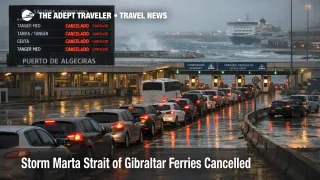
Storm Marta disrupted maritime operations across the Strait of Gibraltar corridor, forcing widespread ferry cancellations and rolling pauses between southern Spain and northern Morocco. Travelers bound for Morocco, and the Spanish enclave of Ceuta, saw schedules break with little lead time as wind, and sea state, crossed operating limits around Algeciras, Spain, Tarifa, Spain, and the Tangier ports. The travelers most affected are those with vehicles, or onward connections on separate tickets, because portside queues, and sold out restart departures, can turn a short crossing into a full day loss. The practical next step is to treat the crossing as time critical transport, verify port level status before you drive to the terminal, and be ready to pivot to an alternate route, an overnight buffer, or a flight.
The Storm Marta Strait ferries disruption intensified on February 7, 2026, after sailings from Algeciras toward Tanger Med were cancelled when the Moroccan port closed operations for safety, and Tarifa also suspended its Tangier City passenger link under deteriorating conditions.
Who Is Affected
Foot passengers on the fast crossings are often stranded first, because high speed craft can hit wind, and swell, limits earlier than conventional ferries. Vehicle travelers face a different constraint, even when a restart window opens, space can disappear quickly, and the approach roads, and holding areas, can lock into long queues once ports meter access. Freight restrictions can also reshape terminal flow, because limiting truck access reduces pier congestion in one layer, but it can push queues into staging areas outside the port, complicating arrival timing for passenger vehicles.
Travelers chaining the crossing to timed onward plans are the highest risk group. That includes rail connections deeper into Andalusia, fixed hotel check in deadlines, guided departures, and same day flights from Gibraltar International Airport (GIB), Málaga Costa del Sol Airport (AGP), or Tangier Ibn Battuta Airport (TNG). When your itinerary is split across separate tickets, a ferry cancellation is not automatically protected by the airline, or rail operator, and reaccommodation tends to get harder as the day goes on and inventory tightens near ports.
What Travelers Should Do
Start with verification, and buffers, not hope. Check port level status first, then your operator's live notices, because a route can look "open" in a timetable while departures are being cancelled in blocks. If you are driving, do not commit to the last stretch into Algeciras or Tarifa until you can see a specific sailing operating, and you have a realistic plan for how long you can sit in a vehicle queue without breaking the rest of your itinerary.
Use decision thresholds to avoid being trapped at the terminal. If your crossing is cancelled, or if earlier departures on your route are being pulled, set a cutoff where you either rebook to a later confirmed sailing, switch to a different port pairing, or pivot to an overnight plan. If you must arrive in Morocco by a fixed hour, or you are protecting a flight, switching to air, or delaying the crossing, is usually cheaper than waiting until late afternoon when the first restarted sailings sell out, and nearby hotels compress.
Over the next 24 to 72 hours, monitor the signals that actually restart the system. Wind forecasts, and coastal hazard bulletins, matter more than rain totals for ferry go, no go decisions, and ports can tighten access again if conditions wobble. Your practical traveler signal is whether ports and operators complete several consecutive departures on time, because a single resumed sailing can be a brief window that closes again. If you see bunching after a restart, assume border processing, and onward ground transport, will slow as several ferry loads arrive close together.
How It Works
A Strait crossing disruption propagates through multiple layers of the travel system. The first order failure is at the waterline, when crosswinds, gust strength, and sea state make approaches, berthing, or high speed craft operations unsafe, and ports suspend movements or operators cancel blocks of departures to avoid loading passengers onto a sailing that cannot dock reliably. During Storm Marta, Algeciras cancelled sailings toward Tanger Med after the Moroccan port closed operations, and Tarifa also suspended its Tangier City link as conditions deteriorated.
The second layer is recovery sequencing. When vessels and crews are out of order, operators rebuild the lineup, ports meter departures to manage harbor safety, and the restarted schedule often returns in uneven steps. That is why some Ceuta rotations can appear in limited windows while Morocco routes remain paused, and why the best traveler strategy is to follow port level advisories, not just a published timetable. Local reporting also noted repeated multi day disruption on the Tarifa route earlier in the week, which increases the odds that even a "reopen" day still behaves like a constrained capacity day.
Second order ripples show up away from the pier. When sailings bunch after a restart, demand spikes on both shores at the same time, and road access near terminals slows. Accommodation becomes a pressure valve, because a missed crossing becomes an unplanned overnight, and inventory can tighten quickly in Algeciras, Tarifa, Ceuta, and Tangier as many travelers make the same decision simultaneously. Weather driven disruptions inland can also reduce the quality of backup options, for example when road closures, or rail disruption, limit how easily you can reposition to a different airport, or staging city.
For related corridor context on rolling suspensions, and restart behavior, see Strait of Gibraltar Ferries Disrupted by Storm Leonardo and Tangier Tarifa Ferry Suspensions During Morocco Storms.
Sources
- Ferry services suspended in the Strait of Gibraltar as Storm Marta impacts maritime links
- La borrasca Marta paraliza el Estrecho: canceladas todas las conexiones con Marruecos
- Algeciras cancela sus salidas a Tánger Med y opera algunas con Ceuta
- Cancelaciones de barcos entre Ceuta-Algeciras por el aviso naranja en el Estrecho
- Farmers report 'catastrophic damage to crops as Storm Marta hits Spain, Portugal