

Carnival IT Outage Delays Cruise Boarding at Ports
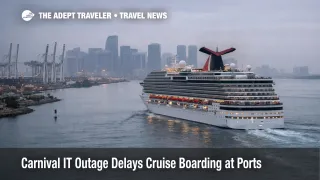
Carnival Cruise Line said an IT issue tied to planned system maintenance disrupted turnaround operations at multiple homeports, slowing both debarkation and embarkation. The disruption hit as the week began, when weather driven schedule knock ons in the Northeast had already pushed some sailings back, tightening the margin for port teams to reset ships and process the next sailing. Carnival's public statement during the incident emphasized that navigation and safety systems were working, while the line encouraged embarking guests to watch email, text, and phone updates for revised arrival guidance.
Reports from guests and cruise outlets indicated the technology impacts were not limited to terminal processing, with some passengers describing reduced functionality in the Carnival HUB app and difficulty using Carnival's website for tasks like check in and accessing documents. Cruise Industry News also reported late departures in several ports, including PortMiami departures that moved from an afternoon schedule to after midnight, which is the kind of delay that can ripple into port traffic, hotel nights, and flight planning for both arriving and departing travelers.
Who Is Affected
The most exposed travelers are those embarking on short turnaround days at busy homeports, where boarding is staged in appointment windows and the terminal experience depends on fast, sequential processing. When a check in stack slows, crowding builds outside security, baggage handoff, and boarding doors, and small delays can turn into hours when multiple ships share the same port arrival and departure band.
Disembarking guests with same day flights face the sharpest downside. A late start to debarkation compresses the entire chain, baggage retrieval, ground transport, bag drop cutoffs, and security screening, and it raises the odds of missed flights at Miami International Airport (MIA) and Fort Lauderdale Hollywood International Airport (FLL) for South Florida turnarounds. Even when flights are protected by a cruise line air program, rebooking capacity can tighten quickly when many guests miss similar departure banks.
Travelers with upcoming sailings who were not in port that day can still be affected if they need to complete online check in, download documents, or print boarding passes in the final 24 to 72 hours before sailing. That is especially relevant for guests who plan to arrive day of sailing and depend on a smooth check in window to protect hotel check out timing, transfers, and parking logistics.
What Travelers Should Do
If you are embarking within the next few days, treat your terminal appointment as conditional. Watch for Carnival messages, and time your arrival to avoid standing in outdoor queues for hours if your window is moved, and carry essentials that help you wait comfortably, including water, chargers, and any critical documents saved offline in case connectivity is unreliable.
If you are disembarking and have a same day flight, use a hard decision threshold. If debarkation is running late enough that you are likely to miss airline bag drop or your first connection bank, move immediately to rebooking, prioritize nonstop flights, and consider switching to a later departure or a next day flight plus a hotel night, rather than gambling on a shrinking margin. This is the moment where travel protection terms, airline fare rules, and ground transport reality matter more than optimism.
Over the next 24 to 72 hours, monitor for two signals: whether Carnival describes any remaining partial service issues, and whether ports report lingering backlog behavior, like late sail aways or extended boarding windows. Some coverage also included a post incident apology message attributed to Carnival's brand ambassador, and it described manual workarounds during the disruption, which is a clue that even after "systems restored," cleanup can take time in guest facing tools.
For recent, related context on how port tech failures and weather delays compound on turnaround days, see PortMiami Carnival Horizon IT Crash Delays Boarding and Carnival Sunshine Norfolk Delay Changes Port Calls.
How It Works
Cruise turnarounds are a chained operation with very little slack. Ships arrive, guests disembark in managed flows, luggage and screening processes run in parallel, cabins are reset, provisioning is loaded, and then the next sailing begins staged embarkation. Technology sits in the middle of that choreography, powering identity checks, boarding validation, appointment management, and the communications loop that tells guests when to arrive and where to go.
When the technology layer slows, the first order impact is straightforward: debarkation and embarkation take longer, lines get denser, and staff shift to manual exception handling. The second order ripple spreads across at least two other layers of the travel system. One layer is air travel and ground transfers, because delayed disembarkation pushes guests into later, more expensive rideshare windows and increases missed flight risk, which then loads airline rebooking desks and reduces seat availability for other travelers. A second layer is ship and crew flow, because late departures can force speed changes, port time adjustments, or itinerary tweaks to protect the next week's arrival slot and the port's capacity plan.
This episode also shows how disruptions stack. TravelPulse reported that weather in the Northeast had already pushed some sailings back about a day, and that matters because weather delays compress the same turnaround timeline that an IT slowdown depends on. In practice, that means the same technical problem can feel worse at the start of a week when multiple ships are trying to recover schedule at once.