

USMCA Tourism Working Group Bill Moves in Congress
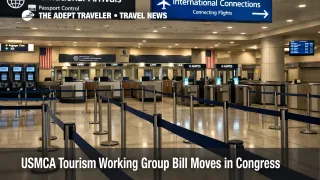
Lawmakers in Washington, D.C., moved to add travel and tourism to the formal machinery of USMCA cooperation, by introducing the USMCA Travel and Tourism Resiliency Act in the Senate on February 5, 2026, and then introducing House companion legislation on February 10, 2026. The change matters most for travelers who move between the United States, Canada, and Mexico, plus anyone building itineraries around major events where border and aviation friction can turn a normal day into a missed connection day. The practical next step is to treat this as a policy signal, monitor how the bill advances during the USMCA review cycle, and keep buffer time in cross border plans until any changes are real and implemented.
In plain terms, the bill would require the Office of the U.S. Trade Representative to prioritize creating a Travel and Tourism Trade Working Group as part of the upcoming USMCA joint review, giving the travel sector a formal seat alongside other industry working groups already contemplated under the agreement. The Senate bill is listed as S.3787 on Congress.gov, and it was referred to the Senate Finance Committee after introduction.
Who Is Affected
This development is most relevant to travelers whose trips depend on smooth cross border movement within North America, including leisure visitors, business travelers, and families using mixed itineraries that involve flights, road crossings, or onward connections through hub airports. It also matters for destinations that are especially sensitive to shifts in international visitation, including U.S. tourism markets that rely heavily on Canadian and Mexican demand, which bill sponsors and industry advocates have framed as a competitiveness issue rather than a niche concern.
Even though the bill does not change entry rules by itself, it points at a familiar failure mode in travel: when coordination is weak, small frictions multiply. A tighter screening posture, inconsistent messaging, staffing gaps, or sudden policy shifts can translate into longer processing times, missed airline connection windows, and cascading rebook pressure. Those second order effects land far from the border, because airlines protect aircraft rotations, crews time out, and the day's schedule loses slack. The net result is that a traveler who did "nothing wrong" can still wind up stuck overnight, paying for hotels, and reworking the rest of the trip.
The timing also overlaps with a high stakes policy calendar. The first USMCA six year joint review is scheduled for July 1, 2026, and the Office of the U.S. Trade Representative has already run public input activity tied to that review cycle. If the travel and tourism sector gets a dedicated working group, it could become the forum where barriers are defined, prioritized, and negotiated, which is why stakeholders are pushing to create it before the review window hardens.
What Travelers Should Do
If you have travel between the United States, Canada, and Mexico in the next few months, treat this as "watch and plan," not "rules changed." Build extra time into airport arrival and border crossing plans, keep itineraries flexible where you can, and avoid tight same day chains that depend on a perfect arrival, a fast entry process, and an on time domestic connection.
Use a decision threshold for rebooking versus waiting that is tied to implementation, not headlines. If your trip sits on a hard constraint, for example a cruise embarkation, a wedding, or a fixed day event, favor routings with more slack, even if the schedule is less convenient. If your itinerary is flexible, wait for concrete signals, like committee action, an enacted law, or agency guidance that changes traveler facing processes.
Over the next 24 to 72 hours when you are close to departure, monitor the sources that actually move outcomes. Watch your airline for schedule changes, and watch official government updates for entry documentation guidance, processing expectations, and any operational advisories. For context on how fast travel conditions can tighten around major events and public guidance shifts, see Minneapolis Travel Advisory Updates Before World Cup 2026. For a separate example of how quickly cross border demand can be reshuffled when a key market is disrupted, see Cuba Jet Fuel Shortage Halts Canada Flights Feb 10.
Background
USMCA entered into force in 2020, and it includes a formal review mechanism at the six year mark that can influence how the agreement is extended and how cooperation is structured. The Office of the U.S. Trade Representative has described the first six year joint review as occurring on July 1, 2026, and it has already hosted public hearing activity as part of preparing for that milestone.
The proposed Travel and Tourism Trade Working Group is meant to close what sponsors describe as a gap, since other sectors have had clearer working group structures while travel and tourism has not had a comparable forum inside the USMCA architecture. The Senate sponsors argue that tariffs, trade policy, and cooperation can either encourage or deter travel demand, and they frame the working group as a practical mechanism to reduce unnecessary barriers and strengthen the travel economy. House sponsors echo that logic while tying the push to peak demand conditions expected around America 250, when cross border efficiency becomes not only a convenience issue, but also a capacity and reliability issue.
From a travel system standpoint, the way this propagates is predictable. First order effects show up where travelers meet the system, at airports, land borders, and documentation checks, where clarity and staffing drive throughput. Second order ripples spread into airline and hotel operations: when arrivals bunch and processing slows, missed connections rise, rebooking demand concentrates on limited inventory, and overnight stays spike in gateway cities. A third layer hits destinations and event logistics, because uncertainty changes traveler behavior, shifting demand toward simpler itineraries, earlier arrivals, and refundable bookings, which can reshape pricing and availability long before the travel day itself. That is why the bill's core idea, a standing forum for coordination with Canada and Mexico, matters even before any specific policy proposals are on the table.
Sources
- Cortez Masto, Moran Introduce Legislation to Boost Tourism Between United States, Mexico, and Canada
- Buchanan, Bilirakis Introduce Bill to Strengthen Travel and Tourism Under USMCA
- Bilirakis and Buchanan Take Decisive Action to Boost U.S. Travel and Tourism Ahead of America's 250th Anniversary
- S.3787 (USMCA Travel and Tourism Resiliency Act) on Congress.gov
- Public Hearing on the First Joint Review of the USMCA (USTR)
- USMCA Joint Review: Process and Role of Congress (CRS)