

Darwin AMSA Inspection Hits Carnival Encounter Cruise
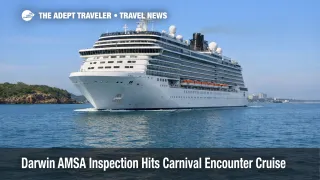
Federal investigators from the Australian Maritime Safety Authority boarded Carnival Encounter while it was docked in Darwin Harbour, Australia, after the Maritime Union of Australia said it received an anonymous whistleblower report alleging serious crew welfare problems on board. The union's summary of the allegations included overcrowded crew living conditions linked to skin infections, concerns about the quality of drinking water, and claims that some crew were pressured to work while ill. For travelers, the immediate question is whether an inspection changes the ship's schedule, or your transfer timing, and the early signal from reporting is that the inspection itself does not automatically mean itinerary disruption.
The Carnival Encounter AMSA inspection matters for travel planning because it raises the odds of short notice operational friction in port, and it increases scrutiny on crew welfare standards for ships that operate heavily in Australian waters. Even when an inspection ends without detentions or formal deficiencies, the process can still affect onboard pacing, communications, and port call timing in ways that show up as longer waits for services, or tighter gangway windows.
Who Is Affected
Guests currently sailing on Carnival Encounter, or meeting the ship in an Australian port call, are the most directly exposed to any timing knock ons. If you are combining a cruise with flights, hotels, tours, or onward connections that depend on the ship arriving and clearing on a precise schedule, you should treat port call days as higher risk for small timing shifts until the ship is fully back to routine operations.
Travelers booked on other Carnival ships in Australia are indirectly affected because the allegations and the inspection add attention to a broader question about how international labor rules are applied in coastal cruising, and what standards are practically enforced by port states. That does not translate into a day to day itinerary forecast, but it can influence traveler choices, advisor recommendations, and how closely guests monitor official channels for shipboard updates.
Travel advisors, group leaders, and travelers with accessibility needs should be extra conservative about same day choreography. When any compliance activity intersects with port operations, the first pressure point is the "last mile" chain, gangway timing, terminal flow, baggage handling, and transfers, and the second pressure point is guest services capacity, because questions and exceptions concentrate quickly in a short window.
What Travelers Should Do
If you are currently on Carnival Encounter, or boarding soon in Australia, prioritize official ship communications over third party recaps. Keep your documents, medications, chargers, and a small amount of water and snacks accessible for port days, and avoid planning tight, independent tours that assume you can step off the ship at the first possible moment.
Use a clear decision threshold for onward travel. If your plan includes a same day flight after a port call, a long drive, or a connection you would have to self rebook, protect the chain by moving to an earlier departure, adding a hotel night, or choosing a later flight that can absorb a port side delay without turning into a missed connection.
Over the next 24 to 72 hours, monitor three concrete signals. Watch for any statement from AMSA about the status of its inquiry, watch for any update from Carnival about shipboard operations in Australia, and watch port agent or terminal guidance if your itinerary involves Darwin. If you want related context on how operational frictions can compound at cruise turnarounds, see Carnival IT Outage Delays Cruise Boarding at Ports and Carnival Sunshine Norfolk Delay Changes Port Calls.
How It Works
AMSA's boarding is best understood as a port state oversight action focused on safety and welfare compliance, not as a travel advisory. Australia applies seafarer welfare oversight through its implementation of the Maritime Labour Convention framework, and AMSA can receive complaints and conduct inspections when a ship is in Australian waters or bound for an Australian port. In plain terms, that means a credible complaint can trigger inspectors to board while a ship is alongside, review documentation and conditions, interview crew, and then provide an inspection report to the master.
For travelers, the first order effects are usually limited and practical. If an inspection runs long, the ship may need more time alongside, which can compress shore time, shift gangway windows, or tighten "all aboard" enforcement. If the inspection drives internal operational adjustments, guest facing impacts can show up as slower housekeeping cycles, longer waits for guest services, or changes to how crew are scheduled in the short term.
The second order ripples spread through at least two other layers of the travel system. One layer is air and hotel planning around cruise movements, because even modest delays in docking, clearance, or disembarkation can propagate into missed flight cutoffs and unplanned hotel nights, especially when travelers booked separate tickets or nonrefundable inventory. Another layer is port operations and onward transport, because taxis, tours, and transfer providers stage vehicles and staffing around expected arrival bands, and when those bands move, capacity can thin quickly, raising prices and wait times.
It is also important to separate allegations from verified findings. The union's claims and the whistleblower summary describe serious issues, while Carnival has said AMSA inspections are routine and welcomed, and some reporting has stated the inspection found no deficiencies. Until AMSA publishes, confirms, or otherwise characterizes any outcomes, travelers should treat the episode as heightened scrutiny, not as proof of conditions on any specific sailing.
Sources
- Maritime safety regulator investigating Carnival cruise ship after whistleblower concerns
- Claims of harmful drinking water, low pay: What's happening with Carnival?
- Federal Government inspectors board Carnival Cruise ship in Darwin following whistleblower reports
- Seafarer welfare
- Make a Maritime Labour Convention (MLC) complaint
- Carnival Encounter Cruise Ship