

NYC Ferry Ice Disruption Shifts Routes Feb 13
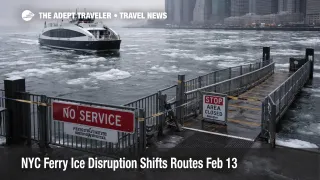
NYC Ferry service across New York City is resuming only in a limited, modified pattern for Friday, February 13, 2026, because ice conditions are still fluctuating by landing across the harbor. The practical change is not just fewer boats, it is a route map that can expand or retract day to day as ice shifts, which makes tight day planning fragile even when daytime temperatures rise. If you normally use the ferry as the clean link between waterfront neighborhoods and the subway, plan as though that layer may fail at the last minute, and build your day around rail first backups instead.
NYC Ferry's February 13 tracker shows three routes operating with landing level exclusions, and two routes still fully paused. East River service is running, but South Williamsburg remains suspended. Astoria service is running, but the Brooklyn Navy Yard landing remains suspended. Rockaway Soundview is running in a shortened pattern that excludes Sunset Park BAT and Rockaway, which means it functions more like a Bronx to Manhattan corridor with a few East Side stops than a true cross borough line for most riders.
St. George and South Brooklyn are not operating, which removes two of the network's biggest capacity relievers for Lower Manhattan and the Brooklyn waterfront. Even on operating routes, NYC Ferry has warned that lingering ice effects can still produce delays or temporary adjustments. NYC Ferry is also layering temporary schedule changes tied to East 34th Street landing construction through February 20, which matters because an already reduced network can lose time quickly when vessels have to meter docking and departures at a key Manhattan stop.
Who Is Affected
Commuters and visitors who stay near waterfront landings, and who normally use the ferry to avoid slower crosstown surface travel, are the most exposed group on February 13. The risk is highest when a plan depends on a specific headway or a timed arrival, because a partial network can slip, or reconfigure, in ways that are hard to recover from mid trip. Travelers moving between Long Island City, Greenpoint, Williamsburg, DUMBO, and Lower Manhattan can still have useful options if their specific landing is operating, but they should assume that any shoreline segment with recurring ice can force a last minute downgrade.
Airport bound travelers are a second high risk group, even though NYC Ferry does not directly serve terminals. Many efficient airport routings start with a predictable hop to a subway trunk, then a clean transfer to airport connectors. When a ferry segment is uncertain, the failure mode is arriving late to the rail network, then getting trapped behind the next train gap, platform crowding, or a slower bus leg that was never in the original plan. This is where missed check in windows, rebooking fees, and same day connection losses show up, especially for departures tied to John F. Kennedy International Airport (JFK), LaGuardia Airport (LGA), and Newark Liberty International Airport (EWR).
A third affected group is anyone stacking timed tourism pieces, including timed museum entry, tours with hard meet points, dining reservations, and Broadway curtain times. The first order impact is simply being late. The second order ripple is the cost of recovery, rideshare surge pricing, wasted ticket value, and itinerary reshuffling that pushes stress into the rest of the day. When the ferry layer is unreliable, more travelers shift onto the same subway corridors and the same bridges and tunnels, which can slow surface traffic, tighten taxi supply, and degrade the very backup options people expect to use.
What Travelers Should Do
Act immediately by choosing your alternate routing before you leave your hotel or apartment, not at the landing. If your ferry plan was a short hop to Wall Street Pier 11, DUMBO, or a Midtown East landing, anchor your trip on the nearest subway station first, then treat the waterfront walk or bus as the variable leg that you can absorb. If you are traveling with luggage, plan for slower transfers, stairs, and longer platform walks, and avoid itineraries that require multiple tight line changes.
Use a clear decision threshold to rebook versus wait. If you have a hard cutoff within the next two to three hours, including an airport check in window, an intercity rail departure, or a non movable tour start, do not gamble on a partial service day holding steady. Commit to the subway based route, and add enough cushion that a single missed train does not break the plan. Waiting can be rational only when your day is flexible, you have a nearby rail fallback, and a delayed arrival does not carry financial penalties.
Over the next 24 to 72 hours, monitor NYC Ferry's end of day tracker updates and the in app schedules, because the operator is making landing decisions daily based on whether docks are consistently clear and safe. Also monitor overnight temperatures and wind, because refreezing and ice drift can reverse a daytime improvement by morning. The most useful signal is whether NYC Ferry continues to add landings without retracting them the next day, which suggests stability, not just a brief thaw. If you need high reliability, favor rail first routing until the network returns to normal, predictable service.
Background
NYC Ferry disruptions from ice are primarily an operations and docking problem, not a simple question of whether a boat can move through water. Ice can accumulate unevenly by shoreline, and wind can push floes into specific landings, gangways, and pilings, which makes safe approaches and secure docking unreliable even when channels look passable. Because NYC Ferry is a network, the constraint at a few landings can ripple into vessel staging, schedule adherence, and the ability to keep headways consistent across an entire route.
That is why partial resumptions tend to appear as landing by landing decisions, and why the system can reopen on some corridors while others remain paused. When service is reduced, displaced riders shift onto the subway, buses, and streets, which raises crowding at transfer stations, increases variability in surface traffic, and amplifies small delays into missed connections. The second order ripple is not limited to transit, it shows up in tourism timing, dining and event attendance, and airport transfer reliability when travelers abandon ferry legs and compete for the same rideshare supply.
For additional context on how this ice cycle has been affecting waterfront trip planning, see NYC Ferry Ice Shutdown Delays Waterfront Travel and NYC Ferry Ice Suspension Disrupts East River Trips.