

NYC Ferry Ice Suspension Disrupts East River Trips
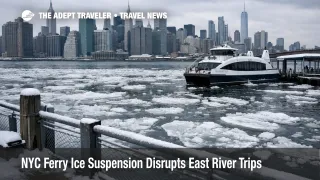
NYC Ferry paused operations because heavy ice in local waterways made docking and safe, predictable service unreliable across the system. The biggest impact hits visitors and commuters who depend on quick cross river trips between Manhattan, Brooklyn, Queens, the Bronx, and Staten Island route connections, especially from waterfront neighborhoods where the ferry is often the fastest link. Plan to travel as if the ferry is unavailable, pick a subway or bus alternate before you leave, and build extra time into airport runs and any timed reservations.
The change that matters for trip planning is simple: NYC Ferry ice suspension removes a high leverage transfer layer, so your itinerary becomes dependent on winter stressed subway, bus, and road corridors.
NYC Ferry's latest operator update said the pause was driven by extreme ice conditions and that it could take several more days for service to fully resume because reopening requires consistent, safe access to landings and vessels. U.S. Coast Guard icebreaking operations have been active in New York Harbor and the Hudson River to keep waterways navigable during the same cold wave, which underscores that this is not just a commuter inconvenience, it is a broader winter navigation problem that can persist even when skies are clear.
Who Is Affected
Travelers staying in or moving between East River waterfront clusters feel the disruption first. If you were using the ferry to connect between Lower Manhattan and DUMBO, between Midtown and Long Island City, or between Williamsburg and Manhattan, your replacement trip usually becomes a multi leg subway ride or a slower bus plus subway pairing, with more exposure to platform crowding and service variability. That extra variability matters more than the extra minutes because it increases missed reservation risk for timed museum entry, tours with hard meet points, and dining seatings that do not flex when you are late.
Airport travelers are the next high risk group, not because the ferry goes to the airports, but because many efficient airport routings rely on a clean handoff from waterfront areas to major subway hubs. When ferry riders shift onto the same subway trunks and the same crosstown bus corridors, the trip becomes less predictable, which is exactly what you do not want on a flight day. This is especially true for early morning departures when service headways are wider and for late evening returns when a missed connection can add a long wait.
A third group is travelers connecting to other transportation layers, including Amtrak and commuter rail at Manhattan terminals, or intercity buses at major hubs. The ferry is often used as a time saver that protects a tight connection, and when it disappears, the knock on effects show up as missed trains, last minute hotel nights, or expensive rideshare pivots. If your trip also involves regional disruptions, such as Northeast flight delay programs or winter road slowdowns, the ferry outage becomes the first domino in a cascade.
What Travelers Should Do
Start with immediate actions and buffers. Decide now which subway station or bus corridor replaces your ferry segment, then add time on top of your normal winter buffer because crowding and wait time are the real failure modes. If you have timed entry or a fixed tour meet, aim to arrive in the neighborhood early enough that a missed train or a packed platform does not break the day. If you are carrying luggage, assume stairs, longer walks, and slower transfers, and reduce tight platform changes.
Use clear decision thresholds for switching plans versus waiting. If your itinerary has a hard cutoff, like a flight check in window, a cruise boarding time, a last train of the night, or a nonrefundable timed ticket, do not gamble on a same day ferry restart. Treat any continued operator language about "several days" to reopen, or any forecast that keeps temperatures below freezing, as your trigger to commit to the alternate routing and, if needed, move reservations to later slots. Waiting is only rational when your day is flexible and you have a low cost fallback, like a nearby subway station and no timed commitments.
Monitor three things over the next 24 to 72 hours. Watch NYC Ferry status for whether the system returns in stages or with partial route constraints, because landings can be the limiting factor even when channels look passable. Watch weather and ice conditions, including whether daytime highs climb above freezing long enough to flush ice out of the harbor rather than refreeze overnight. Watch your personal choke points, namely the subway hubs you must pass through and the bridge and tunnel approaches near your pickup or drop off, because that is where crowding and surge pricing tend to appear first.
For airport departures during the disruption window, build your plan around the most reliable transit spine for your origin. For John F. Kennedy International Airport, the most resilient public transit pattern is usually subway or LIRR into Jamaica or Howard Beach, then AirTrain to the terminals, because it avoids most bridge and tunnel traffic variability. For LaGuardia Airport, plan for the Q70 LaGuardia Link from Jackson Heights, or the M60 SBS from Manhattan, and assume queues can grow when more travelers shift off rideshare. For Newark Liberty International Airport, the cleanest rail based option is typically NJ Transit to the airport rail station, then AirTrain into the terminals, and you should treat highway based rides as the higher variance choice in winter congestion. If you want a same week snapshot of broader airport delay risk that can compound these ground transfer issues, see Flight Delays and Airport Impacts: February 2, 2026. If you want a comparable example of how ice creates rolling, hard to predict ferry reliability even after conditions "look better," see Ice Cancels Cape May Lewes Ferry Sailings Feb 2.
Background
Ice driven ferry shutdowns propagate through the travel system in layers. The first order effect is at the source: vessels must slow, landings become difficult to approach safely, and schedules stop being predictable enough to publish and keep. When docking is the constraint, operators can be forced into system wide pauses because a network that cannot guarantee landings creates safety risk and rider chaos, even if some segments appear physically navigable.
The second order ripple hits at least two other layers quickly. Connections and transfer hubs take the first hit because ferry riders shift to a small set of subway trunks and bus corridors, which increases dwell time, platform crowding, and missed transfers. That crowding then changes road behavior, as more people choose rideshare or taxis, pushing demand toward bridges and tunnels where winter traffic is already more fragile. Airport access sits on top of both layers, so a ferry disruption that starts as a local waterfront problem can become an airport reliability problem once travelers compress into the same few transit corridors, especially during peak departure banks.
The broader navigation context matters, too. Port Authority of New York and New Jersey airports and regional rail links do not depend on the ferry directly, but they do depend on reliable ground access and predictable travel times. Meanwhile, the Coast Guard's winter operations show that ice can become a region wide constraint affecting commercial traffic, fuel deliveries, and public transportation, which is why ferry service can remain paused until conditions are consistently safe rather than briefly passable.
Sources
- NYC Ferry Service Suspension Update
- MULTIMEDIA RELEASE: Coast Guard Conducts Icebreaking Operations Amid Worsening Ice Conditions in New York Harbor and Hudson River
- NYC Ferry suspends all service until 'further notice' as ice builds in Hudson, East Rivers
- NYC, NJ ferry services disrupted by ice on Hudson River
- Public Transportation, JFK
- Public Transportation, LaGuardia
- Public Transportation, Newark
- Getting to Manhattan from LaGuardia Airport
- Newark Airport Rail Station