

Nairobi Airport Strike Delays Flights Feb 16, 2026
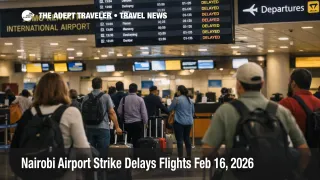
A worker strike disrupted operations at Jomo Kenyatta International Airport (NBO) in Nairobi, Kenya, creating delays across departures and arrivals on February 16, 2026. Airlines warned that air traffic control related slowdowns were affecting flight flows, and that schedules could shift as the day develops. Travelers connecting through Nairobi are the most exposed, because even modest departure spacing and late inbound arrivals can collapse tight regional connections. The practical move is to confirm your flight status before leaving for the airport, then plan for longer check in, screening, and gate waits than a normal Monday.
The Nairobi airport strike delays matter because this is no longer a planning window, it is a same day operational disruption. When the constraint is airside flow and staffing, delays do not stay neatly inside one terminal or one carrier, they stack across the day as aircraft arrive late for their next legs, gates stay occupied longer, and crews bump into duty time limits.
Who Is Affected
Passengers flying Kenya Airways, and its regional networks, should expect the most immediate exposure because Nairobi is the carrier's primary hub, and the airline has issued an advisory warning of delays and schedule adjustments tied to air traffic control impacts. Local reporting also cited delays affecting Jambojet flights, and Reuters reported that Tanzania's Precision Air flagged air traffic control delays as well, a sign the disruption is affecting multiple operators that rely on the same airport and airspace services.
Travelers are most at risk when they have a tight same day connection from a long haul arrival into a regional hop across East Africa, or when they are on separate tickets. In those cases, a late inbound can turn into a missed onward flight that is treated as a no show by the second airline, which is the fastest path to expensive last minute fares and forced overnight stays.
You should also assume second order effects beyond the terminal today. As delayed departures push arrivals later into the evening, hotels near the airport can tighten, and ground transport demand can spike in short waves when multiple flights release passengers at once. If aircraft and crews end the day out of sequence, tomorrow's schedule can inherit cancellations or further retimes even if labor activity cools, because the operation still has to reposition assets back into their planned rotations.
What Travelers Should Do
Start with immediate actions and buffers. Confirm your flight status directly with your airline before you leave for the airport, and screenshot any rebooking offers that appear in your Manage Booking flow while you still have signal and time to think. If you are checking bags, plan for slower counter and baggage acceptance throughput, and keep essentials, medication, chargers, and one change of clothes in hand luggage in case you are pushed overnight.
Use a clear decision threshold for rebooking versus waiting. If missing your connection would break a safari departure, a cruise embarkation, a wedding, a permit, or any fixed date event, the lower risk move is to reroute to a later connection, or shift travel to February 17, 2026, while inventory still exists. If your plans are flexible, and you are on a single protected ticket, it can be reasonable to wait for the airline to reaccommodate you, but only if you have a realistic same day backup and you are not relying on a separate ticket onward flight.
Over the next 24 to 72 hours, watch three things. First, airline advisories for your specific flight number, because schedule adjustments can move check in cutoffs and gate times quickly. Second, any airport or aviation authority updates about recovery and contingency measures, because those statements often signal whether the operation is stabilizing or still clearing a backlog. Third, early wave performance on February 17, 2026, because when the first bank runs late, the rest of the day often degrades as crews and aircraft fall out of position.
How It Works
Airport strikes create traveler disruption through two linked layers, landside processing and airside flow. Even if some check in and terminal functions continue, a slowdown in air traffic control and related operational services reduces the number of movements that can be handled per hour, which forces departures to wait for clearances and arrivals to sequence more slowly. That first order delay then turns into second order misses, because late arriving aircraft reach gates later, depart later for their next legs, and compress connection windows that were already tight.
Nairobi is especially sensitive to this pattern because it functions as a hinge hub for long haul arrivals, regional banks, and domestic connections. When one bank slips, rebooking demand concentrates into fewer remaining seats, which makes the next available option more expensive, and sometimes pushes travelers into an unplanned hotel night. If disruption runs late, a third ripple can show up the next day as crews time out, aircraft are out of position, and the schedule needs extra time to unwind back to normal.
For related planning context on earlier warning signals in this same labor dispute, see Kenya Airport Strike Notice Risks Nairobi Flights Feb 16 and Nairobi Airport Security Delays After System Outages.
Sources
- Worker strike delays flights at Kenya's main airport
- Flights are delayed as workers strike at Kenya's main airport
- KQ announces flight disruptions at JKIA
- Flight disruptions at JKIA amid aviation workers' strike
- "Contingency plans have been activated": Kenyan Airport Authority amid flight delays at JKIA