

The Carlton Milan Opening Ahead of Milano Cortina
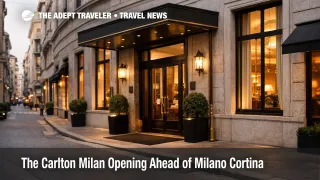
The Carlton Milan, a new Rocco Forte hotel in Milan, Italy, opened on November 6, 2025, adding 71 rooms and suites in the Quadrilatero della Moda near Via Senato and Via della Spiga. Olympics visitors, fashion district shoppers, and travelers using Milan as a base for Milano Cortina 2026 events are the most likely to feel the opening as fresh supply in a tight winter market. Travelers planning stays through February and March should book with flexible terms, lock in transfer plans early, and build buffers for city mobility constraints tied to the Games.
The Carlton Milan opening gives travelers a new luxury option in Milan's fashion district just as Milano Cortina 2026 concentrates demand into the city in February 2026 and March 2026.
The Carlton Milan opening: What Changed
Rocco Forte Hotels brought the Carlton name back to Milan with a property that has entrances on Via Senato 5 and Via della Spiga 8, a walkable base for shopping streets, museums, and the historic center. Company materials describe 71 rooms and suites designed to feel like private residences, with interiors curated by Philip Vergeylen and Paolo Moschino in collaboration with Olga Polizzi. The timing matters because it puts a fully renovated asset into the market right before Milan's highest visibility winter weeks.
On property, the hotel positions itself as a full service city stay with dining anchored by Spiga, the restaurant led by Fulvio Pierangelini, plus the Carlton Bar, and Cafe Floretta, a light filled ground floor space. Amenities include Irene Forte Spa and fitness facilities, including a thermal and relaxation suite described with sauna, steam room, sensory showers, and sound beds.
For travelers comparing options, the practical headline is that the opening adds inventory in one of Milan's most supply constrained districts, which tends to tighten first when demand spikes for ceremony nights, premium sessions, and brand events. In February 2026 and March 2026, that demand spike aligns with the Olympic Winter Games, scheduled for February 6 to 22, 2026, and the Paralympic Winter Games, scheduled for March 6 to 15, 2026.
Who Is Affected
Travelers aiming to stay in central Milan during the Olympics and the Paralympics are the most exposed to price volatility, minimum stay rules, and last minute sellouts, especially around major ceremony nights and Milan hosted sessions. That includes fans who want to stay close to the fashion district, visitors planning day trips to other Lombardy venues, and media and corporate groups that prioritize walkable access to restaurants, shopping, and meeting spaces.
Leisure travelers who are not coming for the Games can still run into the same constraints if their trip overlaps with peak dates. Event driven compression is rarely uniform, it hits certain neighborhoods first, then pushes late bookers into alternatives that can add daily transfer time and reduce flexibility for dining and sightseeing.
Travel advisors and planners face a different kind of risk in this window, inventory exists, but it moves fast, and policies can be stricter than a typical winter stay. A new opening can help, but the upside shows up mainly for travelers who book early enough to lock terms, and who treat transport as part of the lodging decision rather than an afterthought.
What Travelers Should Do
If staying in Milan between February 16, 2026, and March 15, 2026, prioritize refundable or changeable rates where possible, and confirm how the hotel handles early arrival, late checkout, and transfers before you commit. Build a buffer for city mobility, especially if you plan to move between the fashion district, ceremony areas, and rail stations on the same day, and keep a paid backup transfer option in mind for late night arrivals.
Rebook versus wait based on hard penalties, not optimism. If missing a connection would trigger a flight change fee, a missed ticketed session, or a first night hotel penalty, treat that as the threshold to shift your arrival day, or to move your hotel closer to your highest priority venue, even if it costs more upfront. If your itinerary is flexible and you have slack days, you can stay put, but only after you have priced alternatives so you can act quickly if availability tightens.
Over the next 24 to 72 hours, monitor the official session times for anything you cannot miss, plus ground transport alerts that affect station access, and any aviation or rail disruptions that can turn a short transfer into a missed check in. For Milan arrivals, keep an eye on Milan Malpensa Airport (MXP), plus city specific updates such as Milan Olympics Protest Roadblocks Near Venues, Stations and broader network shocks such as Italy Feb 16 Air Strike, Flights Still at Risk.
Background
Opening a new hotel in Milan tends to work best when it lands just ahead of a predictable demand surge, because it lets the property ramp staffing and operations while guests are actively searching for rooms. A global event also solves the awareness problem that new hotels usually face, press attention rises, search volume spikes, and travelers are more willing to try a new flag if the location and cancellation terms fit.
Milano Cortina 2026 amplifies that effect because Milan is both a gateway city and a host city, including the Olympic Opening Ceremony at San Siro on February 6, 2026. In practice, the first order effect is simple compression in central districts, and the second order ripple shows up as pressure on transfers, rail connections, and check in timing when flights, trains, or roads slip.
A new opening in this environment is a traveler advantage only if it is used strategically. Treat the hotel choice, the airport arrival plan, and the onward venue plan as one chain, because Olympic period disruptions propagate quickly, a delayed flight can cause a missed airport train, which forces a road transfer, which then pushes check in later, and that can cascade into missed reservations or added costs.