

New York Cruise Departures Delayed, Sailings Move to Feb 23
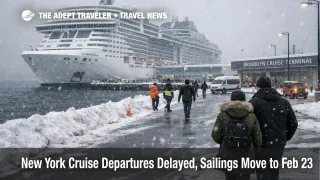
New York cruise departure delays spilled into Monday, February 23, 2026, after heavy snow and hazardous marine conditions pushed at least some Sunday sailings off schedule. MSC Cruises says MSC Meraviglia, which was set to depart the Brooklyn Cruise Terminal on Sunday night, will now leave Monday "at lunchtime" after local authorities closed seaports as a precaution during the winter storm. Royal Caribbean's Odyssey of the Seas also remained at Cape Liberty in Bayonne, New Jersey, into Monday, reflecting the same weather driven constraints on safe departures from the New York Harbor region.
The immediate decision for travelers is simple, assume timing is flexible until you see an all clear in your cruise line's app and email alerts, and protect anything that depends on a precise sail away, like hotel checkout timing, ground transfers, and same day flight plans. For broader context on why sailings can slip even when terminals are operating, see Northeast Storm Seas Reshuffle New York Cruises.
New York Cruise Departure Delays: What Changed on Feb 23
MSC Cruises attributes the MSC Meraviglia delay to seaport closures ordered by local authorities during the winter storm, describing the move as a planned safety precaution affecting cruise lines operating in the region. The ship's itinerary remains a Bahamas and Florida run, with calls at Port Canaveral and MSC Ocean Cay Reserve, then a return to the New York area.
This is unfolding inside a wider Northeast storm disruption that has also hammered air travel, with major snowfall totals reported in New York City and thousands of flight cancellations and delays across the region. That matters because cruise delays rarely stay "just" a cruise problem, the same weather system that pauses harbor movements can also degrade airport operations, road access, and hotel inventory for travelers trying to position in or out of the port corridor.
Which Travelers Are Most Exposed
Embarking passengers are exposed first, especially anyone who planned to arrive the same day by air, rail, or a long drive, because storm recovery timing is uneven and the cruise line can tighten arrival windows even when the ship is still alongside. If you are traveling as a family or group, your risk is higher because one delayed leg can break the whole plan, and rebooking multiple people into limited inventory is harder and more expensive once regional recovery is underway.
Debarking passengers are the next group to watch, even if your ship ultimately sails only hours late. A late departure can compress later port calls, shift onboard schedules, and reduce the "slack" that normally protects arrival day logistics at the end of the voyage. That is why post cruise flights booked too tightly can become the most expensive piece of the trip, not because the ship is late by itself, but because the rest of the regional transport system is also stressed at the same time.
For travelers sailing from Bayonne specifically, this fits the same risk pattern described in Cape Liberty Blizzard Delays Royal Caribbean Sailingv, where marine conditions, not terminal readiness, become the binding constraint.
What Travelers Should Do Now
If you are already checked in or en route to the terminal, treat your cruise line app alerts and official emails as the only authoritative clock for boarding waves and sail away timing. Do not anchor on the original schedule, and do not assume that "boarding continues" means the ship will depart on time, those can be true at the same time during weather holds.
If you have not started travel yet, the practical threshold is whether a miss would force you into expensive downline catch up, or wipe out nonrefundable hotel and transfer costs. If the answer is yes, spend money to buy time now, shift inbound flights earlier where possible, add a buffer night, or move the trip, because recovery pricing typically spikes once thousands of travelers make the same decision at once.
Over the next 24 to 72 hours, monitor the storm and recovery signals that actually change outcomes. Watch your cruise line's operational messages first, then watch regional transportation performance, including airport cancellations, and road conditions, because that is what governs how quickly you can reposition if your plans change. If you have post cruise flights booked on a tight schedule, consider proactively moving to a later departure time if the region's flight recovery remains constrained, because New York cruise departure delays can cascade into airport timing risk even after the ship is back on the move.
Why Departures Slip in the New York Harbor Region
Cruise departures out of the New York area are constrained by more than the pier. A ship needs a safe window to transit harbor approaches under wind and sea conditions that keep pilotage and tug operations within safety thresholds, and ports can pause or meter movements when those thresholds are exceeded. That is why MSC described the seaport closure as a precautionary measure, the system is designed to stop ship movements before conditions become unsafe, not after.
Once departures pause, second order impacts show up fast. Passenger timing compresses into fewer workable hours, which crowds rideshares, curb access, and nearby hotels, and it also increases the chance that travelers with separate ticket flights or rail legs get stuck paying last minute change costs. In a storm like this one, the aviation side is often disrupted at the same time, which is why cruise travelers should think in terms of a corridor wide event, not a ship specific inconvenience.