

Northeast Storm Seas Reshuffle New York Cruises
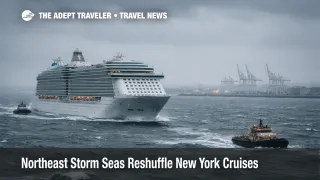
Unsafe winter sea states in the Northeast are driving cruise itinerary reshuffles that look bigger than a single late departure from one pier. The immediate exposure is passengers sailing from the New York area, including Cape Liberty Cruise Port in Bayonne, New Jersey, because strong winds and high seas can turn a normal departure into a wait for a safe harbor transit window. Travelers should assume delays, late sail aways, and possible dropped or swapped ports, then protect flights, hotels, and transfers by building buffer and watching cruise line app alerts closely.
The Northeast storm seas cruises problem is simple: when marine conditions hit storm warning thresholds, captains and ports prioritize safety, and the schedule becomes flexible whether passengers like it or not.
Who Is Affected
The first group is embarking passengers in the New York area who planned same day arrivals by air or long drives with no margin. In a winter system, the binding constraint is often offshore and at the harbor entrance, not at the curb, so the terminal can be open while the ship still cannot safely sail. That mismatch is what creates confusing day of messages like "boarding continues" paired with "departure delayed," and it is why check in windows can tighten instead of loosening.
The second group is anyone whose cruise sits inside a chain of prepaid pieces, airport transfers, third party excursions, rail tickets, and nonrefundable hotels. A shortened port call can break a long excursion even if the ship technically still visits the port, because return to ship timing margins shrink when the ship is making up time. A swapped port can also strand travelers with reservations that are no longer reachable, especially when multiple sailings converge on the same backup port and shore inventory compresses.
The third group is debarking passengers with tight flight plans at turnaround airports. When a ship leaves late, it often arrives late unless it can safely increase speed later, and winter routing choices can reduce that catch up option. The result is predictable: later morning pier clearance, longer lines for taxis and rideshares, and flight rebooking pressure that spikes exactly when the Northeast air system is also stressed by the same storm.
For a New York area case in point tied to the same storm pattern, see Cape Liberty Blizzard Delays Royal Caribbean Sailingv. For the connected aviation side that can trap cruise travelers in the corridor, see Northeast Blizzard Grounds NYC, Philly Flights Feb 22.
What Travelers Should Do
Treat embarkation day like a winter irregular operations day, even if your cruise app still shows the original departure time. If you have not left home yet, move inbound flights earlier, or add a hotel night so you are already in the region before roads and airport operations degrade. If you are driving, assume slower highway speeds, parking friction, and longer last mile timing into the terminal area, especially if the line starts metering arrivals.
Use a decision threshold for rebooking versus waiting that is stricter than normal. If missing the ship would force last minute flights to the next port, or would wipe out high value prepaid pieces, pay for buffer now and protect the whole trip. Waiting can be rational only if you are already local, you can safely reach the terminal when called, and you are not stacking separate tickets that will punish you financially if the ship timing slides.
Over the next 24 to 72 hours, monitor three streams that actually move outcomes. First, cruise line app notifications and emails, because they are the authoritative source for revised boarding waves, sail away timing, and any port sequence change. Second, National Weather Service marine forecasts for the waters your ship must transit, because storm warnings and sea height are the operational trigger for route and speed decisions. Third, your airline and hotel change rules, because once the recovery window fills, the price of flexibility spikes fast.
How It Works
Cruise schedules look fixed on a brochure, but they are conditional contracts with the ocean and the port system. When a coastal low intensifies off the Mid Atlantic and New England, the first order effect is hazardous sea state and wind, which can force a ship to reduce speed, change route, or wait for a safer departure window. In the waters south of Long Island, National Weather Service forecasts can reach storm warning levels with very strong winds and large seas, conditions that make timing and comfort secondary to safe navigation and safe pilot operations.
That marine constraint then propagates into port operations. A ship departing the New York area must coordinate pilots, tugs, traffic management, and berth sequencing, and those services are themselves weather constrained. If the ship cannot depart on time, the whole turnaround cadence shifts, disembarkation clearance can compress, and boarding often becomes metered to prevent crowding while the schedule is still moving.
The second order ripples land in aviation and lodging. A delayed sailing pushes passenger arrival behavior into fewer workable hours, which concentrates demand into hotels, rideshares, and customer service resources. At the same time, the Northeast airspace can be constrained by the same system, so reaccommodation seats are scarce and expensive. This is why a "just a cruise delay" often becomes a flight and hotel problem, especially for travelers who planned to arrive day of embarkation or depart with a thin margin on debarkation day.
Sources
- NWS Marine Forecast, South of Long Island to 1000 FM, ANZ815
- NWS Marine Forecast, Mid Atlantic Waters Synopsis, ANZ899
- Winter Storm Triggers Flight Cancellations, Delays and Cruise Reroutes
- Royal Caribbean reroutes and delays ships because of blizzard
- Cruise Ship Returns to New York a Day Early to Avoid Severe Weather High Winds