

Frontier Slows Growth Plan, What It Means for Fares
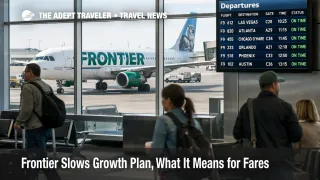
Frontier Airlines is dialing back its growth plans as it tries to claw its way back to sustainable profits. In mid February 2026, the carrier outlined a target of about 10% annual growth, down from its historical mid to high teen pace, and paired that with a fleet plan that includes returning 24 Airbus A320neo aircraft early and pushing out 69 Airbus deliveries that had been scheduled for 2027 through 2030.
The traveler facing takeaway is not that Frontier is shrinking in 2026, it is that the airline is trying to stop adding capacity faster than it can profitably sell it. If the plan works, it should reduce the kind of off peak overcapacity that forces deep discounting, and then abrupt schedule trimming. If it fails, you should expect the usual ULCC pattern, sharp fare swings, thinner frequencies on weaker days, and more itinerary fragility when something cancels.
Frontier Airlines Growth Cut, What Changed
Frontier reported a $137 million net loss for 2025, and it is using 2026 to reset how it grows. Management has described 10% as a "sweet spot," slower enough to reduce fare pressure from too much capacity, but still fast enough to expand in targeted markets.
The fleet mechanics matter. Frontier announced a transaction with AerCap to return 24 A320neo aircraft early in the second quarter of 2026, and it reached an agreement with Airbus to defer 69 aircraft deliveries from 2027 through 2030 into 2031 through 2033. For 2026, Frontier still expects 24 deliveries, but it also indicated it expects to end 2026 with roughly the same fleet size it started with, leaning harder on aircraft utilization to generate seat growth.
Frontier is also changing leadership at the top. James G. Dempsey moved from interim CEO to President and CEO in January 2026, after Barry Biffle's departure was announced in December 2025.
Which Travelers Will Notice The Shift First
You are most likely to feel this change in markets where Frontier is trying to take share after competitors pulled back, and in the day of week patterns ULCCs use to manage demand.
Frontier has pointed to growth opportunities in Atlanta, Georgia, and Las Vegas, Nevada, including adding frequencies on existing routes and launching new ones. In practice, that means travelers who rely on Frontier for price discipline in those markets could see more flights in peak demand periods, but not necessarily more resilience on the weakest days.
The second exposure group is anyone who books ULCC itineraries with low frequency service, where one cancellation turns into an overnight problem because there is no later same day option. This is the structural risk behind ULCC "cheap fare, expensive recovery." It is also why Frontier watching tends to overlap with Spirit watching, especially while Spirit restructures and cuts capacity. If you want the competitive context, see Spirit Frontier Merger Talks Could Change 2026 Fares.
What Travelers Should Do When Booking Frontier
Treat Frontier's strategy shift as a signal to book differently, not as a promise of steadier operations.
If you need to arrive by a fixed time, pick flights with redundancy. That means earlier departures, nonstop when possible, and routes with multiple daily frequencies. If your Frontier option is the last flight of the day, price the ticket as if you might have to buy a same day replacement on another carrier if things go sideways.
If you are buying the fare because it is meaningfully cheaper, lock down the total trip cost up front. Ultra low fares often become average fares once you add bags, seats, boarding, and change flexibility. The smartest comparison is always all in, door to door, including how expensive your "plan B" would be if you misconnect or cancel.
Finally, understand what protections you do, and do not, have in the United States when delays happen. There is still no U.S. requirement for automatic cash compensation for long controllable delays, so your leverage is mostly refunds in certain situations, airline policies, and your own risk tools. A practical explainer is U.S. Backs Off Airline Delay Compensation.
Why Slower Growth Might Not Fix ULCC Economics
The analyst skepticism around Frontier's plan boils down to a simple claim, slowing capacity growth may reduce self inflicted fare pressure, but it does not automatically solve the post pandemic disadvantage ULCCs have faced, especially when demand shifts toward premium products and when larger carriers can compete with basic economy pricing while still selling higher margin upsells elsewhere.
There is also a fleet fit issue. If Frontier leans harder into using larger A321neo aircraft while trying to find "new" markets, it can run into a mismatch, some smaller markets cannot reliably fill that many seats year round at profitable fares. That is one reason utilization becomes a double edged sword, higher utilization can lower unit costs, but it can also reduce operational slack when weather, maintenance, or air traffic constraints hit.
Zooming out, aircraft supply constraints are still a background pressure across the industry. Delivery timelines have been stressed for years, and Airbus has warned airlines that delivery delays can persist because supply chain bottlenecks take time to unwind. This is part of why deferrals, lease extensions, and fleet reshuffling have become normal tools, and why schedule reliability and capacity are intertwined. For a deeper, systems level look at what is keeping capacity tight, see AI Data Centers And The Airline Supply Chain, A 2030 Outlook.
Sources
- Frontier Airlines Reports Fourth Quarter 2025 Financial Results, Frontier Investor Relations
- Frontier Announces Fleet Optimization Transaction with AerCap, Frontier Investor Relations
- Frontier Airlines Trims Fleet Through Lease Terminations and Order Deferrals, Aviation Week
- Frontier to cut annual growth in a bid to boost profits, Travel Weekly
- Frontier Airlines parent company appoints new CEO, Reuters
- Airbus warns airlines delivery delays to last three years, sources say, Reuters