

White House Spat Puts US Airline Oversight Back in Play
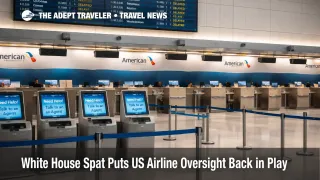
A senior White House staffer has dragged airline reliability and passenger protections into the political spotlight after a very specific kind of travel day went wrong. Deputy White House Chief of Staff James Blair wrote on X on February 26, 2026, that American Airlines delayed him about 2.5 hours over a hydraulic fluid issue, and that the day before the airline "forgot to book a pilot" for his wife's flight, adding that he will take a "new interest" in the airline industry. The exchange drew a pointed reply from former Transportation Secretary Pete Buttigieg, who argued the administration should restore and enforce passenger rights policies it has rolled back.
The practical travel relevance is not the social media drama. It is the renewed attention on how aggressively the U.S. government will police airline performance, refunds, disability related handling, and consumer protections at the exact moment winter operations, record spring demand, and tighter rebooking inventories make disruptions more expensive for travelers.
US Airline Passenger Rights: What Changed
The new development is that a White House official has publicly signaled personal and political attention toward airline operations after experiencing delays, and operational failures, on a major carrier. Reuters reported that American Airlines has lagged peers early in 2026, including weak on time performance and the highest cancellation rate among major U.S. airlines in January 2026, which sets up the larger debate: whether reliability problems get addressed through market pressure, internal carrier fixes, or tougher enforcement from regulators.
At the same time, the administration's recent moves point in the opposite direction, less punitive enforcement, and fewer consumer protection expansions. Reuters has reported that regulators waived the remaining $11.00 million (USD) portion of a Southwest penalty tied to the December 2022 disruption that stranded more than 2 million passengers, waived $16.7 million (USD) in fines against American Airlines related to mishandling mobility aids, and formally withdrew a Biden era proposal that would have required airlines to pay cash compensation when carrier caused disruptions trigger long delays. In other words, the policy posture has been trending toward lighter penalties and fewer new obligations, even as reliability and traveler frustration remain live issues.
Blair did not specify what he intends to do, or what policy changes he supports. For travelers, that uncertainty matters, because it can produce headlines without producing enforceable protections, and it can also produce abrupt enforcement swings if leadership decides to make a point using existing authority.
Which Travelers Feel This Most, and Why It Matters Now
Frequent flyers on hubs, and travelers on tight, multi segment itineraries, are the most exposed to reliability gaps because small failures compound. A two hour mechanical delay is rarely just a late arrival. It is missed connections, later hotel check in, and a reduced chance of same day reaccommodation when flights are full. Travelers connecting to time fixed events, cruises, weddings, tours with timed entry, or work commitments suffer the highest downstream cost, because the itinerary cannot flex even if the airline can.
Disabled travelers and anyone traveling with mobility aids are also directly exposed to the enforcement posture. When penalties are large and public, airlines tend to invest faster in processes, vendors, training, and tracking. When penalties are reduced, delayed, or waived, improvements may still happen, but the pressure is weaker, and disputes can take longer to resolve because the deterrent signal is smaller.
There is also a timing layer. The U.S. travel system is already operating closer to its throughput ceiling heading into March and April, and separate federal disruptions can change airport processing and connection math. For context on how quickly airport friction can escalate during peak demand, see US Spring Break Flights Set Record as Shutdown Hits and Global Entry Paused, TSA PreCheck Stays On in Shutdown. When volume is high, any reduction in predictability, whether from airline operations or government processing, translates into higher misconnect risk and higher out of pocket costs.
What Travelers Should Do Now if Disruptions Hit
Travelers should treat this as a signal to plan more defensively, not as a promise that help is coming. In the near term, the best protection is itinerary design. Choose longer scheduled connections, avoid last flight of the night onward legs when a misconnect becomes an automatic overnight, and build buffer into same day commitments. If the trip has a hard start time, buy margin early, because the reaccommodation market is weakest when flights are full.
When something goes wrong, document in real time and force clarity. Save screenshots of delay and cancellation notices, keep receipts for meals and lodging, and record the rebooking options you were offered. If the carrier is responsible, ask for the airline's written policy on refunds, rebooking, and reimbursements for that scenario, and escalate through customer relations with specifics rather than frustration. A clear paper trail is what makes a complaint actionable.
If you are traveling with a wheelchair or other mobility device, reduce the odds of damage and delay by taking photos of the device at check in, removing detachable parts when possible, labeling key handling points, and asking for the process the station uses for gate delivery versus baggage claim delivery. If mishandling occurs, report immediately at the airport, then file a formal complaint, because the enforcement system works better when incidents are documented precisely and promptly.
Why Oversight Signals Change Airline Behavior
Airline reliability is shaped by incentives and constraints that travelers do not see. Carriers balance schedule density, aircraft utilization, maintenance windows, crew availability, and network recovery planning. When the system is stressed, a missing crew member, a late inbound aircraft, or a maintenance item can cascade across multiple flights because the airplane and crew are the same physical assets that must move through the network.
Regulatory enforcement is one of the levers that changes how aggressively airlines invest in prevention and how quickly they resolve customer harm. Large fines and public enforcement actions create a deterrent effect, and they can push airlines to prioritize fixes that are otherwise easy to defer. Lighter penalties, or the perception that regulators prefer warnings and compliance letters over fines, can shift behavior toward slower, quieter change that may not track traveler pain in real time.
That is why the Blair, Buttigieg exchange matters to travelers even if it produces no immediate rule change. It raises the odds of more political scrutiny of airline performance, but it does not guarantee stronger passenger protections, especially given the administration's recent rollback and fine waiver decisions. The traveler takeaway is simple: plan for the rules you have, not the rules you hope will arrive, and keep your itinerary resilient while the policy direction stays unsettled.
Sources
- White House official vows 'new interest' in airline industry after flight woes (Reuters, February 26, 2026)
- James Blair post on X (February 26, 2026)
- US proposes to ease airline penalties for consumer protection violations (Reuters, January 7, 2026)
- US drops Biden plan to require passenger compensation for delayed flights (Reuters, November 14, 2025)
- US waives $11 million Southwest Airlines fine imposed over 2022 holiday meltdown (Reuters, December 6, 2025)