

UK ETA Enforcement Blocks Boarding for Visa Free Visitors
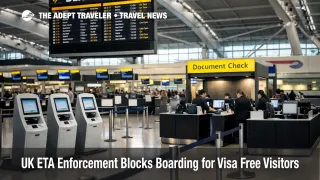
UK ETA enforcement is now a live airport day risk, not just a policy note, because the United Kingdom began strictly enforcing its Electronic Travel Authorisation requirement on February 25, 2026, for many visa free visitors from 85 eligible nationalities. Reuters reported the shift as a hard pre travel gate, and UK authorities have made clear that carriers must check permission before departure, with penalties possible if they transport someone without the right documentation. For travelers, that means the main failure point is airline, rail, or ferry check in, not a conversation at passport control after landing. The practical move is simple, confirm whether your passport needs an ETA, apply before travel, and do not assume a short UK stopover or same day connection makes the rule irrelevant.
The change matters because it pushes UK border screening upstream into the booking and departure workflow. GOV.UK says an ETA costs £16 and is linked to the passport used in the application. It allows travel, but it does not guarantee entry, which still remains a border decision on arrival. Each traveler, including children, needs their own ETA, so families, multi passenger bookings, and last minute trips are exactly where a missed application can turn into a denied boarding problem.
UK ETA Enforcement: What Changed
What changed since earlier rollout coverage is that the soft planning deadline became hard enforcement on February 25, 2026. Reuters said visitors from 85 countries now must hold an ETA in advance or they cannot travel, and a UK parliamentary statement said carriers such as airlines are required to check that passengers hold the appropriate permission before travel. That same statement also says carriers may be penalized if they bring someone to the UK without the correct documentation or permission, which explains why the check happens before departure rather than after arrival.
In plain language, the UK has turned a border rule into a boarding rule. If your passport requires an ETA and your approval is missing, delayed, expired, or tied to a different passport than the one on your booking, the trip can fail at online check in, document verification, bag drop, or the gate. That is a different risk profile from older visa free UK travel, where many passengers were used to showing up with only a valid passport and ticket. Related Adept coverage already touched this earlier in UK ETA Enforcement Feb 25 Raises Denied Boarding Risk and UK ETA Feb 25 Boarding Rule, Avoid Denied Boarding.
Who Needs To Act Before UK Travel
The main exposed group is travelers from ETA eligible, visa free countries, including the United States, Canada, Australia, Japan, South Korea, most of Europe, and several Gulf and Latin American markets. GOV.UK's current list was updated on March 5, 2026, and shows who can apply now, while also noting that some nationalities were recently removed from eligibility and now need a visa instead. Travelers should not rely on memory here, because the list has changed over time.
The second high risk group is transit passengers who assume a UK connection is automatically exempt. GOV.UK says you do not need an ETA if you are transiting through a UK airport and will not pass through border control. But that exemption is operational, not universal. GOV.UK also distinguishes between airside transit, where you do not pass border control, and landside transit, where you do. The Home Office factsheet adds that travelers transiting through Heathrow Airport and Manchester Airport who do not go through UK passport control do not currently need an ETA, while eligible visitors who do pass through control need one. That makes separate tickets, terminal changes, overnight misconnections, baggage recheck requirements, and irregular operations the scenarios most likely to catch experienced travelers off guard.
Exemptions matter too, because they create a different kind of airport friction. British and Irish citizens do not need an ETA. People with permission to live, work, or study in the UK also do not need one. Dual British or Irish citizens are a special case, because GOV.UK says they cannot get an ETA and must instead prove citizenship with a valid British passport, a valid Irish passport, or another valid passport containing a certificate of entitlement. The UK Parliament warned that without those documents, British citizens risk refusal of boarding or travel delays.
What Travelers Should Do Before Departure
Treat UK ETA enforcement as a document check that belongs in trip setup, not in your airport day checklist. Start with the official GOV.UK checker, confirm whether the exact passport you plan to use needs an ETA, and apply through the official channel rather than third party sites that may charge more. GOV.UK says an ETA usually costs £16 and the Home Office says travelers must use the same passport for travel that they used when applying. If your booking, your passport, and your ETA record do not match, fix that before check in opens.
Use a hard decision threshold for timing. GOV.UK and Home Office materials say many ETA decisions are fast, but travelers should still allow up to three working days. That means anyone inside a 72 hour departure window without approval should stop treating the ETA as a formality. At that point, rebooking to a later departure can be cheaper than gambling on airport day resolution and losing onward flights, prepaid hotel nights, or timed bookings in London or beyond.
For stopover itineraries, verify whether your connection remains airside all the way through. A UK stop that looks harmless on paper can become an ETA problem if a delay, schedule change, or bag issue forces you through border control. Travelers building a London trip around a broader UK visit can use London Travel Guide: The Ultimate 7-10 Day Itinerary for First-Time Visitors, but the entry step now has to be locked before the rest of the plan.
Why Carriers Will Enforce It So Early
The mechanism is straightforward. The UK wants to screen many visa free travelers before they board, not only when they arrive. The ETA collects passport, contact, and suitability information in advance, and the government says that helps it know more about who is seeking to travel and block some arrivals before transport even begins. Because carriers may face penalties for carrying someone without proper permission, they have a direct reason to stop a traveler before departure rather than let the problem reach the UK border.
That upstream enforcement creates second order travel effects that matter well beyond one missed flight. A denied boarding event can break self connect itineraries, strand checked baggage plans, burn nonrefundable hotel nights, and force same day rebooking at much higher fares. The risk is even larger on trips that use the UK as an intermediate hub rather than the main destination, because travelers may not think of a short stop in London as a separate entry compliance step. The tradeoff is clear, a few minutes spent checking ETA status before departure can protect a much more expensive chain of flights, rooms, tours, and onward transport.
Sources
- UK To Enforce Travel Permit Requirement on Foreign Visitors, Reuters
- Get an Electronic Travel Authorisation (ETA) to Visit the UK, GOV.UK
- Check if You Can Get an Electronic Travel Authorisation (ETA), GOV.UK
- When You Do Not Need an ETA, GOV.UK
- Layovers and Transiting Through a UK Airport, GOV.UK
- Electronic Travel Authorisation (ETA) Factsheet, February 2026, Home Office
- The Enforcement of Electronic Travel Authorisation, UK Parliament