

Peru Gas Shortage Hits Lima Airport Transfers
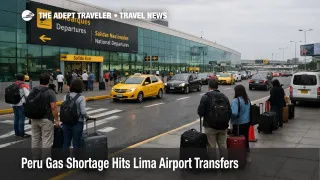
Peru gas shortage has become a real travel logistics problem in Lima, Peru, and Callao, Peru, after the rupture of the Camisea pipeline triggered emergency measures, vehicle fuel shortages, and a week of remote work and remote classes in the capital region. The clearest traveler risk right now is not a confirmed breakdown at Jorge Chávez International Airport (LIM) itself, but less reliable road access to and from the airport, plus weaker taxi and transfer availability across the city. Travelers moving through Lima over the next few days should build in extra ground transport buffer, avoid tight domestic connections, and confirm all private transfers before departure.
The latest official and first party picture supports a ground transport story more than an airport shutdown story. The UK Foreign, Commonwealth & Development Office said on March 7, 2026 that emergency measures are in place after the Camisea rupture and warned travelers to expect disruption and shortages of natural gas for vehicles, while the U.S. Embassy in Lima warned on March 9, 2026 that the shortage could affect buses, taxis, and other transportation services for that week and possibly longer. Reuters separately reported that Peru suspended gas exports during what officials called the country's worst energy crisis in two decades, though President José Balcázar said on March 10 that repairs could restore supply over the March 14 to March 15 weekend.
Peru Gas Shortage: What Changed for Travelers
What changed is that Peru's fuel stress is now concentrated enough in Lima and Callao to affect the normal assumptions travelers make about getting to the airport, crossing the city, or moving on to domestic connections. Reuters reported that about one million vehicles in Peru run on natural gas or LPG, and Bloomberg reported earlier in the crisis that rationing in Lima prioritized mass public transport, but not taxis and cargo vehicles. That makes the immediate exposure uneven, because some essential movement is protected while many airport trips still depend on fleets that are more exposed to shortages or cost spikes.
For travelers, that means transfer risk is rising faster than flight risk. I did not verify strong evidence that Lima airport operations themselves are failing at scale, and that distinction matters. The smarter read is that passengers should expect more friction reaching the airport, more variability in taxi supply and pricing, and more knock on timing problems once a road transfer slips.
Which Travelers and Routes Are Most Exposed
The most exposed travelers are people transiting through Lima on same day domestic connections, cruise or tour passengers on fixed pickup times, and visitors using taxis or app rides rather than hotel arranged transport. Intercity coach users and travelers trying to move quickly between Lima, Callao, and surrounding districts also face more timing risk, because a fuel shortage in urban vehicle fleets spreads first through dispatch reliability, queue times, and fare pressure before it shows up as a total system failure.
Travelers headed onward to Cusco, Peru, Arequipa, Peru, Iquitos, Peru, or other domestic destinations should be especially careful with short airport windows. A late hotel pickup in Lima can cascade into a missed domestic flight, a lost rail connection, or a compressed tour start. That is the same systems logic Adept has already seen in earlier Peru ground disruption coverage such as Lima Transport Strike to Disrupt Independence Day Travel, where the airport remained open but access risk still threatened itineraries. Travelers planning bigger Peru trips may also want the broader destination context in Peru - Travel News and Guides from The Adept Traveler.
What Travelers Should Do Now
Travelers with flights from Jorge Chávez should treat the road trip to the airport as the fragile leg of the itinerary. For now, the practical move is to reconfirm airport transfers directly with the provider, favor hotel cars or prebooked private transport over on demand hailing where possible, and leave a larger than normal buffer for departures and domestic repositioning. If you are landing in Lima and connecting onward the same day, avoid assuming your usual transfer time will hold.
The decision threshold is simple. Keep your plan if you already have a protected private transfer, a generous layover, and lodging or tour operators who can absorb late arrival. Rework the plan if your itinerary depends on curbside taxi availability, a short domestic connection, or a same afternoon overland move after arrival. This is also a good moment to price in an overnight in Lima rather than force a brittle same day chain, especially while the wider energy market remains volatile, as discussed in Travel Costs Rise as Iran War Pushes Up Oil Prices.
Over the next 24 to 72 hours, the main things to watch are whether Peru actually restores gas flow on the March 14 to March 15 timeline the president described, whether Lima and Callao emergency measures are lifted on schedule, and whether embassies or the airport concessionaire begin warning of direct airport access problems rather than broader city transport friction. Until that signal changes, Peru gas shortage remains a destination transport problem first, and an airport operations story second.
Why the Disruption Spreads Through Travel
The mechanism is straightforward. The damaged Camisea linked system is a core part of Peru's energy network, and Reuters reported that the disrupted pipeline supplies nearly half of the country's electricity and most of its LPG. Once supply is rationed, authorities and operators start protecting essential demand, which leaves non priority vehicle fleets, discretionary road trips, and flexible urban transport bearing more of the pain. In travel terms, first order effects hit taxis, app rides, buses, and local transfers. Second order effects then reach airport timing, hotel check in windows, domestic flight connections, tour starts, and intercity coach reliability.
That is why this story matters even without verified mass cancellations at Lima airport. A traveler does not need the airport to close for the trip to go sideways. When city transport becomes less predictable, the margin for error disappears, especially in a destination where many itineraries string Lima together with Cusco, the Sacred Valley, the Amazon, or the coast on tight schedules. Peru's government may still stabilize the situation quickly if repairs hold, but until supply clearly normalizes, travelers should plan for weaker ground mobility in the capital region.
Sources
- Peru travel advice, GOV.UK
- Message for U.S. Citizens: Natural Gas Shortage Impact on Transport and Services in Peru, U.S. Embassy Lima
- Peru suspends gas exports after pipeline rupture sparks energy crisis, Reuters
- Peruvian gas pipeline to be fixed this weekend, Balcazar says, Reuters
- Peru's pipeline disruption tests industrial resilience, businesses blanch at remote work order, Reuters