

Air India Fuel Surcharge Raises India Trip Costs
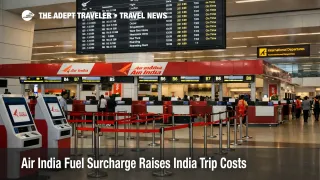
Air India has turned Gulf driven fuel pressure into a direct traveler pricing change. On March 10, 2026, the carrier said it would expand fuel surcharges in phases across domestic and international routes, including flights operated by Air India Express, after a sharp rise in aviation turbine fuel prices. For travelers, this matters less as an airline margin story and more as a booking timing story, because some tickets now cost more depending on when they were bought, where they go, and whether the itinerary later needs to be changed.
The practical takeaway is simple. Travelers booking India trips now should price the whole itinerary again before assuming last week's fare logic still holds. The best response depends on trip length, how many sectors are involved, and whether the plan depends on separate tickets or surface transport inside India after arrival.
Air India Fuel Surcharge: What Changed
Air India said Phase 1 began for new bookings made from 1201 a.m. India Standard Time on March 12, 2026. That phase added a ₹399 surcharge on domestic India and SAARC routes, $10 on West Asia and Middle East routes, raised Southeast Asia fuel surcharge levels to $60, and raised Africa to $90. Phase 2 starts for new bookings made from 1201 a.m. India Standard Time on March 18, 2026, lifting Europe to $125 and North America and Australia to $200. Phase 3, covering Hong Kong, Japan, and South Korea, has been announced in concept but not yet priced publicly.
Two details matter more than they first appear. First, Air India said existing bookings made before those start times do not pick up the new surcharge unless the passenger changes dates or the itinerary in a way that triggers fare recalculation. Second, the airline said it will review the surcharge periodically, which means this is not a one and done change if fuel pressure keeps moving.
That is what makes this a traveler cost story. The surcharge is no longer theoretical inflation buried inside future fares. It is a published pricing layer that changes the math on new bookings, changes, and long haul add ons right now.
Which India Trips Face the Biggest Fare Pressure
The most exposed trips are the ones with long sectors, multiple paid legs, or weak schedule flexibility. North America and Australia itineraries face the largest published surcharge at $200, Europe is next at $125, and Africa and Southeast Asia also move meaningfully higher. Domestic travelers face a smaller per ticket increase, but that still bites harder on short sectors where the base fare may be relatively low and where travelers often book late.
This also hits some trip styles harder than others. Multi city India itineraries that mix an international arrival with one or two domestic flights now face more price friction than a simple round trip into one gateway. Open jaw plans can still make sense, but they are less automatically smart when each added flight carries a surcharge and when later ticket changes may reset the fare. Travelers who were already weighing rail or coach on shorter domestic legs now have a stronger reason to compare total door to door value instead of defaulting to a flight.
The pressure also lands unevenly across traveler segments. Late bookers, families buying multiple domestic sectors, and long haul passengers layering India onto a bigger Asia trip are all more exposed than travelers on older untouched bookings. That sits inside a wider industry pattern, not an Air India only outlier, because Reuters reported that airlines globally are already raising fares or surcharges as jet fuel jumped from roughly $85 to $90 per barrel to about $150 to $200 in recent days.
What Travelers Should Do Before Booking Or Changing Tickets
Book now if the trip is firm, the dates are unlikely to change, and the itinerary depends on Air India or Air India Express sectors that you would struggle to replace later. Waiting only makes sense when your travel window is flexible enough to benefit from a later fuel price retreat and when you can tolerate the risk that fares stay high or rise further. Air India's own language, that surcharges will be reviewed periodically, leaves room for both outcomes.
Be careful with split tickets. In theory, separating a long haul ticket from domestic India sectors can help you mix carriers or swap a short flight for rail. In practice, it also removes protection when the first leg runs late, baggage misconnects, or a domestic segment needs to be rebuilt. That tradeoff is manageable on relaxed itineraries with overnight buffers. It is a bad bet on same day international connections, destination weddings, cruises, or fixed tours.
For shorter domestic moves, compare rail or coach only after pricing the full substitution, not just the ticket. A train that saves money but forces an extra hotel night or longer transfer may not actually be cheaper. The better use case is a trip where you already planned more than one city, have schedule flexibility, and can absorb longer ground travel without risking the international leg. Travelers following Adept's recent Pakistan Fuel Shortage Warning Hits Travel Planning and British Airways Asia Reroutes Reshape Gulf Exits coverage will recognize the same rule here, volatile fuel and routing conditions punish tight, stacked itineraries first.
Why Fuel Costs Are Now Showing Up In Published Fares
The mechanism is straightforward. Air India said aviation turbine fuel has surged since early March 2026, that fuel accounts for nearly 40 percent of airline operating costs, and that Indian excise duty and state VAT in major metro markets such as Delhi and Mumbai magnify the pressure. Reuters separately reported a much broader aviation squeeze, with fuel costs soaring as Gulf conflict disrupted supply and pushed airlines around the world toward fare hikes, surcharges, and revised schedules.
For travelers, the first order effect is a higher ticket price. The second order effect is that itinerary design changes. Some passengers will cut domestic flying, some will shift to rail on shorter sectors, some will avoid open jaw plans that looked clever when short hops were cheaper, and some will move demand toward other carriers or hubs depending on how those airlines pass through fuel costs. That can change connection banks, hotel night patterns in gateway cities, and how much slack travelers need around a trip that used to be priced and timed more tightly.
Air India also made the airline's own threshold explicit. It said that without the surcharge, some flights would likely be unable to cover operating costs and would have to be canceled. That does not mean cancellations are imminent, but it does explain why the surcharge is arriving now, and why travelers should treat it as an operational stabilizer rather than a symbolic fee.
Sources
- Important Update: Phased implementation of fuel surcharge, Air India
- Air India to raise fuel surcharge amid rising jet fuel prices, Reuters
- Price hikes, outlook cuts, What airlines are doing as fuel costs surge, Reuters
- Pakistan Fuel Shortage Warning Hits Travel Planning
- British Airways Asia Reroutes Reshape Gulf Exits