

Star Princess Norovirus Outbreak Hits Next Sailing
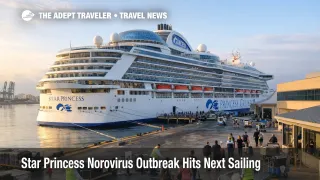
The Star Princess norovirus outbreak matters because it hit a brand new Princess Cruises ship, sickened 153 people on a March 7 to March 14, 2026 Caribbean voyage, and still left the vessel on a rapid turnaround in Fort Lauderdale, Florida. CDC says 104 passengers and 49 crew reported illness, with diarrhea and vomiting the main symptoms. For travelers, the main issue now is not only the finished sailing, it is whether the ship's next departure feels normal at embarkation, dining, and onboard routines after a shipwide illness response.
The Star Princess norovirus outbreak affects travel plans because cruise illness controls can continue to shape boarding flow, cleaning cadence, and onboard service even when an itinerary itself remains on the schedule. CruiseMapper showed another Star Princess sailing beginning from Fort Lauderdale on March 14, 2026, which means incoming passengers may have faced a tighter reset window than they would on a ship with a longer gap between cruises.
Star Princess Norovirus Outbreak: What Changed
CDC's Vessel Sanitation Program says the outbreak was reported on March 11, 2026 during the voyage, and its public posting dated March 12 lists norovirus as the causative agent. That matters because this was not just a vague gastrointestinal illness event under review, it was a confirmed norovirus outbreak on a ship carrying 4,307 passengers and 1,561 crew. Princess told CDC it increased cleaning and disinfection, collected stool samples, isolated sick passengers and crew, and consulted with CDC on sanitation and illness reporting procedures. CDC also said it was conducting a field response, including an environmental assessment and outbreak investigation, to help control the outbreak.
What changed since the sailing ended is the traveler decision point. Once the ship returned to Fort Lauderdale on March 14, the story stopped being only about the passengers who got sick and became a practical question for the next group of guests, whether embarkation would stay smooth, whether public spaces would feel more controlled, and whether anyone with recent symptoms should rethink boarding at all. Because the ship remained in rotation, the first order effect is onboard illness management, but the second order effect is friction for incoming travelers who built flights, hotels, and ground transfers around a routine same day embarkation.
Which Travelers Face The Most Friction
The first exposed group is anyone who sailed on the affected March 7 to March 14 voyage. Even after disembarkation, norovirus can create a practical travel problem because symptoms often start 12 to 48 hours after exposure, and CDC says soap and water handwashing is more effective than relying on hand sanitizer alone. That means travelers flying home, checking into hotels, or moving on to another trip segment should treat even mild symptoms seriously and avoid pushing through tight onward plans.
The second exposed group is passengers boarding Star Princess right after the outbreak voyage. They may never get sick, but they can still feel the operational ripple through stricter sanitation messaging, altered self service patterns, more visible crew cleaning activity, and possible pressure on dining and housekeeping if crew members are recovering or isolation rules remain active. On a ship this large, even a relatively small percentage of ill guests can change the onboard rhythm because shared dining rooms, elevators, lounges, and restrooms are exactly where close contact and repeated surface touches stack up.
A third group is travelers with weak post cruise flexibility. If you booked separate airfare, a same day train, or a nonrefundable inland stay right after the cruise, this kind of outbreak raises the risk that a health issue turns into a logistics issue. That same pattern showed up in prior cruise illness coverage on Adept Traveler, including Rotterdam Norovirus Outbreak Disrupts Cruise Routines and Seven Seas Mariner Illness Outbreak CDC Probe, where the biggest traveler pain point was often not cancellation but compressed routines, changed onboard behavior, and harder arrival day planning.
What Travelers Should Do Now
If you were on the affected voyage and symptoms begin after you get home, report them early, hydrate, and avoid assuming it was just motion sickness or something you ate ashore. CDC says norovirus usually starts 12 to 48 hours after exposure, and the main danger for many travelers is dehydration, especially if vomiting and diarrhea hit while they are still in transit. In practical terms, that means protecting the day after disembarkation matters almost as much as protecting the cruise itself.
If you are boarding Star Princess next, treat this as a buffer story, not necessarily a cancellation story. Arrive with extra time, keep medications and hydration basics in your carry on, and do not rely on a tight chain of airport arrival, pier transfer, and immediate boarding. The right threshold is simple, if you or your cabin mate have had vomiting or diarrhea in the last 48 hours, boarding is a bad gamble because norovirus spreads fast in close quarters and can leave you isolated in your cabin for part of the trip.
Travelers should also use this outbreak as an insurance and cost reminder. Cruise ship medical care is convenient, but it can become expensive quickly, especially when a routine illness turns into a clinic visit, onboard testing, or trip interruption. Adept Traveler's Viral $10K Bill Highlights Cruise Medical Costs is not about this outbreak specifically, but it is still useful context for why buying stronger cruise medical coverage before departure is often smarter than hoping the onboard clinic stays irrelevant.
Why The Outbreak Matters Beyond One Voyage
CDC's cruise outbreak system matters because it is designed to catch illness clusters before they disappear into anecdote. The agency posts outbreaks when thresholds are met, and in this case the numbers were high enough to make the event meaningful even on a ship with more than 4,300 passengers. That threshold does not mean everyone was sick at once, but it does signal a cruise where standard operations had to shift into outbreak control mode.
Norovirus spreads efficiently in cruise environments because ships combine close quarters, repeated surface contact, shared food spaces, and quick passenger turnover. The first order effects are isolation, cleaning, and service disruption onboard. The second order effects land at the edges of the trip, slower embarkation, more stressful disembarkation, higher odds of hotel or flight changes, and extra cost exposure if symptoms appear as travelers move back onto land. That is why a cruise outbreak story is really a whole itinerary story, not just a shipboard health note.
Star Princess also draws extra attention because it is one of Princess Cruises' newest ships. Princess says the 4,300 guest vessel began service on October 4, 2025 from Barcelona, and the line later formally christened it with Camila and Matthew McConaughey as christeners. That does not make the outbreak medically different, but it does raise the reputational stakes because new ships are supposed to project smooth operations, not a norovirus headline within their first Caribbean season.
Sources
- Star Princess March 2026, Vessel Sanitation Program, CDC
- Cruise Ship Travel, CDC Travelers' Health
- How to Prevent Norovirus, CDC
- About Norovirus, CDC
- Star Princess Cruise Ship Information, Princess Cruises
- Star Princess Sets Sail on Maiden Voyage from Barcelona, Princess Cruises
- Camila and Matthew McConaughey Named Godparents of New Star Princess, Princess Cruises
- Star Princess Itinerary Listing, CruiseMapper