

Southwest Pinch Me Sale Drops Fares To $59
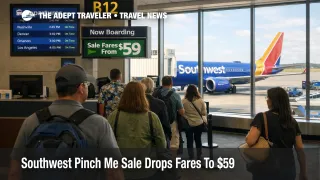
Southwest Airlines has launched a short St. Patrick's Day fare sale with one way prices starting at $59, and the booking window is tight. The Southwest Pinch Me sale is open from March 17 through March 19, 2026, for select travel within the continental United States and for interisland Hawaii trips between April 7 and June 10, 2026. For travelers with flexible dates, this is the kind of sale that can make a quick spring trip materially cheaper, but only if the route, day of week, and advance purchase window line up. The practical move is to search now, focus on Tuesday and Wednesday departures first, and treat the lowest advertised fare as an entry point rather than a network wide guarantee.
The sale matters because Southwest is not advertising a broad summer discount, it is offering limited inventory inside a shoulder season window when many travelers are still making spring and early summer plans. That gives budget focused flyers, weekend trippers, and Hawaii island hoppers a brief chance to lock in lower fares before more expensive booking periods take over. It also lands in a Southwest environment that now includes assigned seating, which changes the value calculation slightly for travelers comparing base fare savings against seat selection and boarding preferences on other carriers. Southwest Assigned Seating Tweaks Target Bin Space is useful context if you have not booked Southwest since the January changeover.
Southwest Pinch Me Sale: What Changed
What changed is straightforward. Southwest's public deals page now lists a featured Pinch Me sale with one way fares as low as $59, a 21 day advance purchase requirement, and limits on seats, travel days, and markets. The airline's public offer page also makes clear that the deal applies only to travel within the continental U.S. and to interisland Hawaii service, not to the carrier's broader near international network. That means travelers looking at the Caribbean, Mexico, or Central America should not assume this sale extends there.
The booking window is also short enough to matter operationally. Southwest says the sale is bookable from March 17 through March 19, and public reporting on the promotion describes the cutoff as midnight Pacific Time on March 19, 2026. The travel window runs from April 7 through June 10, 2026, which puts the best value squarely in the late spring period, after some peak spring break demand but before the heaviest summer rush. That makes this more useful for flexible leisure trips, family visits, and low cost positioning flights than for fixed holiday travel.
Who Gets The Best Value From This Southwest Sale
The travelers most likely to benefit are those who can move around the edges of the calendar. TravelPulse reports that off peak days such as Tuesday and Wednesday should produce the strongest savings, which fits the normal airline pattern of discounting softer demand days first. In practice, that means a traveler chasing the headline $59 fare should search midweek departures before trying Friday or Sunday patterns, and should be prepared for the return to price differently from the outbound. The cheapest round trip is often built from two separate low fare one ways, not from a single symmetrical itinerary.
The fit is especially good for short domestic breaks, city to city visits between major Southwest stations, and interisland Hawaii flights where even modest fare cuts can improve a multi island trip budget. The fit is weaker for travelers with fixed event dates, school constrained schedules, or nonstop only preferences on thin routes, because the official terms explicitly warn that seats, days, and markets are limited. This is where sale coverage often gets too promotional. The headline fare is real, but it is not evenly distributed across the network.
Travelers who have followed prior Southwest promotions will recognize the pattern. In Southwest Week of WOW sale: $39 fares through Oct 2, the lowest fares also depended on limited inventory and flexible booking behavior. The difference this time is that the current sale window sits entirely after Southwest's January 27, 2026 assigned seating launch, so travelers are shopping in the airline's newer product structure rather than the old open seating model.
What Travelers Should Do Before March 19
The first move is to search exact city pairs with a low fare calendar mindset instead of assuming the homepage teaser will translate directly to your preferred itinerary. The 21 day advance purchase rule means the cheapest inventory is structured for travelers booking ahead, not for last minute spring trips. If your outbound date is fixed, shift the return first. If your airport is fixed, shift the day of week. Those two changes usually matter more than obsessing over the headline fare itself.
The rebook versus wait decision is simple here. Book during the sale if you already know your travel window and the fare is competitive against your alternatives. Wait only if your dates are highly uncertain, because the sale expires quickly and the lowest buckets are limited. This is not a waiver situation where patience usually improves the outcome. It is an inventory situation where delay often means the cheapest seat disappears first.
Over the next 24 to 48 hours, the main thing to watch is not a policy change, it is fare drift on your specific route pair. Southwest's own support guidance points travelers to low fare calendar and lowest fare sorting tools, which is the right approach for a sale like this. If you are comparing against another carrier, compare final trip utility, not just the base fare. Assigned seating, airport choice, and schedule convenience may matter more than saving a small amount on a poorly timed flight.
Why This Sale Matters Beyond The Sticker Fare
The mechanism behind these sales is familiar but important. Airlines use short booking windows and limited fare buckets to stimulate demand on off peak dates and on markets where they want to fill seats early. That means the first order effect is obvious, lower entry fares on qualifying flights. The second order effect is more useful for travelers, because these sales can also reset what counts as a good fare on competing routes and create a short comparison window where booking early actually improves trip economics.
For Southwest specifically, the sale also arrives as the carrier continues settling into its assigned seating era. That changes how travelers judge value. A cheap fare on Southwest is no longer being weighed against a purely open seating experience, it is being weighed against a more standard U.S. carrier booking flow. For some travelers, that makes a low sale fare easier to commit to. For others, especially families or travelers who care about boarding and bin access, the better question is whether the itinerary still works cleanly after seat selection and timing are factored in.
Sources
- Flight Deals and Offers | Southwest Airlines
- Southwest Airlines Puts Spring Flights on Sale From $59
- Finding the Lowest Fares | Southwest Airlines
- Southwest Assigned Seating Tweaks Target Bin Space
- Southwest Assigned Seating Changes Boarding January 2026
- Southwest Week of WOW sale: $39 fares through Oct 2