

Jet Fuel Shortages Spread as Hormuz Risk Deepens
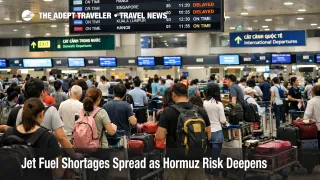
Jet fuel shortage risk is no longer just a market story. It is already affecting traveler decisions in parts of Asia, where governments, fuel importers, and airlines are warning about tighter supply, higher prices, and, in some cases, possible flight cuts. The immediate pressure is coming from the Iran conflict, the near closure of the Strait of Hormuz, export limits in Asia, and a sharp jump in refined fuel prices. For travelers, that means the safest plans now are simpler itineraries, larger buffers, and fewer assumptions that flights, ferries, road transfers, and same day connections will keep working normally.
The jet fuel shortage risk matters now because this is not just about crude oil getting more expensive. The International Energy Agency says Gulf producers exported 3.3 million barrels per day of refined oil products in 2025, including middle distillates such as diesel and jet fuel, and more than 3 million barrels per day of refining capacity in the region has already shut because of attacks and blocked export outlets. In plain English, the world is losing both feedstock and finished product at the same time, and jet fuel was already one of the tighter parts of the barrel before this shock.
Jet Fuel Shortage Risk: What Changed
What changed is that shortages are no longer theoretical. Vietnam's aviation regulator has warned airlines to prepare for possible flight reductions from April after China and Thailand halted jet fuel exports, with Reuters reporting that Vietnam relied heavily on those channels and that importers said they could only guarantee supply through March. That moves Vietnam from "higher costs" into a real schedule risk, especially for domestic flying that feeds long haul gateways and island or beach stops. Adept covered that shift in Vietnam Jet Fuel Warning Puts April Flights at Risk.
The pressure is broader than Vietnam. Reuters reports China has banned exports of gasoline, diesel, and jet fuel through at least the end of March, while Thailand and South Korea have also taken steps to protect domestic markets. Sri Lanka has moved into emergency fuel buying and rationing, and AP reports that the Philippines, Thailand, and Vietnam are already taking conservation measures as imported energy stress worsens. Those are not all aviation-only shortages, but that is exactly why travelers should care. When whole energy systems tighten, aviation competes with power grids, road transport, and industry for supply and financing.
Airlines are already passing some of that pain through. IATA's latest monitor says the global average jet fuel price rose 11.2 percent week over week to $175.00 (USD) per barrel, while Reuters says jet fuel prices in Asia have surged and airlines from Air India to European and U.S. carriers are adjusting fares, surcharges, or forecasts. Adept's Air India Fuel Surcharge Raises India Trip Costs shows how this turns quickly into a booking problem even before an airport runs short of fuel.
Which Travelers And Places Face the Most Exposure
The highest current exposure is in import-reliant Asian markets that depend on Middle East crude, Gulf refined products, or both, and that do not have large domestic buffers. Vietnam is the clearest aviation case because officials have openly discussed possible flight reductions. Sri Lanka is in a wider energy conservation phase, which can still hit airport runs, hotel operations, and domestic transport even if airports stay open. Pakistan is also on the travel watchlist because official foreign travel advice now warns that regional escalation could affect fuel availability and transport, a risk Adept detailed in Pakistan Fuel Shortage Warning Hits Travel Planning.
The next tier of exposure is places that may not be short yet, but are structurally vulnerable if Hormuz disruption lasts longer. Reuters says Australia, Bangladesh, and the Philippines are heavily exposed to China's missing export volumes, and AP says India and Indonesia are already feeling broader supply and price stress. Japan and South Korea are better resourced, but they are still highly import dependent and are leaning on reserves and market controls, which is a sign of real stress, not comfort.
Europe and North America are less likely to see literal airport fuel outages in the near term, but that does not make them safe from traveler impact. The first order effect there is fare pressure, fuel surcharges, and network trimming on marginal routes. The second order effect is less slack in the system, which means tighter reaccommodation options when weather, airspace closures, or aircraft shortages hit. That is one reason a broader systems piece like AI Data Centers And The Airline Supply Chain, A 2030 Outlook still matters here, because airlines are dealing with fuel stress on top of an already fragile operating base.
What Travelers Should Do Now
Travelers with April departures in Asia should simplify where they can. A one city stay or a protected round trip on one ticket is safer than a four stop itinerary that depends on separate domestic segments, tight connections, and late changes. In Vietnam especially, the better play is to reduce dependence on domestic feeder flights until airlines publish clearer April schedules. In Sri Lanka, Pakistan, and other markets under wider fuel stress, the weak point may be the road transfer or local transport leg, not the flight itself.
For booking decisions, the threshold is simple. Book now if the trip is firm, options are already limited, and losing the current schedule would break the itinerary. Wait only if your dates are flexible and you can absorb the chance of higher fares, added surcharges, or fewer frequencies. Travelers should also avoid same day domestic to international handoffs unless the whole journey is protected on one ticket, and they should build at least one buffer night before a critical long haul departure when fuel stress overlaps with airspace disruption.
Over the next 24 to 72 hours, watch for three signals. First, government or regulator language shifting from conservation to route reduction or rationing. Second, airline notices about schedule reviews, surcharges, or reduced frequencies. Third, evidence that Hormuz flows remain constrained long enough for refiners and importers to burn through near term buffers. If those signals harden, jet fuel shortage risk will stop being a regional warning and become a wider timetable problem.
Why the Hormuz Closure Threat Matters So Much
The mechanism is straightforward. The Strait of Hormuz is one of the world's most important oil chokepoints, and the IEA says crude and oil product flows through it have plunged from about 20 million barrels per day before the war to a trickle. That matters because many Asian importers rely not just on crude from the Gulf, but also on refined products from Gulf producers and swing suppliers such as China. Once Hormuz tightens, refiners lose feedstock, exporters protect domestic supply, and buyers farther down the chain start competing harder for the same jet fuel cargoes.
There is also very little easy replacement capacity. The IEA says middle distillate markets were already relatively tight, and there appears to be limited room for refineries outside the Gulf to raise diesel and jet fuel output enough to offset sustained losses. That is why this story can move from "higher oil prices" to "actual fuel shortages" faster than travelers expect. The problem is not only the price of crude, it is the lack of spare refining, export, and shipping capacity for the exact fuels aviation needs.
That is the key traveler takeaway. A prolonged Hormuz disruption would not hit every destination equally or at the same speed, but it would keep pushing the jet fuel shortage risk outward, first into import dependent Asian markets, then into fares, surcharges, and thinner schedules elsewhere. Travelers do not need to assume every airport is about to run dry. They do need to assume that fuel is now a live operational variable again.
Sources
- The Middle East and Global Energy Markets, IEA
- Jet Fuel Price Monitor, IATA
- Short-Term Energy Outlook, U.S. Energy Information Administration
- Vietnam braces for flight cuts from April after China, Thailand ban jet fuel exports, Reuters
- China's fuel export ban to further tighten Asia supply, Reuters
- Global airlines hike fares, cut routes as fuel costs balloon, Reuters
- Sri Lanka cabinet approves emergency spot purchases of fuel, Reuters
- Iran war pushes countries into energy triage as they conserve power and curb soaring prices, AP News