

British Airways Winter 2026 Expansion Adds 2 Routes
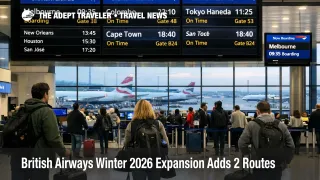
British Airways winter 2026 expansion is now on sale, and the practical change for travelers is bigger than two headline route launches. The carrier says it will grow long haul flying from London by nine percent versus winter 2025, add Melbourne and Colombo, and increase frequencies on a string of existing routes including Baltimore, Houston, New Orleans, Cape Town, Tokyo Haneda, and several Caribbean markets. For travelers, that means more booking options from late October 2026 into early 2027, but it also means separating BA's planned network growth from the airline's separate short term recovery moves tied to Middle East disruption.
The immediate planning window starts now because tickets for the new services and expanded frequencies went on sale on March 17, 2026. Melbourne is the bigger structural addition because it restores BA service to a major Australian city on a daily, year round basis via Kuala Lumpur, while Colombo is a winter only Gatwick route aimed more squarely at seasonal leisure demand. Travelers looking at Asia, Australia, Sri Lanka, Southern Africa, or Caribbean itineraries for late 2026 should treat this as a real inventory change, not just a marketing announcement, especially if they care about nonstop versus one stop tradeoffs, cabin choice, or Heathrow versus Gatwick routing.
British Airways Winter 2026 Expansion: What Changed
The confirmed changes are broad. British Airways says Baltimore will rise to daily London Heathrow service for winter 2026, New Orleans will move to four flights per week, and Houston will increase to 12 weekly Heathrow flights. Beyond North America, the airline says Cape Town gets a third daily Heathrow flight in December, Tokyo Haneda rises to double daily from the end of March and continues through the winter schedule, San José, Costa Rica moves to Heathrow and increases to five weekly flights, and Kingston plus Punta Cana each rise to four weekly Gatwick flights.
The two new route launches matter most. Colombo service from London Gatwick starts on October 23, 2026, at three flights per week for the winter season only. Melbourne is a daily Heathrow service via Kuala Lumpur. BA's network release lists the first London departure on January 9, 2027, while BA's Melbourne launch release says the service begins from Melbourne on January 11, 2027, which fits a normal outbound then return start pattern rather than a contradiction. BA also says Melbourne will offer four cabins, including First, while Colombo will offer three cabins without First.
This is also arriving alongside temporary Asia capacity added for a different reason. BA says it added seven extra return services to Bangkok and Singapore in the last week, adding more than 3,300 seats between March 10 and March 19, 2026, because Middle East disruption has pushed demand onto alternate routings. That is a short term operational response, not the same thing as the winter schedule buildout. Readers following British Airways Asia Reroutes Reshape Gulf Exits or British Airways Extends Gulf Flight Cuts to May 31 should read this expansion as a parallel network story, not proof that BA's Middle East operation is back to normal.
Who Benefits Most From the New British Airways Routes
Melbourne is the clearer win for long haul planners who value schedule depth and premium cabin choice. Because the route is daily and year round, it is more useful for business travelers, VFR traffic, and long lead leisure trips that need reliable date flexibility. The via Kuala Lumpur routing is still a one stop itinerary, so it does not compete on pure speed with some Gulf or Southeast Asia one stop options on every origin and date, but it does give travelers another oneworld aligned pathway between Australia and the U.K. through Heathrow.
Colombo fits a narrower but still meaningful audience. A three times weekly winter only Gatwick service is best for leisure travelers, Sri Lanka bound holiday demand, and U.K. origin passengers who can work around fewer weekly departures. The tradeoff is obvious, fewer frequencies mean less forgiveness when plans change, and Gatwick is less useful than Heathrow for some onward connections. Still, the route gives BA a direct Sri Lanka option again during the season when demand is strongest.
The U.S. increases matter most for travelers who use London as a bridge rather than a destination. More Baltimore, Houston, and New Orleans flying improves the odds of finding usable long haul connection banks into Europe, Africa, Asia, and India without shifting to another carrier or a more awkward airport pair. That does not guarantee lower fares, but it does improve schedule resilience, especially in winter when missed connections and tight same day reaccommodation can hurt more.
How Travelers Should Book Around It
Travelers targeting Melbourne or Colombo should book early if dates are fixed and cabin matters. Melbourne launches around the Australian Open and ahead of the Melbourne Grand Prix window, and BA explicitly tied the timing to those demand peaks. That usually means better early availability than late availability, especially in premium cabins and on school holiday adjacent dates.
If your trip is connection sensitive, the key threshold is hub choice. Choose Heathrow when onward connectivity and recovery options matter more than airport convenience, especially for North America, Africa, India, and Europe flows. Choose Gatwick only when the nonstop or fare is materially better and you can tolerate thinner same airline fallback options. For Colombo in particular, waiting for a perfect fare may be less useful than locking a workable departure pattern, because three weekly service leaves less room to recover from a missed preferred date.
Over the next few weeks, watch three things. First, whether BA quietly adjusts frequencies or introductory fares as winter demand firms up. Second, whether Middle East disruption keeps supporting stronger Bangkok and Singapore demand, because that can tighten Asia connection inventory beyond the Gulf itself. Third, whether partner and competitor airlines respond on Australia, Sri Lanka, South Africa, and Caribbean markets, since the real traveler outcome is shaped by total network competition, not BA's schedule in isolation.
Why This Launch Matters Beyond Two New Routes
The mechanism here is network balance. BA is not just adding destinations, it is shifting more winter long haul capacity toward leisure heavy and connection useful markets at the same time that parts of the Middle East network remain constrained. That matters because long haul planning works as a system. When one region becomes less reliable, airlines often strengthen alternate pathways that can absorb displaced demand or capture travelers who no longer want to route through a fragile corridor.
The first order effect is simple, more seats and more destination options from London. The second order effect is more subtle, stronger Heathrow and Gatwick banks can change fare pressure, partner feed patterns, and which cities become practical one stop choices for winter 2026. Melbourne strengthens BA's Australia relevance and oneworld utility. Colombo adds a seasonal Indian Ocean leisure option. The U.S. growth makes London a more usable bridge for travelers who might otherwise defect to another European hub.
That is why this announcement matters even for travelers not headed to Australia or Sri Lanka. British Airways winter 2026 expansion is really a London long haul capacity story. More flying on the right routes can improve trip design well beyond the named destinations, but travelers should still separate planned winter growth from the carrier's ongoing Middle East recovery moves, because those are solving different problems on different timelines.