

Israel Ben Gurion Outbound Cap Cuts Exit Options
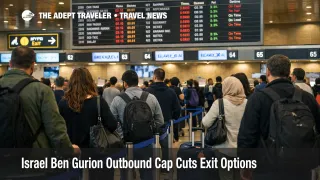
Israel Ben Gurion outbound flight cap tightened again on March 19, 2026, and that changes the exit math for travelers who were still counting on a direct air departure. The U.S. Embassy Jerusalem's latest security alert says Israel's transport authorities reduced passenger capacity on certain outbound flights from Ben Gurion Airport, while separate embassy alerts say routine consular services in Jerusalem and Tel Aviv remain suspended through March 20. For travelers, the problem is no longer just whether the airport is operating. It is that a limited departure channel has become thinner again, which raises the odds of losing a seat, slipping into a later departure window, or having to pivot to a land exit such as Taba on short notice.
This is a real change from earlier March coverage. Ben Gurion Airport (TLV) had resumed a gradual outbound restart from March 8 through a narrow group of Israeli carriers, under passenger limits tied to security rules. What changed on March 19 is that those restrictions tightened again after damage from falling interception debris at the airport pushed authorities to reimpose stricter limits on departures. That means a traveler who thought the system was slowly loosening is now dealing with a renewed squeeze instead.
Ben Gurion Outbound Flight Cap: What Changed
The March 19 change is not a full shutdown. It is a capacity cut inside an already restricted air exit system. The embassy alert specifically says flights to the United States on widebody aircraft are now capped at 130 passengers, down from the prior higher limit, and Israeli reporting says the Transportation Ministry reimposed passenger limits after debris damaged private aircraft at the airport. That matters because a flight can still appear to operate while carrying fewer passengers than travelers expected, which can force re-accommodation, queue pressure, and last minute seat rationing even without a headline cancellation.
The consular piece matters too, but in a narrower way. The U.S. Embassy Jerusalem and branch office in Tel Aviv remain closed for routine consular services through March 20, which reduces the margin for travelers who still need standard passport or document help, even as emergency messaging on departure options continues. For most travelers, the operational problem is still the seat itself. For a smaller but important group, especially travelers with document issues, both problems now stack together.
Which Travelers Are Most Exposed by the Cut
The most exposed travelers are the ones with near term outbound bookings from Ben Gurion on a tight timeline, especially those trying to connect onward the same day, leave before a visa or lodging problem worsens, or depart on separate tickets that do not protect the rest of the itinerary. A thinner outbound cap does not just threaten one flight. It can also break the onward chain, including hotel checkout timing, airport transfer windows, rebooking options, and later long haul connections.
Travelers who are waiting on non Israeli carriers are also in a weaker position. The gradual restart since March 8 has centered on a limited set of Israeli airlines, and foreign carrier service has remained patchy and vulnerable to further suspensions. That means travelers without a confirmed, currently operating seat on the approved carriers face a higher chance that Ben Gurion stops being the cleanest exit option before they actually move.
The travelers who may need to pivot fastest are those already close to fallback thresholds described in earlier Adept coverage. Israel Exit Planning Shifts to Managed Departure Lanes showed why Ben Gurion, Taba, and assisted channels had become a managed three lane system, while Taba Border Cash Rules Raise Egypt Exit Risk showed why the Egypt route only works if the visa, cash, and onward plan are already thought through.
What Travelers Should Do Now
Travelers with a confirmed near term seat from Ben Gurion should verify the operating carrier directly, keep airport transfer plans flexible, and build more buffer than they would for a normal departure. The right threshold now is not just "I have a ticket." It is "I still have a confirmed seat on a flight that is still operating under the current cap, and I can absorb a same day disruption without losing the whole trip." If that is not true, the itinerary is already fragile.
Travelers without a confirmed near term seat should stop treating Ben Gurion as the default answer. They should compare whether a land exit is more controllable, especially via Taba, but only if they can meet Egypt's cash and visa requirements and legally continue to the airport they actually need. The U.K. government says Taba travelers should carry at least $110.00 (USD) in cash per person, because border charges can change and ATMs are unreliable. Travelers considering that pivot should review Egypt Tourist Entry Requirements For 2026 before they move.
Over the next 24 to 72 hours, the signals that matter most are simple. Watch for further airline suspensions, any additional tightening of passenger caps, renewed changes to who can book or board, and any fresh embassy language around departure routes or consular limits. This is why the Ben Gurion outbound flight cap matters more than a routine schedule change. First order, it cuts available exit seats. Second order, it puts more pressure on Taba, rebooking channels, hotel nights near staging points, and every transfer timed around a seat that now has less room to survive disruption.
Why Israel Exit Planning Got Tighter Again
The mechanism is straightforward. Ben Gurion is operating as a controlled valve, not a normal hub. Since March 8, Israel has allowed only a gradual outbound restart on a limited carrier set, under Home Front Command related rules. When authorities tighten the passenger count again, they are not just removing abstract capacity from a spreadsheet. They are shrinking the number of people who can actually move through one of the few remaining direct exit channels.
That is why this March 19 change matters even for travelers who are not flying to the United States. Once the air lane gets thinner, the whole system has less slack. More travelers start competing for fewer seats, more people reconsider Taba or Jordan, and more itineraries shift from normal commercial booking logic to crisis logistics. The result is that Israel exit planning gets harder again, even while Ben Gurion technically remains open. The right read is not that all departures have stopped. It is that the Ben Gurion outbound flight cap has made air exit less forgiving at exactly the moment many travelers were counting on gradual improvement.
Sources
- Security Alert: U.S. Embassy Jerusalem, March 19, 2026
- Security Alert: U.S. Embassy Jerusalem, March 17, 2026
- Security Alert: U.S. Embassy Jerusalem, March 18, 2026 Update
- Israel Travel Advice, GOV.UK
- Passenger Limits Reimposed on Outbound Flights After Private Jets Hit by Missile Debris, The Times of Israel
- Israel's Main Airport to Reopen in "Extremely Limited Format," Reuters, March 2, 2026