

Europe Fuel Shock Threatens Summer Airfares
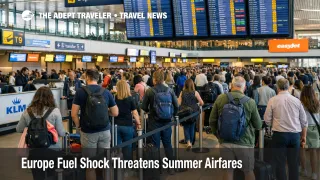
Europe summer airfares are moving toward a tougher booking environment, because European airline chiefs said on March 19, 2026 that jet fuel prices have surged as Middle East conflict disrupts routes and energy flows, and they used that pressure to push for a delay to the EU's 2030 synthetic aviation fuel mandate. For travelers heading to Europe this spring and summer, the immediate issue is not a single blanket surcharge. It is a wider cost squeeze that can raise fares, thin out marginal frequencies, and leave less slack when delays or reroutes hit. Travelers booking now should expect higher late booking risk, weaker recovery on tight connections, and more pressure on long haul itineraries that depend on Europe's big connecting banks.
Europe Summer Airfares: What Changed
What changed this week is that the fare pressure story in Europe is no longer hypothetical. Reuters reported that European airline chiefs warned a prolonged Middle East conflict would mean higher airfares, with European jet fuel prices roughly doubling since late February as carriers absorb longer routings and higher operating costs. Some airlines still have fuel hedges in place, but executives also said those protections expire in the coming months, which shifts more of the cost risk into the core summer selling period.
The airline lobbying push matters because it shows where management teams think the pressure is heading next. At the Airlines for Europe summit in Brussels, carriers urged the EU to postpone the synthetic aviation fuel, or eSAF, mandate scheduled to start in 2030. EasyJet's chief executive said the mandate should be delayed until the fuel is actually available, while the European Commission rejected a delay and said climate targets remain on track. That does not change this summer's legal blending rules overnight, but it does show that airlines see fuel availability and cost as a structural problem, not a short burst of war pricing.
The traveler consequence is straightforward. When fuel gets sharply more expensive, airlines first try to recover it through pricing. When that is not enough, weaker routes and off peak frequencies come under more pressure, especially where aircraft are already flying longer paths around constrained airspace. In an earlier Adept Traveler article, Jet Fuel Shortages Spread as Hormuz Risk Deepens, Adept traced how fuel stress was widening from Asia into broader airline planning. This week's Europe angle shows that the same shock is now feeding directly into summer fare setting and network choices.
Which Europe Trips Face the Most Risk
The most exposed travelers are late bookers, price sensitive leisure travelers, and anyone relying on a single convenient daily flight instead of a route with multiple fallback options. If an airline trims one marginal frequency on a secondary transatlantic city pair, or reduces a weaker intra Europe feeder, the result is not only fewer seats. It also means less recovery capacity when misconnects, weather, or crew knock on effects hit.
Long haul itineraries that depend on Europe as a transfer point also face more risk than point to point summer trips. A traveler flying into Paris, Amsterdam, Frankfurt, or Helsinki and then onward to a second European city, North Africa, or Asia depends on banked schedules working cleanly. If fuel costs stay high and airspace detours remain in place, those banks become more fragile because aircraft arrive later, crews run tighter, and the system has less spare time to absorb disruption. In an earlier Adept Traveler article, Middle East Reroutes Stretch Europe Asia Flights, Adept showed how route detours were already breaking tight connection math. Higher fuel costs make carriers even less willing to preserve lightly profitable cushion flights.
Short haul leisure routes inside Europe are also exposed, especially where low cost carriers have built pricing power around dense schedules and fast aircraft turns. Those airlines can often keep selling seats, but the tradeoff may be higher fares on peak days and less generous reaccommodation when things go wrong. Reuters also reported that some carriers have already said ticket prices will have to rise because of fuel costs, while Finnair warned that supply stress could even threaten jet fuel availability if the Strait of Hormuz disruption persists.
What Travelers Should Do Before Summer Fares Move Higher
The first practical move is to stop treating Europe summer tickets as a market that will necessarily soften later. If your trip depends on a specific week, a specific airport, or a one stop itinerary with limited alternates, earlier booking now is safer than waiting for a last minute drop that may never come. The main benefit of booking earlier in this environment is not just price protection. It is schedule choice.
The next decision point is route structure. A slightly more expensive itinerary with multiple daily frequencies, or with a larger connection buffer at a major hub, may now be the better buy than the cheapest one stop fare on a thin route. Travelers heading to smaller European cities should pay close attention to the final feeder leg, because that is where frequency cuts and reaccommodation pain often show up first.
Over the next several days and weeks, watch three signals. First, fare increases or fuel surcharges announced by major European carriers. Second, any summer schedule trims on weaker city pairs or secondary departure days. Third, whether fuel hedges roll off into a still elevated price market. Travelers who are already ticketed should monitor schedule change notices closely and rework tight same day rail, ferry, or tour bookings if the flight times shift. Reuters reported that U.S. carriers are also leaning on higher fares as fuel rises, which suggests this is not a Europe only pricing problem, even if Europe's mandate debate adds another layer of pressure.
Why Airlines Are Targeting the EU Fuel Mandate Now
The immediate trigger is the war driven fuel shock. Reuters reported that Europe's jet fuel prices have doubled since late February, while a separate Reuters report said jet fuel in Europe surged above $220.00 (USD) per barrel as conflict choked Middle East supply. That kind of move hits airlines fast because fuel remains one of their biggest costs, and IATA's Jet Fuel Price Monitor said the global average jet fuel price last week rose 11.2 percent week over week to $175.00 (USD) per barrel.
The deeper mechanism is that Europe is dealing with both a short term shock and a long term transition cost at the same time. Under ReFuelEU Aviation, the EU requires a 2 percent SAF share from 2025 and a 1.2 percent synthetic aviation fuel share from 2030 at covered EU airports. Airlines argue that synthetic fuel supply is still too scarce and too expensive, so adding that requirement into a market already hit by conflict driven fuel inflation would leave European carriers at a competitive disadvantage against non EU rivals. The Commission's response was clear, the targets stay.
What happens next depends on duration. If energy prices ease and Gulf routing conditions improve, the summer impact may stay concentrated in higher fares and some selective schedule reshuffling. If prices stay elevated into the hedge rollover period, the pressure is more likely to spread into broader capacity discipline, fewer cheap shoulder day fares, and less resilience when operations break. That is the real traveler risk. Europe does not need an outright fuel shortage at its airports for summer plans to get more expensive and less flexible.
Sources
- European airlines warn of higher fares, fuel shortages due to Iran war, Reuters
- Prices for oil, fuel cargoes smash record highs as Iran war chokes Middle East supply, Reuters
- US airlines lean on demand, fares as Iran war rattles overseas peers, Reuters
- ReFuelEU aviation, European Commission
- Jet Fuel Price Monitor, IATA