

Carnival Fuel Costs Raise Cruise Price Risk for 2026
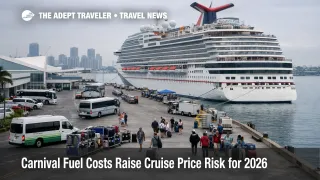
Carnival cruise price risk became more concrete on March 27, 2026, when Carnival cut its full year profit forecast and said higher fuel prices are expected to add more than $500 million in expense. For travelers, the immediate warning is not that booked cruises are suddenly being repriced. It is that one of the biggest mass market operators now has less room to keep discounting, hold the line on fly-cruise bundles, or absorb higher operating costs through the core booking season. Travelers still comparing 2026 sailings should assume the cheapest total trip math may get worse before itinerary maps change.
Carnival Cruise Price Risk, What Changed
What changed is that fuel pressure is now large enough to alter Carnival's annual guidance even though the company said it has minimal direct exposure to the conflict zone itself. Reuters reported on March 27 that Carnival now expects full year adjusted earnings per share of about $2.21, down from a prior expectation of up to $2.48, and that the company expects more than $500 million in higher fuel expense, partly offset by nearly $150 million in operational gains. Carnival's first quarter 2026 earnings presentation also said the business already has nearly 85 percent of 2026 inventory booked and is seeing strong demand at historically high prices, which gives it some cushion, but not immunity.
That matters because Carnival is not describing a weak demand problem. It is describing a cost shock landing on a strong booking base. In plain language, this is the kind of setup where future fares, bundled airfare, and promotional generosity tend to tighten before travelers see obvious itinerary cuts.
Which Cruise Travelers Are Most Exposed First
The travelers most exposed are not necessarily the ones sailing next week. They are the people still shopping 2026 cruises, especially fly-cruise vacations, peak summer departures, longer itineraries, and bookings where airfare is a large share of the total trip cost. Carnival's own filings warn that higher fuel prices can raise cruise operating costs and also lift airfare, which can increase guests' overall vacation costs and reduce demand because many passengers rely on airlines to reach embarkation ports.
This also looks broader than a single company problem. In an earlier Adept Traveler article, Cruise Fuel Costs Rise as Oil Hits Wave Season tracked how rising oil prices were already putting uneven pressure across major U.S. cruise lines. In another earlier Adept Traveler article, Norwegian Fuel Warning Raises Cruise Fare Pressure the same pattern was starting to show up even without immediate itinerary changes. Carnival's March 27 guidance cut is a harder signal because it moves the story from analytical risk to confirmed earnings pressure on the sector's biggest operator.
What Travelers Should Do Before Locking In Fly-Cruise Plans
Travelers booking now should focus on total trip cost, not just the base fare. The first number that can move is often airfare into the embarkation city, followed by weaker onboard credit offers, less aggressive discounting, or pricier bundled extras. Carnival's booking terms also reserve the right to increase published fares and air fare supplements without prior notice, while specifically allowing pass through of certain government tax and fee increases even after booking. That does not mean every booked cruise is about to get a surprise fuel add on, but it does mean travelers should read fare terms carefully and compare total package cost, not headline pricing alone.
The practical decision threshold is simple. If a fly-cruise itinerary already fits your budget, preferred cabin, and air schedule, waiting for a dramatically better deal now carries more risk than it did a few weeks ago. If the airfare portion is still unsettled, or if you need school holiday dates and a specific ship, locking those pieces sooner makes more sense than betting on late spring discounting. Travelers with flexible dates can still wait, but they should monitor airfare and package value together, not just cruise fare alone.
Why This Is Spreading Beyond a Carnival Stock Story
Carnival's March 27 update matters beyond investors because it shows how fuel stress can spread through cruise travel even when ships are not operating heavily in the affected region. Reuters said the company is the only major U.S. cruise line that typically does not hedge fuel, which makes Carnival a clearer read on what higher bunker costs look like when they hit without much financial insulation. That does not automatically mean every rival will respond the same way. It does mean fuel is no longer a background variable. It is now one of the live inputs shaping 2026 cruise pricing, promotion quality, and deployment economics.
What happens next depends on whether oil stays elevated into spring and summer booking windows. If fuel prices ease, Carnival's strong booked position may let the company protect margins without major traveler facing changes. If fuel stays high for longer, the likely progression is firmer fares on new bookings, tighter package economics, more pressure on fly-cruise budgets, and closer scrutiny of itineraries where long distances or weaker pricing power make the math less attractive. For travelers, that is the real warning in Carnival's guidance.
Sources
- Cruise operator Carnival cuts annual profit forecast as fuel costs surge, Reuters
- First Quarter 2026 Earnings Presentation, Carnival Corporation & plc
- Terms and Conditions of Ticket Contract, Carnival Cruise Line
- Carnival Corporation & plc Annual Report on Form 10-K for fiscal year ended November 30, 2025