

Vietnam Domestic Flight Cuts Thin April Options
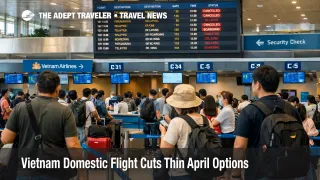
Vietnam domestic flight cuts are now an active April planning issue, not just a fuel market warning. Vietnam Airlines began canceling 23 flights a week from April 1 across seven thinner domestic routes, while Vietnam's aviation authority says airlines are also preparing fuel surcharges on international routes as jet fuel costs and supply pressure worsen. For travelers, the main risk is not only a canceled segment. It is the way fewer frequencies can break same day beach, island, and regional connections inside Vietnam, especially when a missed flight leaves fewer recovery options than before.
Vietnam Domestic Flight Cuts: What Changed
What changed is that the pressure has moved into named routes and published weekly reductions. Reuters reported on March 24 that Vietnam Airlines would suspend seven domestic routes and cancel 23 flights per week from April 1, including Hai Phong, Vietnam to Buon Ma Thuot, Vietnam, Cam Ranh, Vietnam, Phu Quoc, Vietnam, and Can Tho, Vietnam, plus Ho Chi Minh City, Vietnam to Van Don, Vietnam, Rach Gia, Vietnam, and Dien Bien, Vietnam. The Civil Aviation Authority of Vietnam, or CAAV, has also said Vietnamese airlines are preparing fuel surcharges on international routes from early April. What has not been published clearly, at least in the official and authoritative reporting available so far, is a route by route surcharge table or a confirmed surcharge amount by market.
That missing detail matters. Travelers can now verify the domestic cuts, but the pricing side remains less transparent. A surcharge with no published amount still affects planning because it narrows the margin between booking now and waiting, especially on international tickets that connect onward to domestic flights inside Vietnam.
The broader signal is that this is no longer just one carrier managing margins. CAAV said operations through mid April are expected to remain stable, but VietnamPlus reported fuel supply beyond that point remains uncertain, with airlines potentially forced into higher cost spot market purchases if replacement supply does not arrive.
Which Vietnam Itineraries Are Most Exposed
The biggest exposure sits on multi stop Vietnam trips, not simple one city stays. Travelers flying into Tan Son Nhat International Airport (SGN), Noi Bai International Airport (HAN), or Da Nang International Airport (DAD), then connecting onward to smaller beach, island, or regional destinations face a thinner recovery grid if one flight goes wrong. A route that loses several weekly frequencies does not have to disappear entirely to become much less forgiving.
Hai Phong and Ho Chi Minh City passengers are the most obvious first wave because the named cuts start there. But the second order effects spread wider. If fewer seats are available to places such as Phu Quoc or Cam Ranh, passengers may be pushed onto different city pairs, different days, or longer surface transfers. That can raise hotel rebooking costs, turn an easy same day connection into an overnight, and put more pressure on substitute routes that still have capacity.
In an earlier Adept Traveler article, Vietnam Flight Cuts Hit April Domestic Connections the warning was that Vietnam had moved from abstract risk into published network thinning. This new April 2 view is less about whether cuts are coming and more about how travelers should adapt now that they have started. Travelers who are still building a trip should also keep entry paperwork simple and current, especially if rerouting becomes necessary, using verified guidance such as Vietnam Entry Requirements For Tourists In 2026.
What Travelers Should Do Now
Travelers with April domestic segments inside Vietnam should recheck bookings directly with the operating carrier, not just an online agency itinerary. The first action is to confirm whether the original domestic leg is still operating on the booked day. The second is to look at the next viable same airline and alternate airline options before leaving home, especially if the trip depends on a connection to a resort area, an island, or a cruise or tour departure.
The tradeoff now is speed versus optionality. Waiting may preserve flexibility if the carrier adjusts schedules again, but early rebooking can protect the structure of a more complex trip while seats still exist. Travelers with same day international to domestic connections should leave more buffer than usual, and anyone using one of the affected city pairs should think seriously about arriving a day earlier if the onward piece is expensive or hard to replace.
Over the next 24 to 72 hours, the most useful signals are whether airlines publish more domestic trims, whether fuel surcharge amounts finally become public on international routes, and whether authorities keep repeating that fuel supply is secure only through mid April. If that time horizon holds and no new supply relief appears, the next decision point will be whether Vietnam keeps this at selective route cuts or moves into broader frequency reductions.
Why Fuel Pressure Is Spreading Through Vietnam Travel
The mechanism is straightforward. Vietnam relies heavily on imported aviation fuel, and CAAV says rising Middle East tension, higher refining costs, war risk insurance, and export limits from some regional suppliers have all pushed Jet A 1 costs higher. VietnamPlus reported average March MOPS Jet A 1 prices around $190.00 to $200.00 (USD) per barrel, with prices reaching $234.34 (USD) on March 24, while Reuters reported the regulator had already warned of looming shortages and flight reductions.
That creates a two layer problem. First, some thinner domestic routes no longer make operational sense if fuel is expensive or less certain. Second, even flights that continue may cost more to operate, which is why international surcharges are being prepared. In an earlier Adept Traveler article, Vietnam Jet Fuel Warning Puts April Flights at Risk we covered the earlier warning stage. The current situation is more serious because the market has crossed from warning into actual schedule reduction. Unless supply improves or prices ease, travelers should expect Vietnam domestic flight cuts to remain a live April planning issue, with the greatest pain on thinner domestic links and on trips built around tight same day connections.