

TSA Shoes-On Fight Deepens U.S. Airport Security Risk
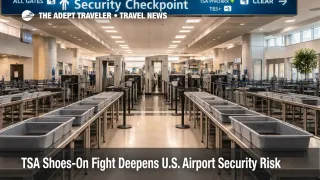
The TSA shoes-on policy is facing new scrutiny in the United States after Sen. Tammy Duckworth said on April 3, 2026 that the agency should reverse the change and resume requiring most travelers to remove footwear at checkpoints. Her demand follows CBS News reporting on a classified Department of Homeland Security watchdog audit that found serious vulnerabilities in how shoes are screened under the current setup. For travelers, there is no same day checkpoint rule change yet, but the story matters because it raises the chance of a sudden policy reversal, uneven airport enforcement during any transition, and renewed pressure on a screening system that is already recovering from weeks of staffing strain.
TSA Shoes-On Policy: What Changed
What changed on April 3 is political and operational pressure, not the checkpoint procedure itself. Duckworth, the ranking Democrat on the Senate aviation oversight panel, sent a letter to TSA leadership urging the agency to immediately withdraw the shoes-on policy that DHS announced on July 8, 2025. TSA and DHS had justified that 2025 change by saying newer screening technology and layered security made routine shoe removal unnecessary for general passengers.
The new pressure comes from the watchdog findings described by CBS News. According to that reporting, covert red team testing found TSA scanners were not effectively screening shoes, and the inspector general treated the issue as urgent. Duckworth argues TSA then failed to move fast enough on corrective action, and she says the agency missed the 90 day response window normally tied to that kind of oversight finding. Those details remain partly opaque because the report is classified, but the core claim, that shoe screening capability itself is in question, is what makes this more than a routine political complaint.
For travelers, the immediate point is narrow but real. You can still keep your shoes on at most standard TSA checkpoints because the rule has not changed back. The live risk is that a security driven reversal, if ordered quickly, would add friction at exactly the place many U.S. airports have been trying to stabilize after the Department of Homeland Security shutdown distorted staffing and wait times through late March.
Which Travelers Would Feel a Reversal First
The first travelers to feel any reversal would be domestic passengers in standard screening lanes, especially at big origin airports where even small process changes can slow throughput. TSA PreCheck travelers are less exposed because keeping shoes on has long been part of the PreCheck benefit structure, and TSA still describes that as a core feature of the program.
The larger exposure sits with travelers whose trip plans have little slack. Families with children, older passengers, travelers with mobility issues, and anyone carrying extra layers or complicated footwear would lose time first if shoe removal returned. So would passengers building itineraries around short check in windows, tight domestic connections, or prepaid ground transfers after arrival. A shoe removal step sounds small in isolation, but across a busy checkpoint it becomes a throughput problem, which is really a queue problem. That is how a process change at the belt turns into missed flights, later aircraft turns, and weaker same day recovery options further down the trip.
The timing is awkward because TSA operations are only partly back on firmer footing. Reuters reported on March 31 that absence rates among TSA officers improved after pay resumed, but more than 500 officers had already quit since mid February and some major airports were still showing much higher absence rates than the national average. In an earlier Adept Traveler article, TSA Pay Restart Eases Airport Security Lines, the improvement was real, but it was not the same thing as a full recovery. In an earlier Adept Traveler article, United TSA Wait Times Reach Seven Hub Airports, the new planning tools were useful precisely because checkpoint conditions were still uneven.
What Travelers Should Do Now
For now, travelers should not assume a checkpoint rule change is imminent, but they also should not treat this as political noise with no travel consequence. The practical move is to keep building normal security buffer, especially at large hubs, and to watch for any official TSA announcement before weekend or holiday departures. If shoe removal returns quickly, the first visible effect will be longer divest and recomposure time in standard lanes, not a dramatic headline closure.
The next decision point depends on what TSA does, not what Duckworth asked for. If the agency leaves the policy in place, travelers mainly need to monitor checkpoint conditions airport by airport. If TSA restores shoe removal, passengers flying in the first several days after the change should arrive earlier than they did under the shoes-on regime, because even a modest throughput hit spreads fast in the morning bank and late afternoon peaks. Standard screening passengers would need the biggest buffer, while PreCheck travelers may see less change unless TSA broadens the rollback.
Travelers should also separate security risk from convenience messaging. The agency's 2025 pitch for the policy change was shorter lines and easier screening. That logic only holds if the underlying technology reliably compensates for leaving shoes on. If the classified testing is directionally accurate, the real choice is no longer convenience versus inconvenience. It is convenience versus whether TSA believes it can close the vulnerability without reintroducing an older safeguard.
Why This Matters Beyond One Checkpoint Rule
The bigger issue is not only whether travelers keep shoes on. It is whether TSA made a national screening change faster than its technology and oversight process could support. CBS reports that the inspector general flagged the vulnerability in a rare seven day warning, and Duckworth says TSA still has not completed the required corrective action response. If that sequence holds, the agency is dealing with both a technical screening question and an accountability question at the same time.
That matters operationally because checkpoint systems rely on consistency. When TSA changes a rule, airports, airlines, airport apps, passenger habits, and staffing assumptions all adjust around it. Reversing course is possible, but it is rarely friction free. The likely next step is pressure on TSA and DHS to explain whether mitigation is underway, whether the shoes-on policy will stay in place, and whether any revised screening procedures could be deployed without a full rollback. Acting TSA leader Ha Nguyen McNeill is currently the senior official performing the duties of administrator, and DHS leadership also changed in late March when Markwayne Mullin became secretary, which means the decision will land in a moving leadership environment as well.
For travelers, the near term takeaway is simple. There is no immediate need to change an itinerary solely because of this letter. But anyone flying in the next several weeks should watch for official TSA guidance, keep extra checkpoint buffer where screening remains fragile, and be ready for the possibility that a security driven policy reversal could arrive with little notice if Congress and DHS oversight pressure continues to build.
Sources
- DHS to End 'Shoes-Off' Travel Policy, TSA
- Senate Democrat Demands That TSA Lift Its "Shoes-On" Policy, Calling It a "Reckless" Safety Risk, CBS News
- Oversight Hearing, DHS Shutdown Impacts, TSA
- Secretary of Homeland Security, DHS
- Absences Fall Sharply After U.S. Airport Security Workers Finally Get Paid, Reuters
- TSA PreCheck, TSA