

United Bag Fee Hike Raises Trip Costs Across the Americas
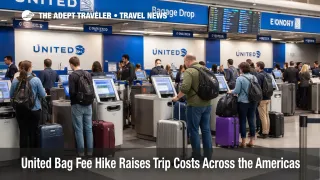
United's latest baggage move turns fuel pressure into a more direct traveler cost problem. For tickets purchased on or after April 3, 2026, the carrier raised first and second checked bag fees by $10 and lifted the third checked bag fee by $50 on many routes within the United States, Mexico, Canada, and Latin America. The immediate effect is not only a more expensive airport transaction, it is a higher total trip cost for travelers who cannot realistically avoid checking luggage.
That matters most for family trips, cruises, longer stays, mixed work and leisure travel, and itineraries that already depend on seats, schedules, and hotel timing lining up cleanly. United is still preserving free checked bags for some co branded credit card holders, certain elite members, active duty military travelers, and premium cabin passengers, so the pain lands unevenly. Travelers without those buffers now need to price the full trip earlier, because baggage is becoming a larger share of what a ticket really costs.
United Bag Fee Hike: What Changed
The new fee structure is straightforward, but the impact adds up quickly. Travelers who prepay now face $45 for a first checked bag and $55 for a second, while those paying within 24 hours of departure will generally pay $50 for the first bag and $60 for the second. United also raised the third checked bag fee to $200. This is the first time in two years that United has increased checked bag fees.
The larger significance is where the airline chose to pass the cost. U.S. carriers usually do not rely on formal fuel surcharges the way some foreign airlines do. Instead, they often push cost pressure into ancillary products such as baggage, seats, and fare bundles. AP tied United's move to higher jet fuel costs, and United CEO Scott Kirby recently told investors that fuel inflation since the conflict escalation on February 28 had already added about $400 million to operating costs.
That makes this more than a small fee table update. It is another sign that airlines are trying to protect headline fare competitiveness while still recovering higher operating costs from travelers who use optional services. In an earlier Adept Traveler article, JetBlue Bag Fee Increase Hits U.S. and Caribbean Trips showed the same pattern beginning to emerge elsewhere in the U.S. market.
Which Travelers Will Pay More First
The most exposed travelers are not always the ones buying the cheapest fare. They are the ones whose trip type makes checked baggage hard to avoid. Families traveling with children, cruise passengers carrying formalwear or extra gear, travelers combining business meetings with leisure time, and people taking longer trips all face a higher real world fare than the base ticket suggests.
The first order effect is simple, a roundtrip traveler checking one bag each way now pays $90 if prepaid, or $100 if the bag is added within 24 hours of departure. A traveler checking two bags each way now reaches $200 to $220 before paying for seats, priority boarding, or any same day change costs. That can materially alter carrier choice on routes where United's base fare only looked cheaper before baggage was added.
The second order effect is more structural. When multiple airlines start leaning harder on optional fees during a fuel shock, comparison shopping gets messier, especially for casual travelers who still sort by fare first. That can push people into weaker decisions, such as booking a lower headline price that turns out more expensive once bags, seating, and timing constraints are added back in. In an earlier Adept Traveler article, U.S. Airfares Rise as Fuel Shock Tightens Summer Trips documented that pressure already spreading across fares, fees, and schedules together.
What Travelers Should Do Before Booking
Travelers who already know they will check a bag should stop treating baggage as a late stage add on. Price the trip with the bag included at the moment of booking, then compare that total against competing airlines, fare bundles, or credit card benefits that may include one free checked bag. On some routes, a slightly higher base fare may now be the cheaper trip once baggage is included.
The main decision threshold is whether baggage is unavoidable and whether schedule resilience matters more than the lowest advertised fare. If the trip involves a cruise departure, a fixed event, a family itinerary, or an onward connection that would be expensive to miss, it is worth comparing the full trip total now rather than hoping a cheaper fare remains cheaper later. If the trip works with carry on only, or if a traveler holds a card or status tier that waives the fee, this change may matter less than schedule and departure time.
The next thing to monitor is whether this stays a two carrier story. JetBlue has already moved, and Reuters has reported that airlines globally are raising prices, adding charges, and cutting weaker flying as fuel costs surge. If oil stays high, the next pass through may not be another bag fee alone. It could show up in thinner schedules, higher change costs, or fewer low fare seats left in the market for summer trips.
Why Airlines Are Using Fees Instead of Fares
Fuel is typically the second biggest airline expense after labor, and most major U.S. carriers do not hedge it heavily. That means a sharp oil move hits operating costs quickly, while many tickets were sold earlier at lower price assumptions. In that environment, baggage fees are a faster and cleaner lever than rebuilding every base fare in the market at once.
That approach also helps airlines protect price perception. A traveler searching fares may still see a relatively competitive base ticket, even though the real spend rises once bags are added. The method is especially effective in a market where demand has remained resilient and where carriers believe travelers will absorb at least part of the added cost. Reuters reported that U.S. airlines have leaned on strong demand and firmer fares even as fuel prices surged, which helps explain why ancillary charges are moving higher before a broader collapse in booking demand appears.
What happens next depends on duration, not just price. A short fuel spike can produce fee changes and modest fare pressure. A longer period of elevated costs can change network planning, reduce backup flights, and make broken itineraries harder to repair. For travelers, the practical takeaway is clear. The United bag fee hike is not an isolated nuisance fee story anymore. It is part of a broader shift in how airlines are spreading fuel stress through the total price of travel.
Sources
- Checked bags
- United Airlines raises bag fees amid rising fuel costs and introduces tiered premium fares
- Price hikes, outlook cuts - What airlines are doing as fuel costs surge
- US airlines lean on demand, fares as Iran war rattles overseas peers
- JetBlue Bag Fee Increase Hits U.S. and Caribbean Trips
- U.S. Airfares Rise as Fuel Shock Tightens Summer Trips