

ICE Leaves Some U.S. Airports, TSA Recovery Uneven
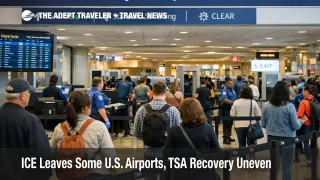
ICE at U.S. airports is beginning to unwind, but that does not mean U.S. checkpoint operations are back to normal. Immigration and Customs Enforcement officers started deploying to about 14 airports on March 23, 2026, after TSA absences surged during the Department of Homeland Security funding standoff, and airports in Phoenix, Cleveland, Pittsburgh, and Philadelphia have since said those officers are leaving or already gone. For travelers flying in the next several days, the practical takeaway is simpler than the politics: security lines have eased at many large airports, but staffing damage, airport by airport variation, and peak bank timing can still turn a normal day into a long checkpoint wait.
ICE At U.S. Airports: What Changed
The operational change is not that ICE arrived, that happened weeks ago. The new development is that some airports are now shedding that stopgap support as TSA officers receive pay again and the worst screening lines recede. Reuters reported on March 30 that major airports were returning closer to normal after TSA pay resumed, while local airport officials later confirmed ICE had already left or was preparing to leave at several locations.
That matters because ICE was never the real fix for airport security throughput. Reuters reported that the officers were helping with crowd management, ID checks at the start of checkpoints, and other support tasks, not replacing trained TSA screening functions. Once pay resumed, the visible emergency response could start to recede, but the system still had to absorb officer resignations, lingering absenteeism, and the normal unevenness of spring traffic peaks.
Which Travelers Still Face the Most Checkpoint Risk
The biggest remaining exposure is on travelers who are counting on a tight preflight schedule. Early morning departures, hub banks, family travel, and itineraries with checked bags or special screening needs remain the most vulnerable, because even a recovering checkpoint system can still produce long lines when staffing depth is thinner than normal. Reuters said the shutdown pushed TSA absentee rates above 12 percent at one point and led to more than 500 officer resignations by March 30.
The second order risk is itinerary brittleness. A checkpoint that is mostly back to normal can still break same day plans if one bank of departures stacks up, because missed flights do not just hit the first segment. They can spill into higher last minute fares, forced hotel nights, lost prepaid parking, missed cruise or tour connections, and weaker rebooking options on busy spring weekends. In an earlier Adept Traveler article, ICE At U.S. Airports Is Not Fixing TSA Lines, the central point was that support officers could change terminal flow without solving screening capacity. That remains true even as some airports begin pulling them back.
What Travelers Should Do Now
Travelers should treat this as a recovery story, not a return to old assumptions. If your airport had visible checkpoint problems during the shutdown, keep building extra buffer into April departures, especially for morning flights and flights with checked bags. A traveler who could once arrive on a tight routine should now leave room for a line spike, because the staffing recovery is not uniform and local airport conditions can shift faster than national headlines.
The main decision threshold is simple. If your trip has a hard consequence for missing the first segment, such as a cruise embarkation, an international connection, a wedding, or a same day event, plan around the possibility of uneven checkpoint flow instead of betting on a recovered airport. For lower stakes domestic trips, the risk is less about systemic collapse and more about ordinary operations still running with less slack than travelers are used to. TSA Staffing Losses Keep U.S. Airport Recovery Fragile and Airport Security Delays Could Outlast the Shutdown are the better internal reads for that planning logic.
Why the Recovery Still Looks Fragile
The recovery is fragile because paying officers and rebuilding staffing are not the same thing. The White House memorandum ordering compensation for TSA officers helped relieve the immediate paycheck crisis, and TSA told Congress in late March that employees had already worked 87 days without getting paid in fiscal 2026. But the broader system still has to rebuild experience, shift coverage, and morale after weeks of disruption.
What happens next depends less on whether ICE remains visible in terminals and more on whether TSA staffing stabilizes. That is why the next warning signs for travelers are practical ones: airport specific wait time spikes, airports reopening or reclosing checkpoints, fresh staffing losses, and any new federal budget moves that cut screening capacity again. Reuters reported on April 6 that the administration has proposed cutting more than 9,400 TSA jobs, which would turn a short term checkpoint recovery into a bigger structural risk if Congress moved in that direction. For now, ICE at U.S. airports is fading as a visible emergency measure, but the underlying question for travelers is whether the screening system regains enough slack to stay reliable during peak demand.
Sources
- ICE agents deployed to more than a dozen US airports, Reuters, March 23, 2026
- Major US airports return to normal as TSA workers get paid, Reuters, March 30, 2026
- Paying Our Great Transportation Security Administration Officers and Employees, The White House, March 27, 2026
- Oversight Hearing, DHS Shutdown Impacts, TSA, March 25, 2026
- ICE agents expected to leave PHL airport this week, NBC10 Philadelphia, April 9, 2026
- ICE agents begin leaving airport security checkpoints after helping TSA staff shortages, Arizona's Family, April 9, 2026
- Trump proposes to cut 9,400 TSA workers, $1.5 billion from budget, Reuters, April 6, 2026