

Pakistan Eases Gilgit Baltistan Advice, Insurance Math
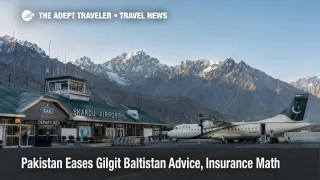
Gilgit Baltistan travel advice changed on April 15, 2026, when the U.K. Foreign, Commonwealth & Development Office, or FCDO, said it no longer advises against all but essential travel to Gilgit-Baltistan, Pakistan. For trekkers, road trippers, climbers, and tour operators, that is more than a symbolic easing. FCDO's Pakistan page also says travel insurance could be invalidated if you travel against its advice, so the shift can reopen cover, booking confidence, and supplier willingness for trips centered inside Gilgit-Baltistan itself. The catch is that Pakistan's regional tensions, fuel risk, terrorism warnings, and upcoming Gilgit-Baltistan elections remain in the advisory, which means northern Pakistan plans are now more bookable, not friction free.
Gilgit Baltistan Travel Advice: What Changed
The formal change is narrow but consequential. As of the April 15 update, Gilgit-Baltistan is no longer listed under FCDO's "all but essential travel" warning, even as other parts of Pakistan remain under stronger warnings. FCDO still advises against all travel to Balochistan, to within 10 miles of the Pakistan Afghanistan border, to parts of Khyber Pakhtunkhwa, and to within 10 miles of the Line of Control in Pakistan administered Kashmir. It also still advises against all but essential travel near much of the India border, to parts of Sindh, and to Dera Ghazi Khan in Punjab.
That matters most for travelers whose plans depend on insurance validity and operator risk policies. Many adventure trips into northern Pakistan are sold on the assumption that evacuation, curtailment, medical, and cancellation cover will remain valid, and FCDO explicitly warns that travel against its advice can invalidate insurance. Once a region drops out of the "all but essential" category, some travelers and suppliers regain a clearer legal and commercial basis to proceed, especially for trekking and expedition itineraries that had become hard to justify after the March tightening.
Who Benefits Most, and Where the Exposure Still Sits
The clearest beneficiaries are travelers whose trip is actually centered in Gilgit-Baltistan, especially trekkers heading toward Skardu, Gilgit, Hunza, or K2 staging areas, photographers planning long mountain circuits, and specialist operators trying to sell summer 2026 departures with fewer insurance objections. In an earlier Adept Traveler article, Pakistan Gilgit Baltistan Unrest Hits Trip Planning showed how the March warning made join dependent itineraries much harder to defend. This week's easing changes that booking math in a meaningful way.
But the recovery is uneven because northern Pakistan trips rarely depend on one geography alone. FCDO still advises against all travel on the Karakoram Highway between Mansehra and Chilas via Battagram, Besham City, Dasu, and Sazin up to the junction with the N15, and against all travel on the N45 from north of the Mardan ring road to the edge of Chitral City, including Kalash valley. That means some classic overland approaches into the north still pass through areas that remain under stronger warnings, even though Gilgit-Baltistan itself has been eased.
The air alternative is not a clean fix either. FCDO says flights to and from the mountainous areas in northern Pakistan are frequently delayed or cancelled because of extreme weather, and advises travelers to plan alternative routes. So the practical tradeoff has shifted, not disappeared. Insurance footing is better for the destination itself, but access can still fail through road warnings, weather related flight cancellations, or wider regional disruption.
What Travelers Should Do Before Booking Northern Pakistan
Travelers should now treat Gilgit-Baltistan as a destination that may be insurable again for some policies, but only after checking the exact wording of their own cover and the routing used to reach it. It is not enough to confirm that Gilgit-Baltistan was eased. You also need to check whether your insurer treats transit through still advised against areas as a separate exclusion, and whether your operator's terms were written around the older March warning.
The most defensible bookings are likely to be trips with slack built into access, flexible domestic sectors, and clear fallback nights in gateway cities such as Islamabad, Pakistan, or Skardu, Pakistan. If a trip depends on a same day domestic connection, a tightly timed jeep transfer, or a single overland corridor, the remaining risk is still high enough that a lower base advisory does not solve the itinerary problem by itself. Travelers should also verify whether guides, porters, transport providers, and hotels have resumed normal cancellation terms after the March advisory period.
The next decision threshold is simple. Book now if your route avoids still warned corridors, your insurance confirms cover in writing, and your operator has realistic delay contingencies. Wait if your trip depends on the Karakoram Highway segments still under stronger warning, or if your itinerary has no buffer for weather, protests, or election related movement controls. FCDO's Travel Advisory explainer is also a useful reminder that advisory changes often affect insurance and supplier behavior before they fully normalize traveler logistics.
Why the Planning Picture Improved, but Not Cleanly
What changed is not that northern Pakistan became low risk overnight. What changed is that the official U.K. risk boundary moved. That can trigger second order effects across the travel system, because insurers, tour operators, expedition organizers, and cautious independent travelers often use that boundary as a practical go or no go line. In an earlier Adept Traveler article, Pakistan Advisory Raises Fuel and Transport Risk showed how broader Pakistan planning was already being strained by regional tensions, fuel risk, and transport disruption. Those constraints remain live.
FCDO still warns that ongoing regional tensions pose significant security and economic risks, have already led to travel disruption, and could affect fuel availability and pricing, leading to transport disruption and delays in some areas. The same page tells travelers to be careful around protests, demonstrations, rallies, and religious gatherings, to allow extra time for travel, and to be prepared to shelter if local authorities instruct them to do so. That guidance matters more now because the easing may pull some travelers back into the market just as the region moves toward elections and remains sensitive to broader national and regional shocks.
The likely next phase is a cautious reopening of confidence rather than a full normalization of northern Pakistan logistics. Some operators will market the easing quickly, especially for summer trekking season. More conservative insurers and organizers may wait for a calmer run of weeks without renewed unrest or election related movement problems. For travelers, the right reading is that Gilgit-Baltistan has become more plan worthy again, but only if the whole chain, insurance, access route, domestic flight resilience, and political timing, works on paper before money is committed.