

Virgin Australia Capacity Shift Pressures Domestic Fares
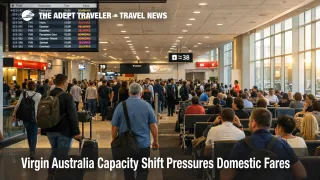
Virgin Australia capacity shift became a practical Australia trip-planning issue on April 15, 2026, when the airline said Middle East conflict-driven fuel volatility would add about A$30 million to A$40 million to its second-half fuel bill and that it had adjusted capacity in response. For domestic flyers and inbound international passengers connecting onward in Australia, the change points to a market with less slack and more pricing pressure, not an immediate systemwide shutdown. The near-term read is straightforward, fares can rise first, weaker schedule flexibility can follow, and travelers should start treating cheap last-minute domestic add-ons as less reliable than they looked a few weeks ago.
Virgin Australia Capacity Shift: What Changed
Virgin said the fuel price shock has more than doubled jet fuel prices since late February and now expects domestic capacity to rise only 1 percent in the second half, with a 1 percent reduction in the fourth quarter. Reuters also reported that the carrier has hedged 92 percent of its second-half Brent crude exposure and 71 percent of refining margins for the rest of fiscal 2026, which helps explain why the move looks more like discipline than panic. The airline did not announce wholesale route cuts, but it did confirm that capacity is being tightened while costs stay volatile.
That matters because Virgin is not talking about a faraway Europe-only fuel problem. It is translating the global fuel shock into a domestic Australia network decision. The first order effect is simple, fewer marginal seats and firmer fares. The second order effect is that thinner schedule padding makes it harder to rebuild an itinerary when an inbound international flight runs late, a school holiday bank fills up, or a weather event hits a leisure-heavy corridor. That is where a modest percentage cut can feel much larger than the headline number.
Which Australia Itineraries Face the Most Pressure
The most exposed travelers are not necessarily those on headline trunk routes alone. ABC reported that Virgin's change is understood as a broad consolidation across its mostly capital-city-focused domestic fleet, with no entire route axed so far. That points to a likely pattern of merged frequencies, fuller flights, and weaker same-day recovery rather than dramatic map changes. Travelers using Sydney, Melbourne, Brisbane, Perth, Adelaide, or other major gateways as domestic connection points should assume less room for error on busy days.
The comparison with rivals sharpens the signal. Qantas said on April 14 that it had already made capacity adjustments and reduced domestic capacity in the fourth quarter by around 5 percentage points, while also redeploying capacity toward Europe. Air New Zealand said on April 7 it would slash flights through May and June, affecting about 4 percent of flights, and hike fares. Put together, that means Virgin's move is part of a wider Oceania pattern, carriers are protecting margins, prioritizing stronger demand, and becoming less tolerant of lightly filled flying.
What Travelers Should Do Now
For domestic Australia trips that matter on timing, book earlier than usual and build more buffer into same-day connections. If you are pairing an international arrival with a separate domestic ticket, the old assumption that another cheap flight will be available a few hours later is less safe in a tighter capacity environment. Where possible, shift to longer connection windows, earlier domestic departures, or a protected through-ticket rather than a self-built chain that depends on open inventory.
For price-sensitive trips, watch the route pattern rather than one headline fare. The decision threshold is not only whether today's fare feels high. It is whether frequency is starting to disappear on your travel day. Once that happens, the remaining flights often reprice quickly because recovery space shrinks. On leisure-heavy routes, a modest schedule trim can raise the cost of holiday packages, rental-car timing, and hotel sequencing even if the airline never uses the word cancellation.
Over the next few weeks, monitor three signals. Watch whether Virgin begins talking about further operational levers after June, whether Qantas and Jetstar extend their own domestic adjustments, and whether fuel commentary shifts from cost pressure to physical supply concern. In an earlier Adept Traveler article, Europe Jet Fuel Warning Raises June Flight Risk, the warning point was Europe. Australia now has its own confirmed carrier response.
Why Australia's Fuel Pressure Is Spreading, And What Happens Next
The mechanism is bigger than crude oil alone. Qantas said it is largely exposed to jet refining margins, which rose from about US$20 per barrel in February to around US$120 at the peak. Virgin's own hedge profile shows the same issue, crude hedging helps, but refining margins still matter. That is why airlines can feel acute pressure even when governments say there is no immediate local fuel shortage. In an earlier Adept Traveler signal, Travel Fuel Risk Is Becoming a Refinery Fit Problem, the point was that travel runs on specific refined products moving through specific refinery and shipping systems, not on a vague idea of global oil supply.
What happens next depends on duration. If fuel volatility eases, Virgin's capacity discipline may stay limited to fare firmness and selective schedule consolidation. If volatility persists into the next financial period, the risk shifts toward broader domestic repricing and more visible network trimming, especially on routes where yields do not justify current fuel costs. For travelers, the Virgin Australia capacity shift should now be read as an early market signal, Australia domestic travel is still functioning, but the cheap-flexible recovery room is getting thinner.
Sources
- Virgin Australia flags higher fuel costs amid the Mideast conflict | Reuters
- QANTAS GROUP MARKET UPDATE, April 2026 | Qantas Newsroom
- Air NZ hikes fares, cuts flights as fuel costs more than double on Iran war | Reuters
- Virgin to trim domestic flights ahead of fuel costs rising by up to $40 million | ABC News