

Bahrain Exits Stay Fragile as Shelter Warning Persists
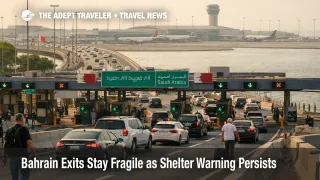
Bahrain exit planning is still a live movement problem, not a normal post crisis cleanup. The U.K. Foreign, Commonwealth & Development Office says its Bahrain advisory was updated on April 17, 2026, to add shelter in place guidance, while also keeping in place the warning that Bahrain's airspace only reopened on April 8, 2026, that commercial flights from Bahrain International Airport (BAH) remain limited, and that the King Fahd Causeway into Saudi Arabia can close again at short notice. The same page also says travelers whose presence is not essential may wish to consider departing if they judge they can do so safely.
That combination matters operationally. A reopened airspace does not mean a resilient exit network. Bahrain still has two weak points at once, air departures that can tighten again, and a road exit that can disappear with little warning. For travelers, that means the practical risk is not only cancellation. It is getting caught between a thin flight schedule, a blocked land fallback, extra hotel nights, and onward bookings in Saudi Arabia or beyond that depend on paperwork staying valid.
Which Travelers Face the Most Exposure
The most exposed travelers are short stay visitors with fixed departure dates, people trying to connect onward through Saudi Arabia by road, and anyone whose next segment depends on a visa, residency status, or a passport with enough remaining validity. The FCDO says road travelers can be denied entry to Saudi Arabia if they do not have the correct paperwork, and adds another operational restriction, if traveling by car, the vehicle must be wholly owned and registered in the traveler's name. It also warns that British nationals using emergency travel documents, emergency passports, or passports with less than six months remaining validity should seek advice before trying to leave Bahrain through Saudi Arabia.
The exposure goes beyond British nationals. The U.S. State Department's Bahrain country information says passports should be valid for at least six months, tourist visas are required, visa overstays can trigger fines or worse, and residents intending to return should have a re entry permit valid for at least six months before leaving. That means a road exit plan is only as good as the documents behind it. A traveler who can physically reach the causeway may still fail the border step and end up back in Bahrain with fewer clean options than before.
This is also where the story differs from a simple airport disruption. A traveler can no longer assume the causeway is the safe backup to limited flights, or that a reopened airport means the decision can wait. In an earlier Adept Traveler article, Bahrain Exit Planning Shifts to Flights vs Causeway framed the same problem as a split between thin air options and fragile road options. The April 17 shelter language keeps that split alive rather than resolving it.
What Travelers Should Do Now
Travelers still in Bahrain should treat departure planning as a same day or next day logistics exercise, not a loose intention. Confirm whether your current flight is operating before going to the airport, keep airline alerts active, and do not rely on a road exit unless you have already checked Saudi entry requirements, your passport validity, visa status, and vehicle eligibility. Keep essential medication, power, cash access, and extra lodging capacity in reserve because the FCDO is explicitly pairing exit advice with shelter guidance and emergency supply language.
The next decision point is not abstract. Leave now logic starts to make more sense if your stay is nonessential, your departure date is within the next few days, your passport or visa situation is tight, your onward Saudi routing is time sensitive, or your fallback options are already narrowing. Wait and see makes more sense only if you have legal stay headroom, flexible lodging, a confirmed onward chain, and a realistic ability to shelter in place if conditions tighten again.
Travelers should also read Bahrain exit planning against the wider Gulf system. In an earlier Adept Traveler article, Strait of Hormuz Reopening Leaves Fuel Risk in Place, the core point was that political reopening does not instantly restore normal transport conditions. That same logic applies here. A formally reopened airspace is not the same as a fully rebuilt commercial network.
Why the Exit Problem Has Not Fully Cleared
The mechanism is straightforward. Bahrain's travel system does not need a full shutdown to keep travelers under pressure. Limited commercial flights reduce slack, so missed departures are harder to replace. A causeway that can close without much warning removes the main land fallback. Shelter guidance then raises the practical cost of waiting because movement conditions can worsen faster than a normal traveler can rebuild a trip.
Second order effects spread quickly from there. A failed exit can become an accommodation problem, a visa problem, and an onward itinerary problem all at once. Travelers can miss Saudi connections, lose hotel nights elsewhere, or run into document validity issues that would have been manageable a week earlier. That is why Bahrain exit planning remains serious even after April 8. The system has reopened enough to tempt delay, but not enough to remove fragility.
What happens next depends on whether Bahrain keeps adding reliable flight capacity and whether regional security conditions stay quiet enough to avoid fresh airspace or border interruptions. Until those two things improve together, travelers should assume Bahrain exit planning still requires buffers, verified documents, and a faster trigger to leave than a normal Gulf city break would. For readers who want the broader supply side context behind Gulf transport fragility, Travel Fuel Risk Is Becoming a Refinery Fit Problem is the best related internal explainer.