

Atlas Europe Cruise Flex Policy Adds Rebooking Cushion
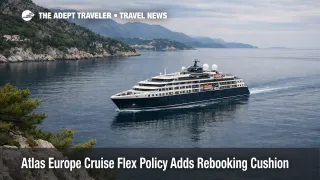
Atlas Europe cruise flex policy gives some spring and summer shoppers a new escape hatch if they are uneasy about booking now. Atlas Ocean Voyages is offering a cancel for any reason style future cruise credit on eligible new bookings made from April 20, 2026 through May 15, 2026 for Northern Europe, Mediterranean, and Arctic voyages sailing through August 31, 2026. Guests can cancel up to 15 days before departure and receive a credit equal to the fare paid, a meaningful buffer for travelers facing higher airfare, higher fuel costs, and a softer close in Europe booking market. The immediate move for travelers is to read the booking window and use it only if the extra flexibility is worth more than a cheaper but firmer fare elsewhere.
Atlas Europe Cruise Flex Policy: What Changed
What changed is not the itinerary map, it is the risk sharing. Atlas is now marketing the program as "Atlas Assurance" and saying eligible guests may cancel for any reason up to 15 days before departure and take a future cruise credit instead of losing the fare value outright. The offer applies only to new bookings made between April 20, 2026 and May 15, 2026, only on Northern Europe, Mediterranean, and Arctic voyages sailing through August 31, 2026, and the credit must be used on bookings made within 12 months for cruises sailing through the end of 2027.
That is a narrower and more useful protection than a blanket refund promise. Travelers still need to watch the edges carefully. The benefit is future credit, not cash back, and it is tied to a specific booking window and a specific set of regions. Operationally, that helps travelers who want to preserve optionality on an expensive Europe or Arctic trip, but it does not fully remove exposure on airfare, hotels, insurance terms, or pre and post cruise arrangements that may sit outside the cruise fare. Atlas is also still selling its separate Europe and Arctic air promotion, which means the line is now using both pricing support and flexibility support at the same time.
Which Travelers Benefit Most From the New Atlas Terms
The best fit is a traveler still shopping a 2026 Europe or Arctic departure who is worried less about whether to cruise at all, and more about whether this summer is the right moment to lock it in. That includes fly cruise guests facing long haul air to embarkation points, travelers building land stays around the sailing, and anyone booking close in where changes in airfare or sentiment can alter the whole trip equation quickly. The protection matters more on Atlas than on a short, low cost mass market sailing because these itineraries often involve remote gateways, pricier air, and more fragile pre and post cruise logistics.
The company's explanation also lines up with the wider market signals. A spokesperson told Travel Weekly that summer demand softened after the Iran war began, while 2027 and later demand remains healthier. That matches the broader pattern already visible in Europe cruise shopping. In an earlier Adept Traveler article, Mediterranean Cruise Demand Softens in March, close in Mediterranean demand had already started to weaken while longer lead demand held up better. Atlas's new policy looks like a targeted answer to that same near term confidence gap, not evidence that Europe cruising has broadly broken.
What Travelers Should Do Before Booking
Travelers considering an eligible sailing should price the full trip, not just the cabin. The main tradeoff is straightforward. Atlas Europe cruise flex policy gives you an exit ramp on the cruise fare, but it does not automatically neutralize higher airfare, harder air availability, or change fees on non cruise components. If your airfare is volatile, your gateway is remote, or you need a lot of moving parts to line up, this kind of future credit protection can be worth real money even without a cash refund. If your trip is simple and you can absorb change more easily, a lower fare elsewhere may still be the better buy.
The timing threshold matters. Travelers who are serious about Europe, Northern Europe, or Arctic cruising this year should make the booking decision inside the April 20 to May 15, 2026 window if they want this protection at all. Waiting past that window could leave the same traveler shopping with less flexibility in a market where the cost side is still unstable. Atlas's own offers page still pairs the reassurance message with summer savings and air credits, which suggests the line is trying to convert hesitation now, not just reward long range planners later.
The other decision point is whether to book or wait for the market to settle. Travelers who only want maximum flexibility should verify the exact fare rules and any exclusions before paying, then compare that against insurance and air conditions. Travelers who are already comfortable with the destination but nervous about summer volatility have a stronger case to book now under the protection window rather than gamble on a better headline deal later with weaker terms. That is especially true for itineraries where one canceled or repriced air leg can break the whole trip.
Why Atlas Is Using Flexibility Now, and What Happens Next
The mechanism looks commercial, not operational. Atlas has not announced a safety problem with these voyages. Instead, the line is responding to softer near term demand and to the cost pressure travelers are seeing around Europe travel. The spokesperson's comments to Travel Weekly tied the weaker summer booking pace to the Middle East conflict and to higher fuel and airline costs. That cause claim comes from the company, but it also fits the wider travel environment, where Europe air planning has become more exposed to fuel disruption and selective schedule risk.
In an earlier Adept Traveler article, EU Jet Fuel Plan Raises Summer Flight Risk, the pressure had already shifted from fare pain toward contingency planning. For cruise travelers, that second order effect matters. When air gets more expensive or less reliable, premium and expedition cruise demand can soften even if the ship itself is operating normally, because the real purchase is the whole trip chain, not only the sailing. Atlas Europe cruise flex policy is a signal that at least one line thinks reassurance is now part of the sales pitch for summer Europe product.
What happens next depends on whether summer air and fuel conditions stabilize and whether Europe close in demand firms again. If they do, this may remain a short tactical booking program. If not, more lines may lean harder on air credits, softer deposit rules, targeted future cruise credit programs, or quieter discounting to keep bookings moving without cutting the base fare too visibly. For travelers, the practical conclusion is simple. Atlas Europe cruise flex policy improves the booking math for some 2026 shoppers, but only if the value of that flexibility is high enough in your specific itinerary.