

Miami Caracas Flights Start April 30 on American
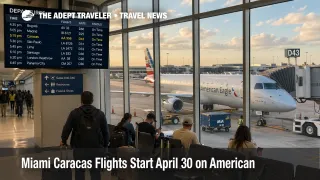
Miami Caracas flights are no longer only a tentative restart. American Airlines is now selling seats for daily service launching on April 30, 2026 between Miami International Airport (MIA) and Caracas, Venezuela, with flights operated by Envoy on Embraer 175 aircraft. For travelers who have been relying on Panama City, Bogotá, or other third country connections, that is a real routing change, but it is still a thin one. The practical move is to treat this as a reopened nonstop with limited backup depth, not as a fully rebuilt U.S. Venezuela market.
Miami Caracas Flights: What Changed
What changed is that the story has moved from intent to inventory. On April 9, American said it aimed to restart Miami to Caracas service as soon as April 30 once government approvals and security checks were complete. On April 20, the airline said tickets are now available and that the new service will launch on April 30, which is materially firmer than a target date without loaded flights.
That does not make the route low risk. It makes it bookable. The U.S. Department of Transportation approved American's request last month for Venezuela service via Envoy, and Reuters reported that approval covers Caracas and Maracaibo for two years. The route is returning after more than six years without U.S. carrier service, which means the first benefit is obvious, fewer forced connections and less exposure to missed onward flights in third countries, but the first constraint is obvious too, one daily regional jet does not create much recovery slack if the operation slips.
Who Benefits Most, and Where the Fragility Remains
The travelers who benefit most are those whose trips are hard to piece together through regional hubs, family visits, humanitarian travel, and business trips where losing half a day to a connection is expensive. A nonstop from Miami cuts handoff risk at the connection point, reduces baggage failure opportunities, and simplifies visa and transit questions that can come with multi country routings.
The fragility is capacity and substitution. American said the route will use an Embraer 175 operated by Envoy, not a larger mainline aircraft. That is a sensible way to test the market, but for travelers it means initial seat counts are limited and same day reaccommodation options will also be limited if a flight goes out full or irregular operations hit. If this service cancels on a travel day, the market will not yet have the sort of dense U.S. Venezuela frequency map that makes recovery easy.
The other constraint is destination risk. The U.S. State Department currently lists Venezuela at Level 3, Reconsider Travel, citing crime, kidnapping, terrorism, and poor health infrastructure, while also noting some areas carry higher risk. Airline restoration and travel advisory levels are separate systems. A restarted route improves access. It does not remove the need to judge destination conditions, ground transport plans, and consular limits before travel.
What Travelers Should Do Before Booking
Travelers using this route in the first several weeks should protect the rest of the itinerary from a single point failure. That means avoiding tight same day cruises, tours, domestic Venezuela connections, or nonrefundable hotel check ins that assume perfect on time performance on day one. Where the trip matters more than the fare, paying more for flexibility is rational on a just resumed route with one daily frequency.
If you are traveling for a fixed event, keep a backup path through a regional hub in mind before departure, even if you prefer the nonstop. The threshold for that backup is simple, if losing one day would break the trip, know the alternate routing and hotel options in Miami before you leave home. If the trip is discretionary and timing is loose, waiting to see how the first week operates may be the cleaner move.
Travelers should also separate booking confidence from country confidence. Confirm entry requirements, monitor the State Department advisory, enroll in STEP if you are a U.S. traveler, and do not assume insurance, employer duty of care rules, or card protections will treat Venezuela the same way they treat lower risk destinations.
Why the Route Is Back, and What Happens Next
American first announced in January that it planned to reconnect Venezuela with the United States, subject to government approval and security assessments. March brought the DOT approval, April 9 brought the first concrete restart window, and April 20 brought ticket sales and a launch statement. That sequence matters because it shows the reopening moved through regulatory, security, and commercial stages rather than appearing all at once.
The next thing to watch is not another press release. It is whether the April 30 launch operates as scheduled, whether the route stays stable through its first week, and whether capacity broadens beyond one daily Envoy flight. In an earlier Adept Traveler article, Venezuela Airspace Warning Disrupts Caribbean Routes tracked how Venezuela related airspace and security changes can spill into wider regional travel. A second earlier Adept Traveler article, Venezuela Airspace Curbs Disrupt Caribbean Flights, showed how quickly operational changes in this corridor can reshape traveler decisions even after restrictions lift. The direct flight is back. The system around it is still thin enough that travelers should keep a fallback plan until the restart proves it can hold.
Sources
- American Airlines flights between Venezuela and the US now available
- American Airlines updates timing for Venezuela service
- American Airlines becomes the first airline to reconnect Venezuela with the United States
- Venezuela Travel Advisory
- American Airlines set to resume US flights to Venezuela as soon as April 30
- USDOT approves American Airlines flights to Venezuela