

Low Cost Airlines Seek Tax Relief as Fuel Shock Bites
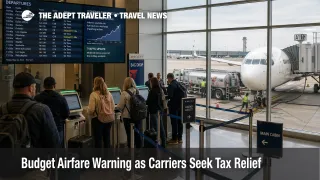
Five U.S. low cost airlines are now asking Congress to strip two federal taxes off domestic tickets, a sign that budget airfare pressure is no longer just a fare story. Reuters reported on April 20, 2026, that the Association of Value Airlines, representing Spirit, Frontier, Allegiant, Sun Country, and Avelo, wants a temporary suspension of the 7.5% excise tax on airline tickets and the $5.30 domestic segment tax as jet fuel costs surge. For travelers, the practical issue is not whether Congress likes the idea. It is that the cheapest end of the U.S. market is signaling visible financial strain at the same time Spirit's survival is back in question.
Budget Airfare Pressure: What Changed
What changed is not a new fare rule or a tax cut. It is that five discount carriers took the unusual step of asking lawmakers for temporary federal tax relief because fuel costs have climbed fast enough to threaten the economics of low fare flying. Reuters reported the group said suspending those taxes would offset about one third of the recent increase in fuel costs. That matters because these are not premium long haul airlines trying to protect margins. They are carriers built around low base fares, ancillary fees, and price sensitive domestic demand.
The taxes at issue are real, current charges on domestic air travel. The FAA's 2026 excise tax schedule lists a 7.5% domestic passenger ticket tax and a $5.30 per passenger domestic segment fee, while the Airport and Airway Trust Fund page shows that these aviation excise taxes help fund major FAA activities. So this request is not just about cheaper tickets. It is a proposal to shift some fuel shock away from travelers and airlines, and onto federal revenue unless Congress backfills the gap.
The traveler consequence is immediate even before any vote. Once airlines start asking for tax relief, the real signal is that fare increases, baggage fee pressure, schedule thinning, and weaker backup options are all more likely. Reuters has already reported that airlines globally are responding to fuel stress with fare hikes, fee increases, forecast cuts, and selective flight reductions.
Which Travelers Are Most Exposed
The most exposed travelers are not necessarily those paying the highest fares. They are the people relying on the ultra low cost end of the market to keep domestic summer trips affordable, especially families, weekend leisure travelers, Florida flyers, and passengers on thinner nonstop routes where one discount carrier may be the main source of pricing pressure. If that layer weakens, the first problem is often not a dramatic collapse. It is fewer low fare seats, less schedule choice, and more expensive last minute recovery when something goes wrong.
Spirit makes that risk more concrete. Reuters reported on April 16, 2026, that the fuel surge threatened Spirit's planned bankruptcy exit, with J.P. Morgan estimating the added fuel burden could exceed the carrier's unrestricted cash reserves. Reuters then reported on April 21, 2026, that Transportation Secretary Sean Duffy questioned whether federal aid for Spirit would amount to "good money after bad," even as President Donald Trump floated support to preserve 14,000 jobs. In other words, the weakest major low cost carrier is no longer a separate side story. It is part of the same market stress picture.
A second exposed group is travelers who assume fuel stress only means a somewhat pricier ticket. That is too narrow. First order, carriers raise prices or fees. Second order, they start protecting stronger routes, trimming weaker flying, and narrowing same day backup choices. In an earlier Adept Traveler article, Spain Summer Airfares Face New Fuel Price Clauses, the pressure showed up through a fuel linked pricing mechanism. In an earlier Adept Traveler article, Travel Bankruptcy Risk Rises if Fuel Stress Lasts Into Summer, the warning was that weaker travel companies could start separating from the pack if fuel strain lasted. This new tax relief push fits that pattern, but it brings the stress directly into Washington.
What Travelers Should Do Now
Travelers booking domestic U.S. summer trips should stop assuming the cheapest fare will still be there later, especially on carriers or routes where price competition already looks thin. For discretionary trips, earlier booking now makes more sense than waiting for a late sale if the itinerary depends on one low cost airline staying aggressive. The main exception is a market where several large carriers still overlap heavily, because those city pairs have more capacity to absorb strain.
Travelers holding existing bookings on financially weaker carriers should watch for quieter warning signs before any dramatic announcement. Those signs include retimed departures, trimmed frequencies, aircraft swaps, baggage fee changes, and fewer same day alternatives on the same route. That does not mean every low cost booking is unsafe. It means the quality of the backup plan matters more than usual. Nonrefundable hotels, cruises, weddings, and same day event tickets raise the cost of trusting a fragile fare.
The next decision point is not Congress alone. Travelers should monitor whether fuel prices stay elevated, whether the tax request gains traction, and whether Spirit stabilizes or deteriorates further. If fuel stress lasts and weaker carriers keep cutting or repricing, the smarter move for important summer trips is to pay a bit more for a stronger schedule, a better protected connection, or a day earlier arrival. Cheap tickets are useful. Cheap tickets with no recovery room are a trap.
Why This Is Happening, and What Comes Next
The mechanism is simple. Low cost airlines run on thinner margins and depend heavily on keeping base fares low enough to stimulate demand, then making money through volume, aircraft utilization, and add on fees. When fuel jumps sharply, that model comes under pressure faster than airlines with richer corporate demand, stronger premium cabins, or more international yield. Reuters reported that the current fuel spike has already pushed airlines around the world into fare hikes, fee increases, and flight cuts. The tax relief request is one more way of saying the normal levers may not be enough at the cheap end of the market.
What happens next depends on three things. First, whether fuel costs ease quickly enough to reduce the emergency tone around low cost carriers. Second, whether Congress has any appetite to suspend aviation taxes that help fund the FAA and the Airport and Airway Trust Fund. Third, whether Spirit's situation becomes a one carrier crisis or a broader warning about the fragility of the low fare segment. Until those answers are clearer, travelers should read this episode for what it is, not a tax policy footnote, but a visible warning that budget airfare pressure is starting to threaten competition, schedule depth, and booking confidence in the U.S. market.
Sources
- US low-cost airlines seek temporary tax relief to address soaring fuel costs
- Fuel surge threatens Spirit Airlines bankruptcy exit, raises liquidation risk
- Saving Spirit Airlines possibly puts 'good money after bad', Transportation head Duffy says
- Trust Fund Excise Taxes Structure
- Airport & Airway Trust Fund (AATF)
- Airport and Airway Trust Fund Baseline, February 2026