

Ethiopia Fuel Shortages Now Threaten Transfers and Power
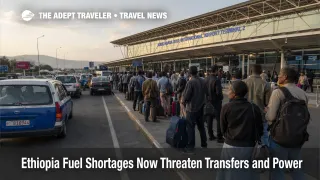
Ethiopia fuel shortages became a sharper traveler warning on April 9, 2026, when Canada updated its Ethiopia advisory to say the shortages are causing long waits at stations and may disrupt ground transport, air transport, electricity, and telecommunications. That matters because the problem now reaches beyond filling up a car. It can break the basic chain that keeps a trip moving, airport transfer, domestic flight timing, hotel operations, and mobile connectivity, especially once travelers leave Addis Ababa, Ethiopia.
Ethiopia Fuel Shortages: What Changed
Canada's advisory now says fuel shortages are severe enough to disrupt taxis, public transportation, flights, electricity, and internet or telecom access, and it explicitly tells travelers to expect delays, allow additional time between locations, and keep a tank at least half full. The page says the latest update added fuel shortage information on April 9, 2026. That is a more practical warning than a generic security note because it describes how a traveler can get stranded even when an airport, road, or hotel remains technically open.
The exposure is not limited to overland touring. A fuel squeeze can hit the whole trip stack. First order, taxis and intercity transport become less dependable. Second order, airport runs get riskier, hotel backup power gets less certain, and communications failures become harder to ride out because travelers lose the transport options they would normally use to recover.
Which Travelers Face the Most Disruption
The highest exposure sits with travelers who are stacking multiple fragile links into one day, domestic connection passengers, business visitors moving between cities, tour travelers relying on road transfers, and anyone staying outside the capital where transport substitutes are thinner. Canada's advisory keeps Addis Ababa at a lower warning tier than the rest of the country, but it also says the countrywide shortages are making travel across Ethiopia increasingly challenging.
Travelers with the least margin are the ones most likely to feel this first. A short same day domestic transfer, a late arriving inbound flight, or a hotel pickup that is merely "a bit late" becomes a bigger operational problem when taxis are scarce and mobile service is unreliable. The U.S. advisory already warns that communications disruptions are common in Ethiopia and can delay consular help, which makes a transport failure harder to fix once it starts.
There is also a growing aviation angle. Reuters reported on March 31 that Ethiopian authorities and state linked firms were already pushing fuel saving measures, while later reporting said Ethiopian Airlines had expanded technical stop use to conserve fuel at Addis Ababa Bole. That does not mean broad passenger flight cuts have been announced nationwide, but it does show the stress is serious enough to shape operations, not just street level transport.
What Travelers Should Do Now
Build more slack into every movement than you normally would. For airport days, treat the airport transfer as the main failure point, not the flight itself. In Addis Ababa, Ethiopia, that means leaving earlier than usual for Addis Ababa Bole International Airport (ADD), confirming transport the day before, and having a second driver or car service option ready if your first plan fails. Outside the capital, same day connections between road legs and domestic flights are a bad bet under current conditions.
The rebooking threshold is simple. If your itinerary depends on one tight road transfer, one working mobile connection, or one domestic hop to protect an international departure, add an overnight buffer instead of trying to optimize the schedule. Travelers headed into higher risk regions should go further and reconsider whether the trip still has a workable operational case at all. In an earlier Adept Traveler article, Ethiopia Advisory Adds Exit Ban, Outage Risk explained how paperwork and communications failures can derail departures even when flights are still moving.
For the next 24 to 72 hours, watch three things at once, fuel availability where you will actually be traveling, the reliability of your ground transport provider, and whether flight operations begin showing broader conservation measures or timing changes. The main risk is not one dramatic shutdown. It is Ethiopia fuel shortages turning a normal travel day into a chain of small failures that leave too little recovery time.
Why the Disruption Spreads Beyond Gas Stations
Fuel shortages hit travel systems unevenly. Public transport weakens first because fleets need steady supply and cannot absorb long waits at pumps. That then spills into airport access, hotel operations, and connectivity because the same fuel pool often supports backup generators, service vehicles, and the transport network visitors rely on when something slips. Canada now makes that mechanism explicit by warning of possible disruption to transport, electricity, and telecommunications in the same advisory update.
Ethiopia also sits inside a wider regional fuel stress story. Reuters reported in March that authorities were already rolling out conservation measures, and Ethiopia's airline sector has begun adapting operations to protect limited fuel at the Addis hub. That wider context matters because it suggests this is not just a short queue problem that disappears once a few stations refill. It is a systems problem. In an earlier Adept Traveler article, Africa Jet Fuel Shortage Hits Flight Planning laid out how tighter regional supply can turn into schedule pressure, thinner recovery options, and more fragile connections.