

Venezuela Colombia Border Warning Raises Overland Detention Risk
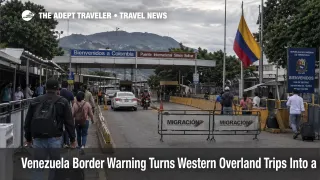
Venezuela border warning has become more operationally specific for travelers who were tempted to treat the March 19, 2026 U.S. advisory downgrade as room for flexible movement. The State Department still lists Venezuela overall at Level 3, but it now sharply carves out the Venezuela Colombia border region within 20 miles as Level 4, Do Not Travel, while also warning that visas are required in advance, are not available on arrival, and can lead to refusal, expulsion, or detention if documents are not valid. For travelers moving near San Cristóbal, Táchira, or Cúcuta linked corridors, that shifts the problem from abstract country risk to a concrete border planning trap.
Venezuela Border Warning: What Changed
What changed is not just the overall risk level, but the precision of where the hard no go line now sits. The current U.S. advisory says travelers should not go to the Venezuela Colombia border region within 20 miles of the frontier because of crime, kidnapping, and terrorism. It separately warns against travel to Táchira state, Apure state, Guárico state, rural areas of Bolívar state, and Aragua state outside Maracay, which means the western side of the country is not just generally risky, it is broken into specific high exposure zones that can catch overland travelers who assume they can improvise once they are in country.
That matters because western Venezuela is where some of the most obvious land movement ideas start to look deceptively simple on a map. The San Cristóbal, Venezuela, and Cúcuta, Colombia, corridor is a logical planning line for business activity, regional family travel, and anyone thinking about entering by air in one country and moving by road near the other. The State Department's Colombia advisory adds another layer, warning against travel within 10 kilometers, about 5 miles, of the Colombia Venezuela border because of crime, kidnapping, conflict between armed groups, and detention risk, and it says the border is not always clearly marked. In practice, that narrows flexibility from both sides.
This is also a sharper framing than the one Adept used on April 21, when the practical focus was airport arrival risk around Caracas after the broader U.S. advisory eased. In an earlier Adept Traveler article, Venezuela Airport Transfer Risk After Advisory Ease, the main issue was still controlled airport arrival and transfer planning. The new problem is that western overland movement now reads less like a flexible add on and more like a boundary travelers should design around from the start.
Which Travelers Face the Highest Western Venezuela Risk
The highest exposure falls on travelers whose itinerary is not purely point to point. Business travelers visiting industrial, logistics, or energy sites in western Venezuela are one group, because meetings and site visits can create pressure to move by road after arrival rather than stay inside a tightly managed transport plan. NGO, media, and consulting travelers can face the same problem if the trip requires movement near Táchira or other western corridors rather than a short, self contained stay in Caracas. Travelers with family ties spanning Colombia and Venezuela are also exposed if they assume border proximity makes spontaneous crossings viable.
The document side is just as serious as the geography. The State Department says a visa is required to enter Venezuela, that no visa is available on arrival, and that travelers without a valid Venezuelan visa face refusal of admission, expulsion, or detention. It also says the U.S. government cannot assist U.S. citizens in Venezuela with replacing lost or expired Venezuelan travel documents or getting Venezuelan entry or exit stamps, and normal U.S. consular operations in Caracas remain suspended. That means a western Venezuela itinerary can fail before the security question is even resolved, because the document trap is part of the risk, not a separate administrative issue.
The result is that spontaneous border crossing plans are effectively off the table for U.S. travelers. A traveler who imagines flying into Colombia, deciding later whether to continue by land, and sorting out paperwork at the frontier is now planning against the official rule set. Even travelers who do not intend to cross can create exposure if they book hotels, drivers, or meetings too close to the border and leave room for route changes under pressure.
What Travelers Should Do Before Departure
Travelers who must go to Venezuela should redesign the trip around controlled entry and controlled movement. That means securing the proper Venezuelan visa before travel, using a flight based arrival plan rather than overland improvisation, and treating western border adjacency as a risk multiplier, not a convenience. If the trip purpose can be met in Caracas or another lower exposure area, keep it there. If the purpose requires western Venezuela, the trip should be organized as a managed security movement with fixed drivers, fixed lodging, and a route that does not drift toward the border zone.
For business travelers, the State Department explicitly says companies should consult their security departments and may need a professional security organization. That is not generic liability language. It reflects the practical reality that road routing, driver sourcing, hotel placement, and communications backup matter more when the country has suspended U.S. embassy operations and the western side overlaps with areas the advisory says not to enter for any reason. Travelers who cannot secure that support should challenge whether the trip needs to happen in person at all.
The main decision threshold is simple. If the itinerary depends on any same trip flexibility near the Colombia frontier, change it now. If it assumes border crossing can be decided in the moment, cancel that assumption now. If the traveler does not already hold the correct Venezuelan documents, the safe read is not to travel until that is resolved. Over the next several days, travelers should monitor State Department updates, airline routing practicalities, and any company specific security guidance, but none of those should be treated as a substitute for the current no go posture near the border itself.
Why the Border Zone Is a Different Kind of Trap
What makes this different from a standard destination advisory is the combination of geography, document enforcement, and limited consular support. The border zone is dangerous because of crime, kidnapping, terrorism, and armed group activity, but the travel system problem is wider than that. A traveler does not need to be targeted by a criminal group to have the trip collapse. It can unravel through bad route choices, unclear frontier markings, invalid documents, detention risk, or the inability to get timely help once inside Venezuela.
That combination creates first order and second order effects for itineraries. First order, land crossings and near border road moves become much harder to justify. Second order, travelers may need to shift to longer air routings, book hotels farther from ground risk corridors, add security support, or abandon multi stop western Venezuela plans entirely. Those changes can raise costs, reduce scheduling flexibility, and make a meeting or site visit that looked feasible on paper no longer worth the operational exposure. The next thing to watch is whether additional governments or carriers sharpen their own language around western Venezuela access, but the U.S. advisory already gives travelers enough information to treat the frontier as a red line rather than a gray zone.