

Wagah Attari Closure Keeps India Pakistan Trips Split
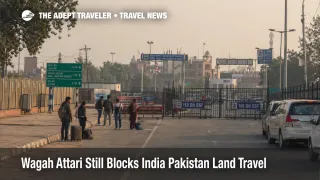
The Wagah Attari border is still not a route travelers can plan around. The U.K. Foreign, Commonwealth & Development Office says the crossing remains closed, continues to advise against all travel within 10 kilometers of the India Pakistan border on the Indian side, and still limits Jammu and Kashmir to a very narrow exception centered on Jammu city and flights in and out. That pushes the usual overland India Pakistan plan out of the workable category and forces travelers to rebuild multi country trips as two separate entries instead.
Wagah Attari Border Closure: What Changed
The core operational change is not subtle. FCDO's India advice, still current on April 22, 2026, says it advises against all travel within 10 kilometers of the India Pakistan border and states that the Wagah Attari border crossing is closed. On the Pakistan side, FCDO says travelers should avoid all but essential travel within 5 miles of the international border with India, while noting that the Grand Trunk Highway route via Wagah is currently closed and that the Kartarpur Corridor is also currently closed for crossings.
That matters because the Pakistan entry rules page is explicit that the Wagah crossing on the Grand Trunk Road is the only official land crossing between Pakistan and India, and it is currently closed. Once that route fails, this is no longer a story about a slower handoff at one checkpoint. It is a route viability story. For most foreign travelers, there is no regular land fallback left between the two countries right now.
This is also a live update, not stale background. In an earlier Adept Traveler article, Attari Wagah Border Closure Ends India Pakistan Land Route, the immediate closure was already clear. What remains true on April 22 is that the route is still down, and the surrounding warning map has not softened into something travelers should treat as normal frontier geography.
Who Can Still Move Where
The narrowest part of the India advice is Jammu and Kashmir. FCDO still advises against all travel to the Union Territory of Jammu and Kashmir, including Srinagar, Gulmarg, Pahalgam, Sonamarg, and the Jammu Srinagar national highway, except for travel by air to and from Jammu city and travel within Jammu city itself. That is not a green light for broader Kashmir touring. It is a small carveout for Jammu city access, not a reopening of the valley or of overland movement deeper into the territory.
On the Pakistan side, the advice is also tighter than many flexible itinerary builders will assume. FCDO still advises against all but essential travel within 5 miles of the India border and against all travel within 10 miles of the Line of Control in Pakistan administered Kashmir. That means even travelers not trying to cross at Wagah should be careful about tours, road trips, heritage visits, or symbolic frontier stops that drift toward border belts or Kashmir linked approaches.
The practical traveler groups most exposed are still the same ones that were hit first when the crossing closed, people holding separate India and Pakistan visas, overlanders, religious or heritage travelers trying to pair Amritsar and Lahore in one continuous trip, and tour plans that once used Punjab as a handoff zone. Their problem is no longer delay. It is that the usual land connection remains unavailable, while the warning language around adjacent zones still makes improvised rerouting a bad bet.
What Travelers Should Do Now
Travelers should now design India and Pakistan as fully separate country entries unless both governments clearly reopen the route and official advisories change. In practice, that means pricing flights first, rebuilding hotel sequencing around air arrivals instead of a road handoff, and checking visa terms before locking in any multi country plan. If a trip was built around crossing by land after a stay in Amritsar or Lahore, the safer assumption is that the land leg is gone, not merely delayed.
The next decision point is whether your current documents still match your new routing. Pakistan's entry guidance says the closed Wagah route is the only official land crossing with India and tells travelers to ensure they have the necessary visas and documentation before attempting any crossing. For India side paperwork and air entry mechanics, India Entry Requirements And New E Visa is the most relevant in house explainer to review before reticketing.
Rebook early if your itinerary has fixed dates, scarce flights, or chained reservations that depend on arriving in the second country on a specific day. Wait only if your trip is fully flexible and you are prepared for the closure wording to remain in place. Over the next 24 to 72 hours, the only signals that really matter are official wording changes on the India and Pakistan travel advice pages, not driver gossip, hotel optimism, or assumptions that the usual route must reopen soon.
Why This Changes India Pakistan Planning
The mechanism is simple, but the consequences spread fast. India Pakistan overland travel only works when border processing, political permission, visa validity, and safe access roads all line up at the same time. When the only official land crossing is closed, travelers do not just lose one checkpoint. They lose the entire timing logic around rail arrivals, private transfers, hotel checkouts, guide handoffs, and onward bookings on the far side.
The second order effects are where trips start to unravel. A failed land leg can become extra nights in Punjab, a missed internal flight, a visa validity squeeze, or a forced redesign toward separate international arrivals with higher airfare and different city sequencing. Kashmir adds another layer, because the India exception is limited to Jammu city and flights in and out, while Pakistan still keeps the Line of Control belt under a stronger no travel warning. So the Wagah Attari border closure is not just a shut gate, it is the reason many subcontinent itineraries now need to be split, repriced, and rebuilt from the ground up.